
By: Merob Geleto, Dahlia Man and Calvin Westin
All posts by HPSH Plaid Line

Saint Paul Hockey Season
By: Frederick Gallatin

As hockey grew outwards into the suburbs, the Highland/Central Scots, fresh off a fourth place finish in Section 4A in 2025, were forced to look inward to replenish their forces for 2026. Their answer came in the form of the other Saint Paul Public Schools; Johnson, Como and Humboldt. Scots Hockey and their iconic red sweaters have taken up a new identity in Saint Paul Hockey and their royal blue and white uniforms. Looking to build off a promising 2025 campaign, 4th- year Head Coach Paul Ryan acknowledged in an interview that success would not come easy. Trying to compete in the State of Hockey’s stacked Section 4A would require discipline, hard work, and grit. Captained by Gavin Olsen, Max Karvonen, and Alex Robles, Saint Paul looked to defend home ice and represent the inner city at every opportunity.
After a slow start, Saint Paul headed down to Red Wing for a holiday tournament. Facing three upper-echelon MN Class A teams, Saint Paul played their best stretch of the year, taking down Mounds Westonka, Altoona, and Red Wing en route to the first championship trophy in SPH history.
As a first-year program, success was not at all guaranteed; the entire season would be an uphill battle.
Led by thirteen seniors, Saint Paul swept rival Saint Paul Academy in their two games played. At Drake Arena, home of the Spartans and their partners, Nova and Saint Agnes, Saint Paul won 8-1. Captain Gavin Olsen netted a hat trick, while Evan Shipp (2), Finn Warner, JoJo Cunningham (2), and Ian Wallace scored for Saint Paul en route to a statement win to start the new year.
At the end of January, Saint Paul hosted the Spartans for Senior Night. After a ceremony to honor the dedication of the thirteen players graduating in the spring, Saint Paul earned a hard-fought 1-0 win over SPA.
As the boys prepare for the gauntlet that is Section 4A’s playoff, questions have risen over the team’s future. Attempting to fill the skates of thirteen seniors is difficult, especially when seniors account for five of the team’s top six point scorers. The resurgence of Saint Paul’s JV team has brought anticipation for next year, as sophomores Antone Pearson, Wesley Rand, and Canaan Nonnemacher look to establish themselves on varsity next year.
Saint Paul (4-17-2) begins their first state title run at Aldrich Arena against the Osseo Orioles (11-12-2) next week. Keys to advancing to face Mahtomedi in the quarterfinals include strong puck control, effective communication, and well-organized special teams. Staying out of the box and making power plays count will greatly assist Saint Paul in extending their season.
Update: Saint Paul beat Osseo but then lost to Mahtomedi to end their season.

Sports schedule for: Feb 23-Feb 28
| ATHLETIC EVENTS SCHEDULE FEBRUARY 23 – FEBRUARY 28 | |||
| MONDAY | FEBRUARY 23 | ||
| TIME | BUS TIMES | EVENT | LOCATION |
| 7:00pm | Girls Basketball Sections vs.South St. Paul | South St. Paul High School | |
| TUESDAY | FEBRUARY 24 | ||
| TIME | BUS TIMES | EVENT | LOCATION |
| 3:15pm | Badminton Captains Practice | Fieldhouse | |
| B: 4:15pm JV: 5:30pm V: 7:00pm | 3:15pm | 8:30pm | Boys Basketball vs. Concordia Academy | Concordia Academy |
| 7:00pm – 9:00pm | Baseball Captains Practice | Fieldhouse | |
| WEDNESDAY | FEBRUARY 25 | ||
| TIME | BUS TIMES | EVENT | LOCATION |
| 4:30pm | Boys Basketball vs. Como Park | Como Park High School | |
| 7:00pm | Girls Basketball Section Quarterfinals | ||
| 7:00pm – 9:00pm | Baseball Captains Practice | Fieldhouse | |
| THURSDAY | FEBRUARY 26 | ||
| TIME | BUS TIMES | EVENT | LOCATION |
| FRIDAY | FEBRUARY 27 | ||
| TIME | BUS TIMES | EVENT | LOCATION |
| 3:15pm | Badminton Captains Practice | Main Gym | |
| B: 4:00pm JV: 5:30pm V: 7:00pm | 2:45pm | 8:30pm | Boys Basketball vs. St. Francis | St. Francis High School |
| 5:00pm | Adapted Floor Hockey State Tournament vs. Brainerd | Bloomington Jefferson High School (Gym C) | |
| 5:30pm – 8:30pm | Boys Volleyball Captains Practice | Fieldhouse | |
| SATURDAY | FEBRUARY 28 | ||
| TIME | BUS TIMES | EVENT | LOCATION |
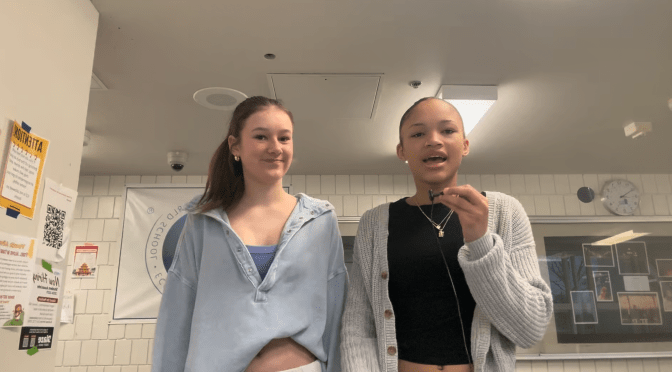
Asking students about the new semester
By: Story Houghton and Damiya Payne

‘The Maze Runner’ movie review
By: Janessa Castro Cruz
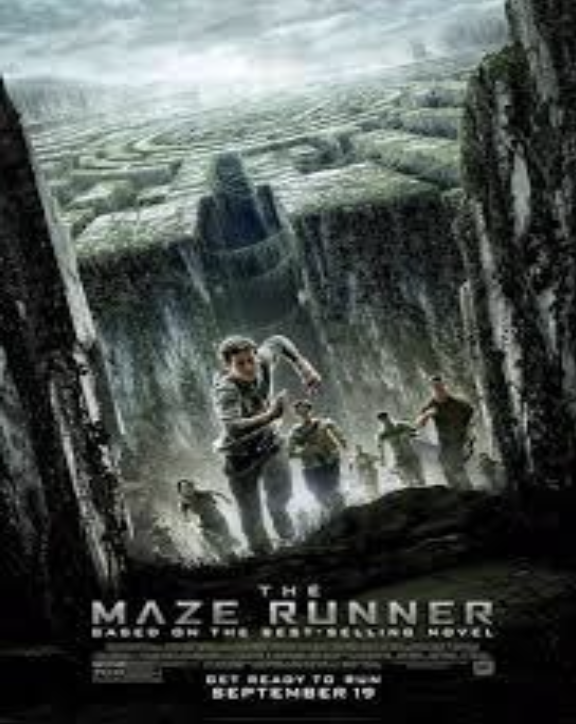
‘The Maze Runner’ a film made in 2014, is dystopian and young adult fiction. There are 2 other movies, ‘The Scorch Trials’ and ‘The Death Cure’ and they are all based on the novel series of the Maze Runner. The first film was produced by Noah Oppenheim, Grant Pierce Myers, and T. S Nowlan. The main cast of the movie contains Thomas (played by Dylan O’Brien), Teresa (played by Kaya Scodelario), Newt (played by Thomas Brodie), and Gally (played by Will Poulter).
The film starts off with Thomas arriving barely awake in an elevator, he is confused and once the doors at the top open he finds himself in a forest glade that is surrounded by a shifting maze full of monsters. He is also getting stared at by a bunch of teenage boys who also arrived in the same elevator. They are all confused on why they are there, and they don’t even know how to get out.
Teresa arrives a few days later, and they are all confused on why a girl is there. She’s scared but finds comfort in Thomas and comes to find out they both have been having dreams about each other.
Thomas and Newt come to an agreement that he should go in the maze and find a way out, Thomas does that and some go with him and some stay behind in the glade. They find the exit and find out that scientists put them there but later they all get kidnapped.
This film is a very interesting one, and the lack of context at the beginning gives it suspense. The cast is amazing and strong and they play their characters really well. The monsters inside of the glade are called the “Grievers” and they look half robot and half animal which is very interesting to me. The cast’s performance in this film really impressed me and this film is very good.
In my opinion, this film is one of my favorites and I’m giving this a 4.7/5. I would recommend this movie to whoever finds it interesting. It might be a little confusing but I like how the characters find a solution to their problems without knowing the risk that lays ahead. You can watch ‘The Maze Runner’ on Prime Video, Peacock, and Fandango.

Maizie and Avi’s thoughts on the 2026 Grammy’s
By: Maizie Hughes and Avi Zmira

Review of the 2026 Super Bowl
By: Karl Salkowski

This year, I was one of nearly 125 million people who tuned in to watch the Super Bowl. Super Bowl LX featured the New England Patriots and the Seattle Seahawks, two standout teams throughout the regular season. Ultimately, the Seattle Seahawks won the game 29-13, earning their second Super Bowl title. The game was played at Levi’s Stadium in Santa Clara, California. As predicted, the Seattle Seahawks dominated for most of the game, eventually leading 12 to 0 by the beginning of the 4th quarter.
Super Bowl ads can cost anywhere from 8-10 million dollars for just a thirty second commercial. This is one of the biggest opportunities for large corporations to gain virality and visibility. Over the last few years, and especially this year, artificial intelligence has become one of the most common topics in these ads, with some commercials having been created completely with AI tools. These commercials tend to be some of the laziest and least creative, making the whole “watching experience” feel more corporate.
In my opinion, the halftime show was one of the highlights. Bad Bunny delivered an incredibly creative and powerful performance. In addition to singing some of his biggest hits, he sent a message of equality, identity, and belonging. This also marked the first halftime show to be performed almost exclusively in Spanish. It included many interesting set pieces, including over 400 people dressed in sugarcane costumes. He ended his performance by listing off all the countries that make up the Americas, ending off with the statement “The only thing more powerful than hate is love.”
Overall, I think this was one of the weaker Super Bowls, as the game felt slow and boring up until the fourth quarter. The Seahawks played incredible defense, with major players such as Kenneth Walker III, and kicker Jason Myers helping to lead to a decisive victory. The definitive highlight of the game for me was definitely the halftime performance. Although I am not really a fan of Bad Bunny, I have been following his music for a couple of years, and it is really cool to see him get the recognition he deserves. Ultimately, I think I would rate this Super Bowl a 7 out of 10.
Birds
By: Evelyn Solano Ruiz
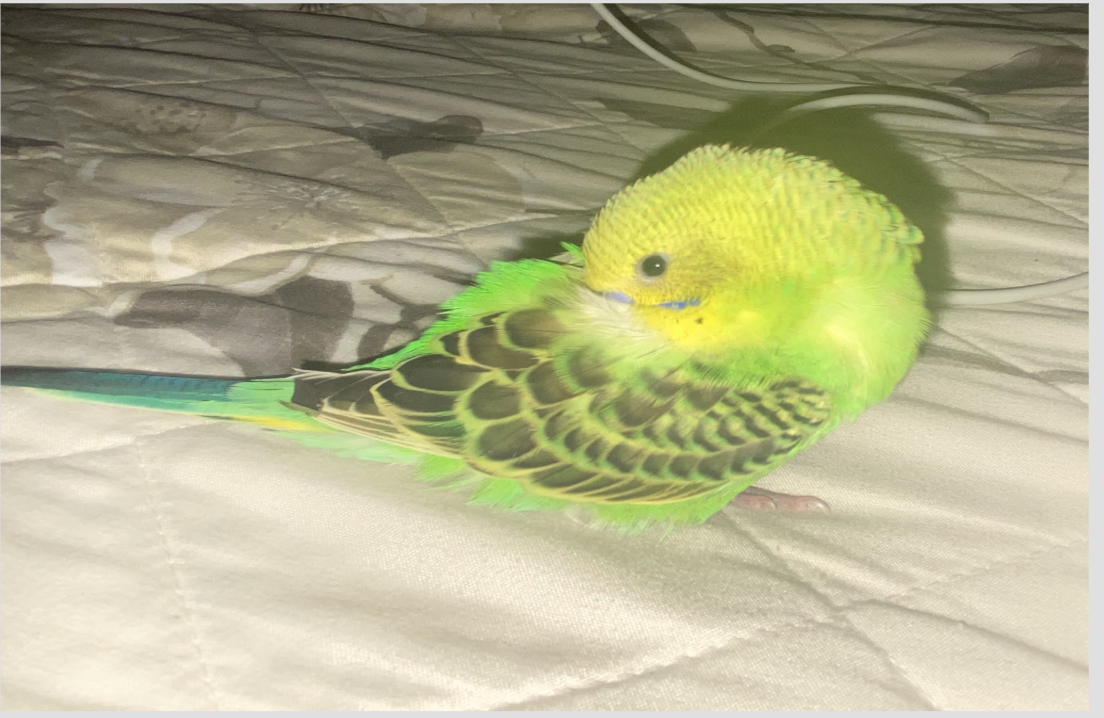
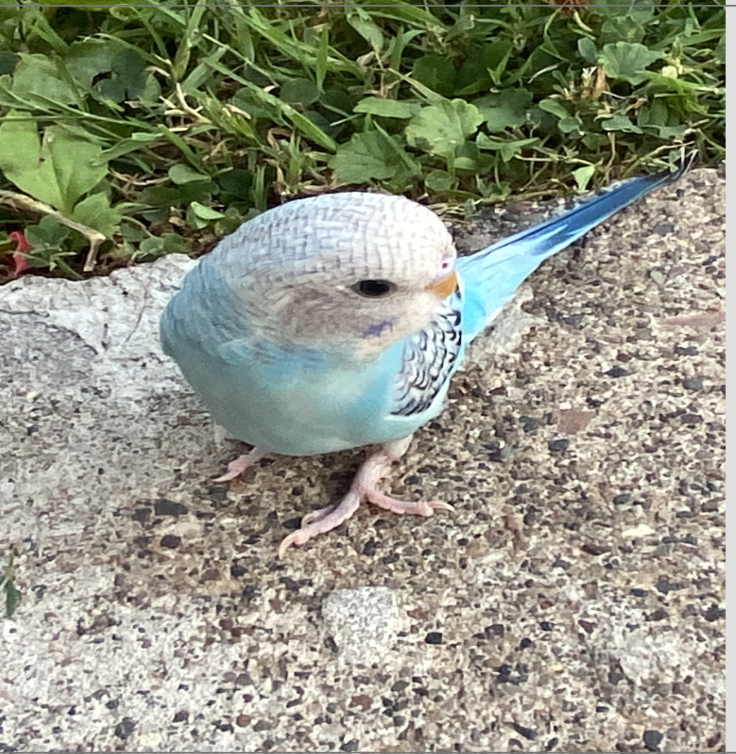
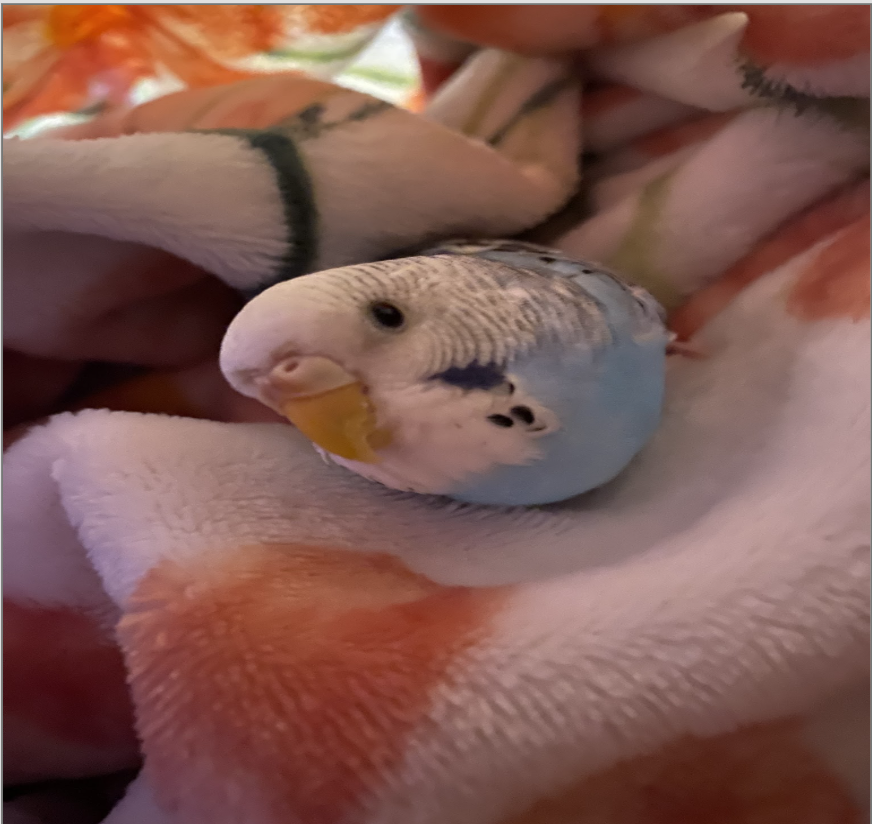
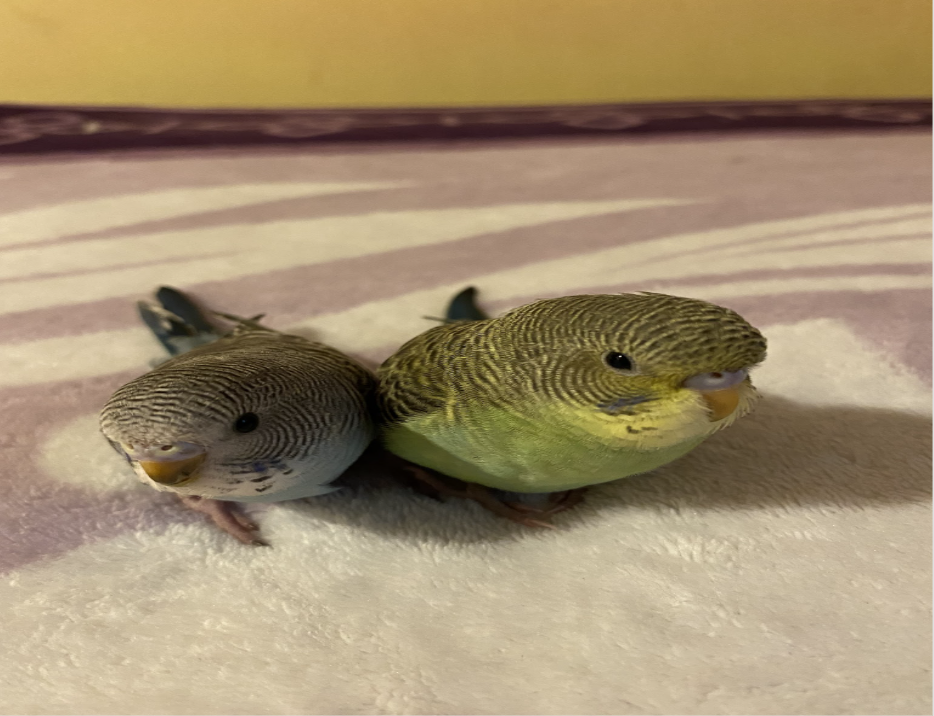
The reason why I chose pictures of my birds is because I love the color of their feathers and they’re all natural and soft. They represent a little different type of bird than we see in Minnesota, and they’re called parakeets. Their colors are different but similar at the same time.
Birds are clumsy, kind, soft, colorful, sleepy, hungry and small. These pictures I took were everywhere at home. I take my birds to visit different parts of my home and they’re all comfortable.
Sports schedule for: Feb 16-21
| ATHLETIC EVENTS SCHEDULE FEBRUARY 16 – FEBRUARY 21 | |||
| MONDAY | FEBRUARY 16 | ||
| TIME | BUS TIMES | EVENT | LOCATION |
| TUESDAY | FEBRUARY 17 | ||
| TIME | BUS TIMES | EVENT | LOCATION |
| 4:30pm | Adapted Floor Hockey Sections | Humboldt High School | |
| 7:00pm – 9:00pm | Baseball Captains Practice | Fieldhouse | |
| 7:30pm | 5:30pm | 9:30pm | Boys Hockey Sections vs. Osseo | Aldrich Arena |
| WEDNESDAY | FEBRUARY 18 | ||
| TIME | BUS TIMES | EVENT | LOCATION |
| B: 4:30pm JV: 4:30pm V: 6:00pm | Boys Basketball vs. Como Park | HOME | |
| 7:00pm – 9:00pm | Baseball Captains Practice | Fieldhouse | |
| THURSDAY | FEBRUARY 19 | ||
| TIME | BUS TIMES | EVENT | LOCATION |
| 5:00pm | TBD | Boys Hockey Sections | Aldrich Arena |
| 6:00pm | 4:00pm | 9:30pm | Boys Swimming Section Prelims | Art Downey Aquatic Center |
| FRIDAY | FEBRUARY 20 | ||
| TIME | BUS TIMES | EVENT | LOCATION |
| 2:15pm | 6:00pm | Wrestling Individual Sections | Cretin-Derham Hall | |
| B: 5:00pm JV: 5:00pm V: 6:30pm | 3:30pm | 8:00pm | Boys Basketball vs. Johnson | Johnson High School |
| JV: 5:30pm V: 7:00pm | Girls Basketball vs. Hope Academy | Hope Academy | |
| 5:30pm – 8:30pm | Boys Volleyball Captains Practice | Fieldhouse | |
| SATURDAY | FEBRUARY 21 | ||
| TIME | BUS TIMES | EVENT | LOCATION |
| 9:00am | 6:30am | 3:00pm | Wrestling Individual Sections | Cretin-Derham Hall |
| 1:00pm | 10:30am | 3:30pm | Boys Swimming Section Finals | Art Downey Aquatic Center |

‘Twilight’ chapter 7
By: Ivy Dahl
Summary:

Chapter seven of ‘Twilight’ begins with Bella having a nightmare where she’s at La Push, the beach she was at in the last chapter, seeing Jacob transforming into a wolf to attack Edward.
She awakes from this nightmare extremely confused, and with her mind full of questions that won’t let her sleep, so she decides to research on her computer. She starts by typing just one word: vampire. She sifts through websites, many of the things she read seeming like they were just stories for kids. But there were a couple of legends that stuck out to her.
Overwhelmed by her thoughts, Bella decided to go on a hike in the woods outside her house to clear her head. It was dark and eerie outside, just like it had been in her dream and when she came across a fallen down tree log, she sat on it like a bench. She thought in a place like this it seemed more reasonable to believe vampires existed. Everything about Edward aligned with him being a vampire including the way he talked so formally, as if from a different time. Also, his impossible strength and his constant reassurance that he’s too dangerous to be around. And even knowing all this, Bella knew one thing even more: she still wanted to be near him.
With her thoughts finally clear, Bella returned to her house, finished some homework and drifted back off to sleep.
When she wakes up the next morning, she’s in a much better mood because of the clarity from last night. This good mood follows her to school, where she decides to sit outside while drawing since it’s sunny. Mike approaches her and tries to use her good mood to his advantage by hitting on her, but she turns him down and tells him to ask Jessica out instead.
Bella goes to lunch and sees that not only is Edward missing, but his entire family is. She’s so bummed out by this that when Jessica invites Bella to go dress shopping in Port Angeles, she just mumbles an agreement.
When Bella gets home, Jessica calls her to tell her the trip is postponed to tomorrow because Mike asked her out.
The chapter ends with her and her friends leaving for Port Angeles the next day.
Review:
This chapter is supposed to be the big realization about Edward, yet afterwards it doesn’t feature him at all or have any kind of confrontation with him about what Bella thinks she realized. Instead, it just features her talking to her friends at school about stuff that isn’t really related, which makes it fall flat and lessens the impact of it on the plot. I’d give it a 5/10.
This is my last ‘Twilight’ chapter review, and I know there is quite a lot of book left, so if you have a lot of time, I would suggest you read the rest of the book! If you don’t have a lot of time, you can watch the movie.
 Plaid Line + PRIZM + Scottie News