
By: Dahlia Man and Brayden Marsh
In elementary, I remember when I was introduced to the issue of climate change at school for the first time. This was one of those rare, significant issues that revealed to me how small I was in comparison to the size of the world. I remember the various educational materials used to educate us about climate change: things like the video of a glacier melting, a large number of polar bears being unable to find enough food, and how gases were creating a “greenhouse” of sorts to keep the earth warm. I understood what was explained to me and knew it was vital information even when I was a child. While it wasn’t a thought consistently I had with me every hour, I did carry it in my mind and considered the lesson it was teaching me.
Climate change stayed an important topic within my next years of school. In middle school and high school, the subject found its way back to me every single year. My awareness of it had never disappeared. As I grew older, the issue didn’t just pop up in lessons at school, it also showed up on my social media feed and news articles. Each time I read/saw more, the more urgent it felt. I began to realize that it wasn’t just ice simply melting, it will affect our food systems, extreme weather change, ecosystem failure, etc. But as big as it was, I had never felt a firm grasp onto how extreme the matter truly was globally. It felt as if it was a distant problem, a concern I had no immediate solution to.
Parallel to my time growing up, I had never felt a concern of worrying about immigration enforcement affecting my own family because I was in a household of US citizens, long before I had even been born. It never had truly felt like something that could have impacted me directly, even if I had parents who were born in a foreign country. It was another topic brought up in the news, but I felt as if it wasn’t a personal one. Or I had at least thought in my young ages. Every school day I left in the morning and returned home in the afternoon, never questioning whether my family would still be there. That familiar perception had made it so much easier for me not to be my concern.
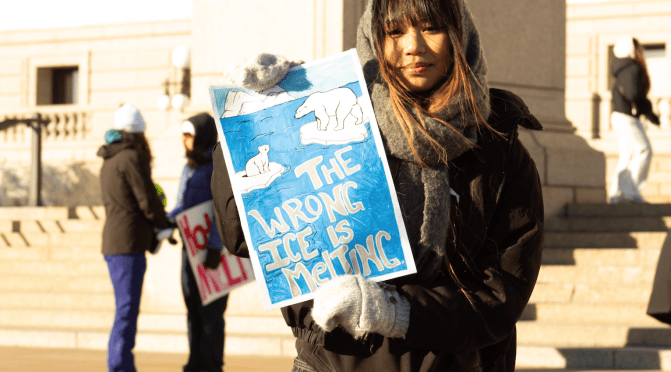
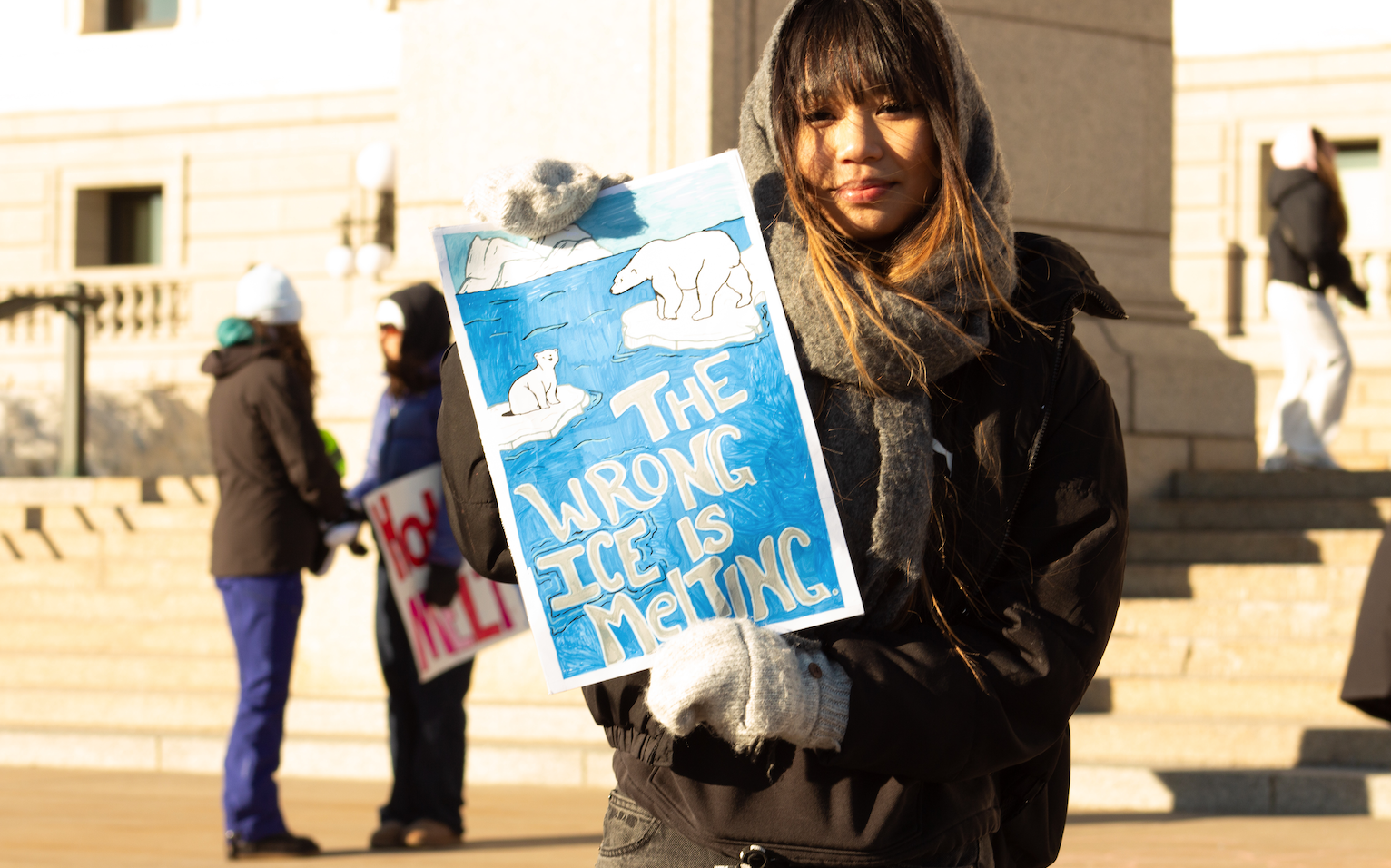
But as I grew older, this began to change drastically. Around me I would hear various stories of families being ripped apart from each other or stories of living in fear. Something that had felt so far, suddenly felt so real and present. I was concerned about the Earth becoming warmer over time, to abruptly worrying if my parents would be waiting at home for me just as they do everyday. This time, it was a different fear. It felt immediate – it was heavy. When I came across a social media post with the words; “The Wrong ICE is Melting”, I felt moved. It stuck with me for days. The double entendre felt so raw, as it addressed not just one issue, but two. It connected climate change and immigration enforcement in a way I hadn’t thought of before. I understand now as I’ve grown, that it is important to care about all issues and matters even if it does not affect me.
We believe the importance of keeping our planet cold is absolutely vital, because it doesn’t just affect us humans, it affects every single part of our Earth. With rising temperatures, we have rising sea levels. This can cause major displacement within our people and even disrupt ecosystems that animals highly depend on. Even beyond this, weather events will become severely extreme, with critical droughts, harsh hurricanes, drastic wildfires, etc. And these aren’t even dire ideas, these are issues some may already face. This is what makes it so crucial for our communities, individuals, and government to take action into fixing our planet before it becomes irreversible.
All together, it is also foremost that we all reconsider how we as a country have treated people within our own borders. It is almost “safe” to say that Immigration and Customs Enforcement instill fear and precariousness instead of actual safety within our communities. With more humane approaches, everything will properly be resolved with dignity and respect. This will help protect families and ensure everyone is treated with integrity. Just like climate change, they are both long-term issues that focus on what we can do for our planet and our future. It builds a strong bond within the people and the vision to the world we want to create.


 Plaid Line + PRIZM + Scottie News