
By: Violet Hirman
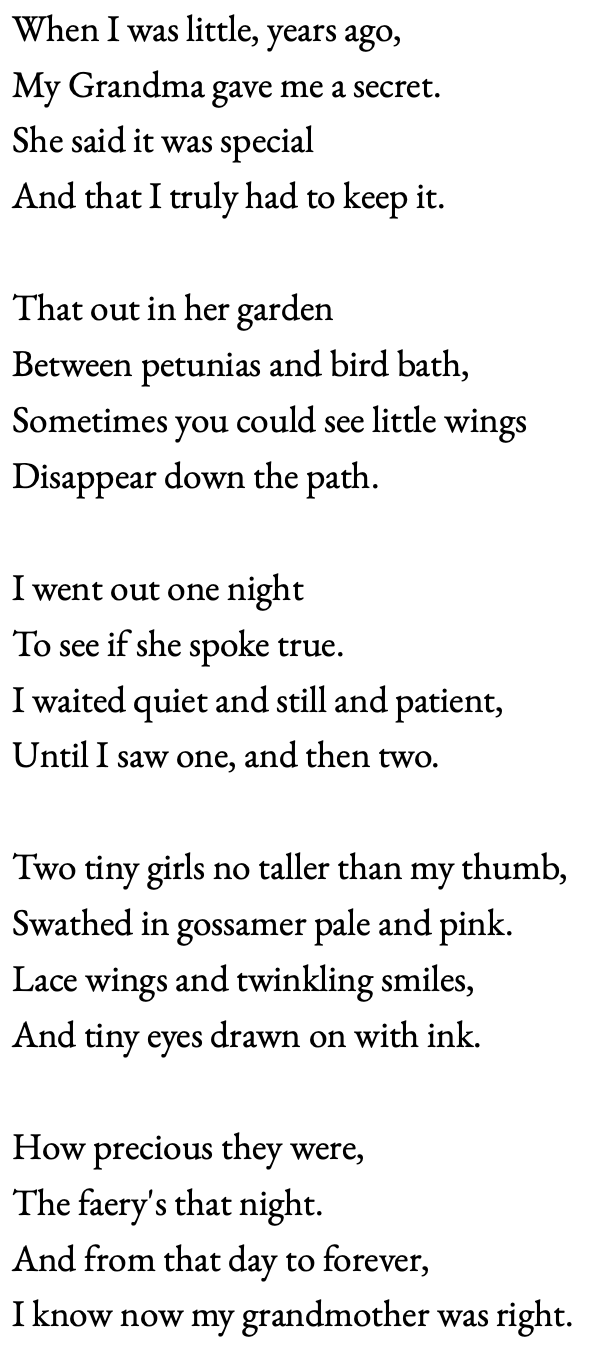


By: Violet Hirman
By: Grace Wright

March 1, 1872 was the day Yellowstone National Park became officially approved by the U.S. congress. The founding of Yellowstone National Park helped start the wave of new parks in over 100 different nations and 1,200 parks.
After Yellowstone became a National Park there were many different monuments and new National Parks, but the issue was that depending on where it was located, it was managed by many different government departments; this made things complicated. The 3 departments involved were: the Department of the Interior, the War Department and the Forest Service of the Department of Agriculture.
On August 25, 1916 an act was signed by President Woodrow Wilson creating the National Park Service. It was a new department responsible for protecting the 35 parks and different monuments that the Department of the Interior was responsible for. It wasn’t until 1933, when an executive order transferred 56 monuments and military sites from the two other departments, that all of the National Parks fell under 1 department These steps have been most important to help build the National Park Systems we know today.
One person who was very important to these steps was Theodore Roosevelt. He was known as the “Conservation President”, he impacted the system well beyond his life. When he was president in 1901-1909 he doubled the number of parks known. He established 5 parks in his time, Crater Lake in Oregon, Wind Cave in South Dakota, Sully’s Hill in North Dakota, Mesa Verde in Colorado, and Platt in Oklahoma. Some of these are not here today but they have still made an impact.
The National Park system in the U.S. includes 400 areas that cover more than 84 million acres in the 50 states but also the District of Columbia, Guam, Virgin Islands and many more.
The National Parks still strive to meet the goals of protecting the diverse cultural and recreational resources, being an advocate and helping to preserve our natural world. The National Park Service employs more than 20,000 people and they care for 400+ National Parks and monuments.
For more information, please visit:
By: Alice Rapacz and Evie Beaumaster

If you’re anything like us, you have tried Tru Fru and loved it. Like Tru Fru, other frozen chocolate dipped fruits are very good but they leave quite a dent in your pocket! We decided to try to make our own and to see if we could make something comparable, but for a smaller price.
Ingredients
To make the homemade Tru Fru, we chose to use strawberries as our fruit. We started by cutting the stems off our strawberries, coring them, and cutting them in half. You want to make sure that your strawberries are completely dry because when you freeze them, they will stick together if they are wet.
After the strawberries are all cut and washed, we put them on a baking sheet to freeze. We covered the baking sheet with parchment paper and made sure that the strawberries weren’t touching each other.
After about 3 hours, the strawberries were fully frozen. We kept them in the freezer while we prepared the chocolates. In two microwave safe bowls add the chocolates (separately) and a tablespoon of coconut oil. Microwave the white chocolate chips first, before doing the milk/dark chocolate, we chose dark. Microwave in 30 second intervals mixing in between each one.
Once fully melted we pulled out the frozen strawberries and added them into a bowl so we could put our dipped strawberries on the baking sheet. We used a fork to dip the strawberries in the chocolate and shook off the extra chocolate so that there would only be a thin layer of chocolate on each strawberry.
After half the strawberries were coated in white chocolate, we had to melt more chocolate to finish the rest of the strawberries and continue dipping the strawberries.
Once they all were coated in white chocolate, we moved onto the dark chocolate. We used the same process of melting, and because the strawberries were frozen to start, the chocolate hardened onto the strawberries so we did not have to put them back into the freezer. After they were all dipped, they were ready to eat!
In the end, the strawberries were really good. Since we used a fork to shake off extra chocolate, there was a nice and thin layer on the strawberries. If it was thicker, it would have been really hard to bite. If you leave the strawberries out for around 3 minutes before eating, it makes the strawberries thaw just enough so they are easier to eat.
The dark chocolate evens out the sweetness from the white chocolate, and the two pair well with the strawberry. Since they are frozen, they would be a perfect sweet treat for on a hot summer day. The strawberries are sweet and fresh, with the chocolate added, they are really good. We made the strawberries when some of our friends were with us. They all really liked them and thought they were a perfect treat to end the night.
Overall, the recipe was pretty easy to follow and the strawberries tasted really good. We think that this recipe is a great way to save some money if you also like Tru Fru. We made around 40 strawberries and the total cost was around $11.78. A typical Tru Fru bag comes with around 16 strawberries for $6.99. For the homemade strawberries it cost around 30 cents per strawberry, the Tru Fru cost around 43 cents. While this is not that big of a difference, we both thought it was worth it. Not only was it fun to make, but we also got to have a delicious treat too. If you ever want a fun and delicious treat to make, we definitely recommend this homemade Tru Fru recipe.
The original recipe!
By: Maya Song

Wordle was invented in 2013 by Josh Wardle. ‘Wordle’ was originally named ‘Mr. Bugs’ Wordy Nugz’. The game was inspired by the game ‘Mastermind’s’ color matching mechanics.
Another reason the game was made was because Josh Wardle’s partner was a word game enthusiast. ‘Wordle’ was bought from Josh Wardle, the software engineer, in January of 2022 for a price “in the low seven figures”, the New York Times said.
In the game ‘Wordle’ you have six tries to guess a five letter word. Throughout the game you will be able to see what letters are correct and incorrect notated by a colored background of the letter. When you put a letter in the right spot the letter’s background turns green. If the letter’s background is yellow it means that the letter is in the word but in an incorrect spot. The grey background means that the letter is not in the word at all.
Science Foundation Ireland says that the best word to start with in ‘Wordle’ is “Tales.” It is said that using this word has a 95% success rate and the game ends with an average of 3.66 rounds. A recommended two word strategy is using the word “Cones” and following it with the word “Trial.” This combination leads to 96% of the target words in ‘Wordle’.
When’ Wordle’s’ public release occurred in October 2021 the daily users went from 90 to approximately 300,000 within two months.
‘Wordle’ will eventually run out of 5 letter words as there are slightly more than 2,300 5 letter words. Tracy from the New York Times says that when this time occurs ‘Wordle’ could recycle words, or start using plural, and past tense words.
Once ‘Wordle’ became popular many other games similar to ‘Wordle’ were made. Games like ‘Absurdle,’ where after each guess the word changes while the hints still work for the new answer. Other games like ‘Sweardle’ for swear words and ‘Weddle’ based off of NFL players.
By: Maeve Brady
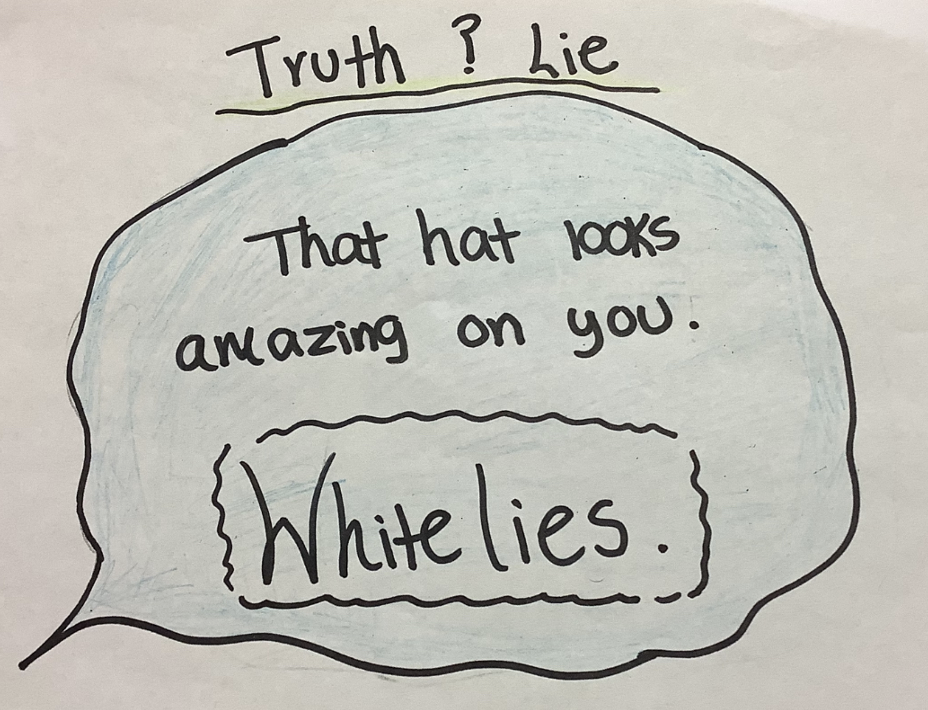
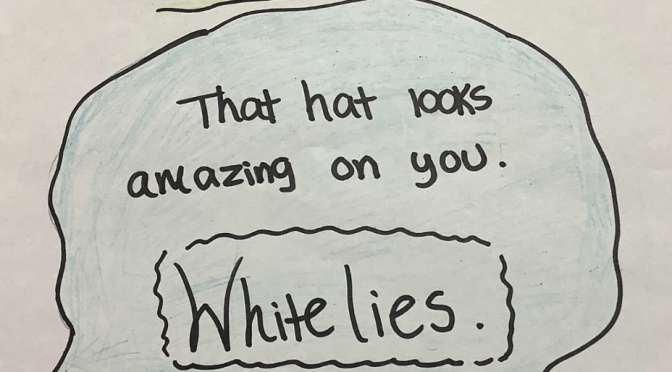
Lying. It is something we all do despite whether you’re aware of it or not. Lying is the substance that is used as a tool in order to avoid getting yourself and/or others in trouble, as well as being used for people’s own personal benefit. For years and years one big question has been asked: Is lying a good thing?
Well, many may consider the adverse effects of lying and disagree. And, besides lying in general, there is also something known as white lying. In our society, people also passionately debate upon whether white lying is ethical or not. Today, I will be giving you both sides of the argument and give you some insight on how it relates to psychology.
To be more specific, white lies are defined as small and trivial lies which people use in order to avoid hurting someone. For example: Imagine your friend comes up to you and asks you if you like their haircut. Let’s say that you indeed do not like it, yet in order to avoid hurting your friends feelings and make them self conscious about it, you just tell them that you love it, despite thinking otherwise. This demonstrates the act of you white lying in order to protect your friend from receiving any sort of mental hurt. But, many would argue otherwise.
There are many people who believe that a white lie does not “protect” someone from hurt, and in fact, that contradicts itself. Many argue that a white lie causes more harm than good, and instead of shielding someone from the dreadful grasp of truth, it only exposes them to more pain. And, despite it being in “good nature”, many consider that lying is still lying, and will only generate more distrust and hurt to the person who thought you were being sincere.
As well as this, because white lying is a form of lying, there is a possibility that it could become a bad habit. And, when more serious situations come about, this habit may have dire results. According to an article written by researchers Elena Svetieva and Leanne Ten Brinke, “Each time someone chooses to lie, no matter how small or seemingly inconsequential, a thread unravels. No big reveal that deception has occurred is necessary, no treachery named, no betrayal felt, no punishment to the deceiver doled out – it is the act itself that harms.” This demonstrates that although white lies have the intention of being “harmless”, the action of white lying will only ignite the fire of chaos.
But, on the other hand of the spectrum, there are many people who think otherwise. Like I have mentioned before, white lying has the intention of being “good natured”, and despite the adverse effects of it, many consider that white lying can improve relationships and in some cases, save people’s lives.
While although white lying can create this sense of distrust, it is also a way to maintain a sort of social harmony and always telling the truth can be more hurtful. They say that white lying does have the word “lying” in the term, yet it is far different from that. It has the intention of helping people avoid hurt, not steer them towards it.
In fact, under certain circumstances, white lies are just supposed to just overall bring peace and ease to someone. For example: Imagine your kid has cancer, and they are due to die soon, and they ask you one simple question, “Am I going to heaven?” Whether you believe in it or not, many would white lie and say yes. This overall brings ease to the child rather than telling them that you don’t know and or they are not. This sort of response may only drive them deeper down into the rabbit hole of depression, leaving them fearful for the rest of their days.
Now, to talk about how white lying relates to psychology. First of all, psychologists believe that besides some other factors that cause white lying, white lying may stem from a person’s own self-consciousness. In fact, it is derived from the factor of justifying oneself, also known as “Deceiver’s distrust”. According to the APA Dictionary of Psychology, “Deceiver’s distrust presumably reflects the assumption that interaction partners are similar to oneself; thus, one’s own deceitfulness leads to the inference that the other is, has been, or will be similarly deceitful. By assuming that others are also untruthful, deceivers can feel less guilt about having lied to them.” This demonstrates that someone may tell a white lie because they believe that others may also be telling lies, therefore justifying their actions of being unhonest to someone.
And, like many other crucial cognitive functions, whenever someone white lies, it is said that this may occur in the prefrontal cortex. More specifically, the medial prefrontal cortex (MPFC). According to JuYoung Kim and Hackjin Kim, researchers for the National Library of Medicine, “An increase in selfish motivation for Pareto lies was associated with higher mean-level activity in both ventral and rostral MPFC. The former showed an increased pattern similarity to selfish lies, and the latter showed a decreased pattern similarity to altruistic lies.” This suggests that the MPFC, which is responsible for processing emotions, values of behaviors, and lying, may have something to do with white lies of selfish intentions.
Thank you so much for following me along as I explain white lies! I hope you learned valuable information about what are white lies and a further analysis of the debate of whether they are good or not. What do you think, should white lies be allowed?
For more information, please go to:
| ATHLETIC EVENTS SCHEDULE: APRIL 14 – APRIL 19 | |||
| MONDAY | APRIL 14 | ||
| TIME | BUS TIMES | EVENT | LOCATION |
| 4:00pm | 2:45pm | 5:00pm | Varsity Softball vs. Humboldt | Humboldt High School |
| V: 4:00pm JV: 4:00pm | Boys Tennis vs. Mounds Park Academy | V: Mounds Park Academy JV: HOME | |
| 4:30pm | JV Baseball vs. Humboldt | HOME | |
| JV: 5:00pm V: 6:30pm | Boys Volleyball vs. Fridley | HOME | |
| TUESDAY | APRIL 15 | ||
| TIME | BUS TIMES | EVENT | LOCATION |
| 2:00pm | Boys Golf Friendship Tournament | Highland 9 | |
| 4:00pm | 3:15pm | 5:15pm | Badminton vs. Harding | Harding High School |
| 4:30pm | Adapted Softball vs. Robbinsdale | Humboldt High School | |
| JV: 4:30pm V: 6:00pm | Girls Lacrosse vs. Waconia | Griffin Stadium | |
| B: 5:00pm JV: 5:00pm V: 6:30pm | Boys Volleyball vs. Harding | HOME | |
| JV: 5:30pm V: 7:00pm | Boys Lacrosse vs. Breck | Two Rivers High School | |
| WEDNESDAY | APRIL 16 | ||
| TIME | BUS TIMES | EVENT | LOCATION |
| 2:00pm | Girls Golf Friendship Tournament | Cedarholm Golf Course | |
| 3:30pm | Boys Golf vs. Como Park | Highland National Golf Course | |
| JV: 4:00pm V: 4:00pm | Softball vs. Como / Johnson | HOME | |
| V: 4:00pm JV: 4:00pm | JV: 3:15pm | 5:30pm | Boys Tennis vs. Johnson | V: HOME JV: Johnson High School |
| 4:00pm | 2:15pm | 7:00pm | Track and Field Meet | Washington Tech |
| 4:30pm | Adapted Softball vs. Dakota United | Humboldt High School | |
| JV: 4:30pm V: 6:00pm | JV Baseball vs. Humboldt Varsity Baseball vs. SPA | JV: HOME V: Target Field | |
| THURSDAY | APRIL 17 | ||
| TIME | BUS TIMES | EVENT | LOCATION |
| 12:30pm | Boys Varsity 9-Hole Tournament | Phalen Golf Course | |
| 4:00pm | 3:15pm | 5:15pm | Badminton vs. Washington | Washington Tech |
| 4:00pm | 2:45pm | 5:00pm | Varsity Softball vs. Washington | Rice and Arlington |
| JV: 4:30pm V: 4:30pm | Baseball vs. Kennedy | Bloomington Kennedy HS | |
| B: 5:00pm JV: 5:00pm V: 6:30pm | Boys Volleyball vs. Washington | HOME | |
| JV: 5:30pm V: 7:00pm | Girls Lacrosse vs. Breck | Breck School | |
| FRIDAY | APRIL 18 | ||
| TIME | BUS TIMES | EVENT | LOCATION |
| JV: 4:30pm V: 6:00pm | Boys Lacrosse vs. Waconia | Griffin Stadium | |
| SATURDAY | APRIL 19 | ||
| TIME | BUS TIMES | EVENT | LOCATION |
| JV: 12:00pm V: 12:00pm | Softball vs. Mahtomedi | HOME | |
By: Daniel Kendle
(Many terms and gameplay mechanics discussed in this article are explained further in episode 13 of JOYSTiCK. It’s advised to read that review prior to this one).
. . .

*Note: This article was written prior to the most recent expansion release. This may impact deck viability
It’s been around 5 months since ‘Pokemon TCG Pocket’ launched on mobile devices, and has been a great success for the franchise. Reportedly having generated around $500 million dollars by February of this year, the game’s critical and financial progress is guaranteed to continue for the years to come.
We’ve seen 4 booster pack expansions since the app’s launch in late October, with a 5th coming March 27: Genetic Apex, Mythical Island, Spacetime Smackdown, Triumphant Light, and soon to join the fray, Shining Revelry. With these have also come many events for both online and offline battling, obtaining rare promo cards, and more. The game’s developers seem to be attentive to the community too: after releasing a trading feature in January, it’s controversy surrounding the in-game currency required to use it has been announced to be retired later in the game’s life, either this year or 2026.
With these highlights out of the way, a large issue with the game has arisen with its continued expansion releases: the online meta surrounding deck-building and playing has become rife with overpowered cards and strategies. This is what we’ll be focusing on today, and why this is an issue. We’ll also be examining several powerful decks as examples for the argument, and finally see ways to potentially combat this issue in the future.
In short, a game’s meta is basically its current competitive state: what aspects of PVP are good or bad, and what strategies are best when playing. This is a vague description, but an all-encompassing one.
Player-versus-player gameplay in ‘Pocket’ comes down to using decks, each required to have 20 cards total. Only up to 2 of the same card can be used in a deck, leaving the player to have to employ at least 10 unique cards. Cards from different expansions can be used in tandem with each other.
The strongest type of cards in the game are “ex” cards: variations of normal Pokemon with higher health and damage, along with more unique effects wrapped into each attack. To balance this, knocking an ex out rewards 2 prize points, with 3 being needed to win a match.
Overall, with some niche exceptions, the game’s meta is mostly ex cards, which presents some issues. The main one, however, is that the over reliance on decks to use ex cards makes deck-building a more linear, provincial task.
Again, there are some commonly-used decks that forgo ex’s, but the prevalence of these cards online lead to most players combating them with their own ex’s, thus catalyzing the problem. The abundance of them online and the relatively-small pool of them combine to create a lack of variety of top-level decks to imitate. This doesn’t necessarily make matches stale, but rather streamlines creativity in making decks into choosing between several powerful options, each with a fluid “correct” list of required cards.
Ex’s as a whole also de-emphasize normal non-ex cards. Unless you have a killer strategy up your sleeve, more often than not non-ex decks struggle against their cousins. This disarray in power makes many cards in new expansions unable to break out into competitive play, unless they can support ex cards.
These problems have soured the metagame. There is still fun to be had, don’t get me wrong, but it’s not ideal to have players be pigeonholed into a selection of certain cards. Experimentation should be rampant in this game, but honestly, it’s often hard to find decks online with more uncommon cards – at least, by my standards.
Here’s a list of some of the best decks in the game, each with an explanation as to why:
The examples listed above are fine examples of the strength of ex cards, and their numerous advantages. A lot of ‘Pocket’’s meta relies on energy acceleration: if your opponent gets an extra card when they knock you out, speed becomes the name of the game.
Once again, the current meta is far from bad, but restrictive in player expression through deck building. So, here are some of my ideas for how to improve competitive play, in my opinion:
These were just 2 ideas, but I hope you can see the potential here. ‘Pocket’ is fun, but I think that its competitive corner is in need of improvement. I’m optimistic, honestly; these developers seem to love their game, and I think they can continue iterating on bettering PVP. Until then, though, I’ll still be looking forward to what they do next.
By: Maggie Hong
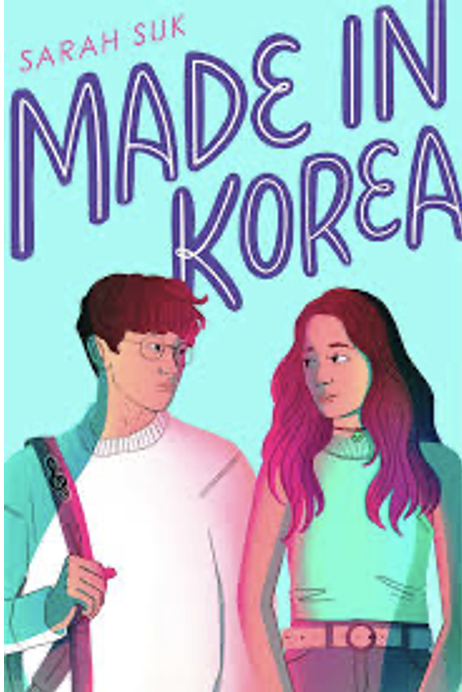
‘Made in Korea’ is a romance novel by Sarah Suk. It follows the stories of Valerie Kwon and Wes Jung, high school seniors who run competing K-beauty brands at their school.
Valerie has been running her business since sophomore year, and it’s the most successful student run business at the school so far. Together with her cousin/business partner Charlie, she carefully stocks face masks, toners, and lip balms to cater to her customers.
When Wes Jung moves to town and begins selling limited edition k-pop merch, Valerie’s business is threatened. Not only that, but she needs the profits to pay for a once-in-a-lifetime trip to Paris with her grandmother, whose health is declining by the day. She immediately goes into overdrive, advertising on Instagram and giving special deals to loyal customers.
Wes didn’t intend to start selling k-pop merch, but when his mom, a PR rep for a popular group, has some lip balms left over, he can’t turn down the opportunity to make some money. He needs the money to repair his broken saxophone, and to pay application fees to music schools across the country. So, even as Valerie tries to intimidate him and warn him off her customers, Wes keeps going.
Valerie and Wes are bitter rivals. But as they compete so closely together, they start to realize one another’s situation. This book was both fun and heartwarming to read, and I felt connected to my culture and represented in a genre I don’t usually read. The characters are loveable and nuanced, and the story is engaging and fast paced. This is a great read if you like romance, or if you’re looking for a lighter read and a change of scenery from more serious books.
I would give this book a 9/10.
By: Fletcher Pike
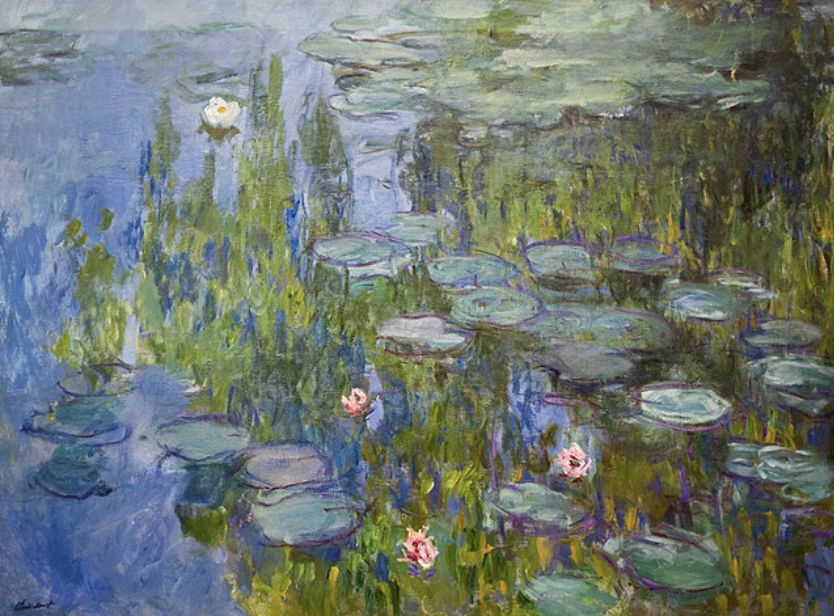
Art comes in several different forms, many of which you have likely seen today. You might think of paintings from the Renaissance period like the ‘Mona Lisa’ or ‘The Girl With The Pearl Earring’, or maybe more abstract, modern paintings. But one art style in particular was formed as a result of one of the most popular movements in art history. That art style would be Impressionism.
Impressionism itself is a very recognizable style of painting, as the paintings featured bright, chromatic colors rather than the more dull palettes that were used for previous styles of painting. The colors also emphasized the contrast between light and shadows. These paintings very often depicted a mundane or realistic setting, rather than dramaticized historical scenes.
In 1874, a group of artists formed the ‘Anonymous Society of Painters, Sculptors, Printmakers, etc.’. Its founding members included popular artists such as Claude Monet, Camille Pissarro, Edgar Degas, Berthe Morisot, and several others. They created an art installation in Paris, France, where many unique paintings were displayed.
However, these paintings were a bit different from other paintings at the time. These paintings included loose brush strokes, vivid colors, and featured scenes primarily of nature or the simple, everyday life. These were different from the grand, historical story-based paintings that were made during this time. This new abstract style brought a sense of realism in contrast to the art featured in this time period.
Claude Monet was a significant figure throughout this movement, as he was one of the trailblazers that popularized the style of Impressionism. In one of his exhibits, critic Louis Leroy gave Impressionism its name by stating Monet’s paintings were more of an uncompleted sketch, “an impression”.
The final independent exhibition of Impressionism was held in 1886, but the painters had begun shifting towards a new direction for the movement, which was Neo-Impressionism. This was an art movement characterized by small intricate dots, distinct brushstrokes, and bright colors.
Though the final exhibition was so long ago, the Impressionist movement had a large impact on the art community by adapting to new art styles, and allowed artists to freely express themselves through their artwork.
For more information, please visit:
By: Hermekay Dehaney

We live in a time when Hollywood is fueled by trying to replicate nostalgic content to relive popular and beloved films and shows with reboots and sequels. While some Hollywood directors and producers hit the mark with shows and movies such as ‘Cobra Kai’ and ‘Spider-Man: Homecoming,’ which are high-grossing reboots, the majority fade away, either getting canceled after one season or becoming box office flops.
There is a popular quote that says, “You either die a hero, or you live long enough to see yourself become the villain,” I think that quote indirectly applies to movies/shows as well. A key factor in good shows is that they know when to end effectively, which leaves a lasting impression on critics and viewers at home. For example, shows like ‘Breaking Bad’, and ‘The Good Place’ are often praised for ending their show successfully. When shows continue past their prime, it leads to low viewer rates and creative decline, a perfect example is the show, ‘Riverdale.’ There are obvious exceptions to this rule, shows like ‘Modern Family,’ ‘The Office,’ and ‘Friends’ are often regarded as some of the best TV shows that have run for more than 9 seasons.
Reboots might seem safe on paper. When executives try to reboot popular shows and movies that nobody asked for, it feels like a quick money grab from executives and actors who starred in the original. They believed that since people enjoyed the original and a beloved original actor is returning to star in it, viewers will enjoy the reboot, which is not true. It only works if the execution is right. If it doesn’t have the creative magic and storyline that the original show captures, it’s bound to fail.
Examples include ‘Gossip Girl (2021), which is a reboot of the original ‘Gossip Girl’ that was first released in 2007; ‘Fuller House’, a reboot of ‘Full House’; ‘That 90’s Show’, a reboot of ‘That 70’s Show’; and ‘Gilmore Girl: A Year In The Life’, which is a reboot of ‘Gilmore Girls’. All of them were betting on brand recognition to be successful, but ultimately flopped, some canceled after only 1 season.
I’ve noticed that when reboots don’t evolve with their original audience, the reboot falls flat. I remember in 2019, Disney+ announced a ‘Lizzie McGuire’ reboot, but it was later shelved before it was filmed due to creative differences between the executives and Hilary Duff, who plays the main character. Hilary Duff wanted it to be a more “mature” show because the original audience of the show has grown up, which means their tastes have evolved. She also wanted her character who would’ve been in her 30s to be in a more realistic real-life adult situation. Disney+ disagreed and wanted it to be more of a family-friendly show approach. This disagreement ultimately led to a cancellation of production. I think it was the right choice because if they had let Disney+ win, the show would’ve been added to the list of canceled reboots after 1 season due to it failing to connect with the original audience for being too juvenile.
Rebooting cartoons to live-action also always fails. Animated shows have different rules compared to live action, cartoons operate on a totally different scale, and their visuals and tone are totally different. What might look good in 2D sometimes looks awkward In live action. These projects struggle to have the features that only animation can capture.
Reboots are just a lack of creativity, they fail to understand what audiences want. It’s not always just the familiar face and nostalgia that pulls viewers in, it’s the creative vision that involves mixing something old with something new without trying to completely change the storyline from the original. Viewers want a new perspective but a similar style. So, if Hollywood wants to keep on revisiting classics, they need to start creating something worth watching.







 Plaid Line + PRIZM + Scottie News
