By: Maeve Brady
Lying. It is something we all do despite whether you’re aware of it or not. Lying is the substance that is used as a tool in order to avoid getting yourself and/or others in trouble, as well as being used for people’s own personal benefit. For years and years one big question has been asked: Is lying a good thing?
Well, many may consider the adverse effects of lying and disagree. And, besides lying in general, there is also something known as white lying. In our society, people also passionately debate upon whether white lying is ethical or not. Today, I will be giving you both sides of the argument and give you some insight on how it relates to psychology.
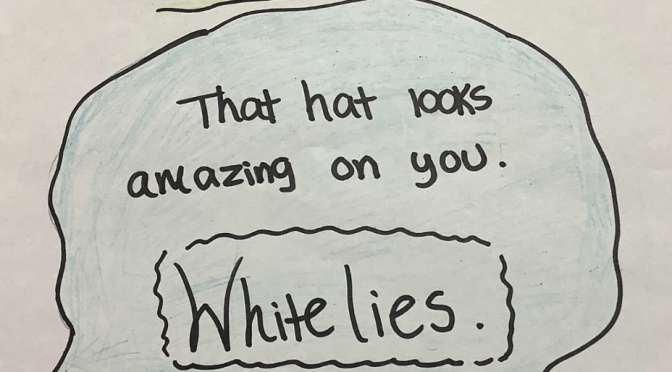
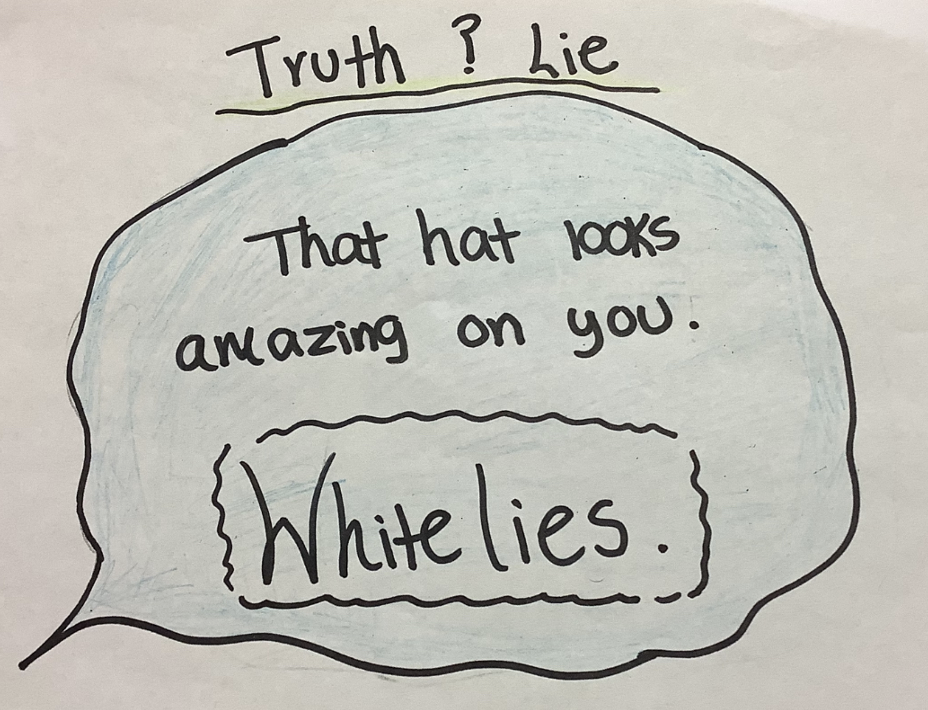
To be more specific, white lies are defined as small and trivial lies which people use in order to avoid hurting someone. For example: Imagine your friend comes up to you and asks you if you like their haircut. Let’s say that you indeed do not like it, yet in order to avoid hurting your friends feelings and make them self conscious about it, you just tell them that you love it, despite thinking otherwise. This demonstrates the act of you white lying in order to protect your friend from receiving any sort of mental hurt. But, many would argue otherwise.
There are many people who believe that a white lie does not “protect” someone from hurt, and in fact, that contradicts itself. Many argue that a white lie causes more harm than good, and instead of shielding someone from the dreadful grasp of truth, it only exposes them to more pain. And, despite it being in “good nature”, many consider that lying is still lying, and will only generate more distrust and hurt to the person who thought you were being sincere.
As well as this, because white lying is a form of lying, there is a possibility that it could become a bad habit. And, when more serious situations come about, this habit may have dire results. According to an article written by researchers Elena Svetieva and Leanne Ten Brinke, “Each time someone chooses to lie, no matter how small or seemingly inconsequential, a thread unravels. No big reveal that deception has occurred is necessary, no treachery named, no betrayal felt, no punishment to the deceiver doled out – it is the act itself that harms.” This demonstrates that although white lies have the intention of being “harmless”, the action of white lying will only ignite the fire of chaos.
But, on the other hand of the spectrum, there are many people who think otherwise. Like I have mentioned before, white lying has the intention of being “good natured”, and despite the adverse effects of it, many consider that white lying can improve relationships and in some cases, save people’s lives.
While although white lying can create this sense of distrust, it is also a way to maintain a sort of social harmony and always telling the truth can be more hurtful. They say that white lying does have the word “lying” in the term, yet it is far different from that. It has the intention of helping people avoid hurt, not steer them towards it.
In fact, under certain circumstances, white lies are just supposed to just overall bring peace and ease to someone. For example: Imagine your kid has cancer, and they are due to die soon, and they ask you one simple question, “Am I going to heaven?” Whether you believe in it or not, many would white lie and say yes. This overall brings ease to the child rather than telling them that you don’t know and or they are not. This sort of response may only drive them deeper down into the rabbit hole of depression, leaving them fearful for the rest of their days.
Now, to talk about how white lying relates to psychology. First of all, psychologists believe that besides some other factors that cause white lying, white lying may stem from a person’s own self-consciousness. In fact, it is derived from the factor of justifying oneself, also known as “Deceiver’s distrust”. According to the APA Dictionary of Psychology, “Deceiver’s distrust presumably reflects the assumption that interaction partners are similar to oneself; thus, one’s own deceitfulness leads to the inference that the other is, has been, or will be similarly deceitful. By assuming that others are also untruthful, deceivers can feel less guilt about having lied to them.” This demonstrates that someone may tell a white lie because they believe that others may also be telling lies, therefore justifying their actions of being unhonest to someone.
And, like many other crucial cognitive functions, whenever someone white lies, it is said that this may occur in the prefrontal cortex. More specifically, the medial prefrontal cortex (MPFC). According to JuYoung Kim and Hackjin Kim, researchers for the National Library of Medicine, “An increase in selfish motivation for Pareto lies was associated with higher mean-level activity in both ventral and rostral MPFC. The former showed an increased pattern similarity to selfish lies, and the latter showed a decreased pattern similarity to altruistic lies.” This suggests that the MPFC, which is responsible for processing emotions, values of behaviors, and lying, may have something to do with white lies of selfish intentions.
Thank you so much for following me along as I explain white lies! I hope you learned valuable information about what are white lies and a further analysis of the debate of whether they are good or not. What do you think, should white lies be allowed?
For more information, please go to:




 Plaid Line + PRIZM + Scottie News