Hey guys, it’s me, Daniel Scientist, here with the boys in the lab for another bumpin’ day at work. Since both business and my monkey breeding study’s been slow for the past few weeks, I’ve been hard at work whipping up hypotheticals for the next ‘Super Smash Bros.’ game.
With the Switch 2 direct and eventual release on the horizon, a new release for the series is near-inevitable. With the last entry, ‘Ultimate,’ becoming the best-selling fighting game ever, a follow-up is poised to release relatively-soon, as the conspiracy theorists want you to believe. It just so happens, however, that I’m extremely gullible!
‘Ultimate’ brought back every past fighter along with 24 newcomers, leading to a grand total of 89 playable characters. This total is gargantuan, and has led speculation for the next title to various areas of varying quality. Reboots, upgraded ports, and regular-old successors have all been thrown out, and each is an interesting concept.
For today’s report, I’ll be examining the latter-most option, as to simplify and streamline my ideas. Specifically, I’ll be sharing my top 5 most-wanted new fighters. Treat this article like a bingo board: if I get any right, I’m gospel; any wrong, I’m just stupid.
Without further ado, I hope you enjoy this research essay (please; I don’t want to go back to the monkey ranch), and let’s dive in.
. . .
#5: Chell (‘Portal’ series)
I reviewed ‘Portal’ earlier this year, and have since fallen in love with the series. I think everything from the humor, writing, gameplay, and all that stuff in-between is rich with polish, and I’m surprised at the little fanfare for representation in ‘Smash.’
Despite having only a Portal Gun to her name, I think the protagonist, Chell, has some cool moveset ideas. Obviously, portals would be the focal point: her up and down Specials could be tied to spawning the blue and orange portals respectively, with her being able to fast-travel around the stage when necessary. Her side special could be something like spawning a box, being able to pass through the portals and potentially setting up combos. A fighter mostly focused on physic systems sounds REALLY cool, but balancing would be necessary.
#4: The Knight (‘Hollow Knight’)
While I’ve never fully finished ‘Hollow Knight,’ I’ve liked what I’ve seen of it so far, even if I’m not as into it as others. Still, the titular Knight would be a great addition to the next ‘Smash’ game.
Being a “Metroidvania,” ‘Hollow Knight’ has a wide array of abilities for the Knight to obtain and use. Vengeful Spirit, Desolate Dive, and Howling Wraiths are slick Special moves that come to mind. Also, these attacks are accessible by harnessing Soul, a meter that’s raised from hitting and killing enemies. So, bringing that mechanic into ‘Smash’ would fit perfectly, in my opinion! It also helps that ‘Hollow Knight’s’ a 2D game, features a double-jump power up (which could be a cool animation to transfer over), and has many stage possibilities with its vast underground world. In particular, the Radiance’s boss arena would be rad.
#3: Paper Mario (‘Paper Mario’ series)
Public outcry has deemed Waluigi the most-wanted ‘Mario’ character, and while he’s definitely in my top 20, I’ve always preferred this spin-off series’ lead role. It’s weird; I’ve never liked characters like Dr. Mario, Toon Link, and Young Link due to being strange, unnecessary inclusions, yet love this idea.
I’m not super keen on the ‘Paper Mario’ series, but after doing some research I think there’s a strong variety of avenues to take this fighter down. Hammers, confetti, and assisting support characters could all be featured, referencing both the 2D and ring combat in different games. Not a character I can give many moveset ideas for, but a strong concept still.
#2:Raven Beak (‘Metroid Dread’)
‘Metroid’ is my favorite Nintendo franchise, and ‘Dread’ is my favorite first-party Switch game. Therefore, it’s natural for among my most-wanted newcomers to be the game’s final boss, Raven Beak. A galactic warlord, this dude not only has one of the coolest designs in the franchise’s history, but also one of the best movesets.
To port some attacks over to ‘Smash,’ his neutral jab could be the 3-hit combo he performs during his fight’s first stage. His neutral Special could be his black hole projectile, which could be charged to increase size (this is similar to Samus’s neutral Special, which could be a thematic similarity). Up special? Simple: he quickly unsheathes his wings and launches into the air, like Joker’s up Special with Arsene active. Down Special? Raven Beak plants a bomb, which, while not arena-covering like in ‘Dread,’ would do a fair amount of damage at a distance, and a critical-hit if the opponent is right next to it when it detonates. Smash attacks? Reference his animations used in parrying cutscenes.
Raven Beak and the next character are vying for my personal most-wanted addition, but I eventually went with the character below for #1 for the 3rd-party “cool factor.” Still, with Ridley being among my mains in ‘Ultimate,’ Raven Beak would be an awesome addition if anything close to my envisioned concept.
#1:The Doom Slayer (‘DOOM’ series)
I mean…where do I even start? ‘DOOM’ is one of my favorite franchises in all of media, so you can probably guess I was disappointed with its main character being relegated to a Mii Costume in ‘Smash’s’ most recent entry.
Part of why the series’s combat rules is because of its mix of melee and ranged fighting. The reason I don’t care much for fighters like Master Chief from ‘Halo’ or Heavy from ‘Team Fortress 2’ being added is because their solo-projectile movesets leave them stranded in the “Zoner” archetype, a pretty lame playstyle. But with the Doom Slayer, the franchise’s ~30 year history offers bloody, gruesome weapons from every path of life. In the upcoming game ‘DOOM: The Dark Ages,’ you get a gun that grinds down and shoots out the remains of human skulls, which is cool as hell. So, for being a fighter with a storied history, wide range of moveset possibilities, and being among my favorite game series, the Doom Slayer is officially my most-wanted fighter for ‘Super Smash Bros.’ 6.
Hey gang, it’s me, Mr. Whatshisname, back again with another spine-strokin’ issue of JOYSTiCK Reviews. I’m ALSOback again in a, uh, cage.
Like the sound of clanging metal in a zebra enclosure, I’ve never been…oh, what’s the point? Ever since I was kidnapped in the last part of this review, I haven’t been able to string a metaphor together. It’s miserable! Writing this serial’s never been harder with these conditions; the wind’s cold, long nights, and all I can hear outside are… animals, frankly.
But what can I do? These hellish conditions are nothing short of permanent, I’m afraid. Even after around 2 months trapped in here, no amount of probing my cell’s given way to finding some kind of exit. Without any viable alternatives for escape, I suppose I’ll be staying here for the rest of my life.
Well, dear readers, this is it. With my paper supply running on fumes, I guess this is goodbye. Thank you for reading, and please keep me in your thoughts…
…is what I’d be saying if I didn’t have an escape plan! You shallow sheeple oughta know that, like clockwork, I’d already have formulated a masterful guide on how to ditch my concrete corral. Fret not: in the next 48 hours, I’ll have transformed from an innate inmate into a free spirit, wandering amongst the living once again.
Unfortunately, my plan requires a mailed device that’ll take another good half hour to arrive here. Until then, I might as well finish some junk on my to-do list – which is a perfect segue into today’s topic: ‘Super Smash Bros. Ultimate.’ Specifically, the “World of Light” campaign. It’s here I mention that if you haven’t read my previous article on this game, it’s advised you do so before reading this. Not only will it give context words to my current entanglement, but there’s a bunch of stuff I’ll mention here that was explained there.
World of Light functions as the game’s main campaign, a common part of many fighting games, let alone ‘Smash’ titles. In this game, the campaign revolves around a new addition to the series: Spirits!
Spirits are basically customizable upgrades for your fighters. Coming in the form of a video game character, each Spirit can be equipped, giving players special abilities and defenses in matches. Some are rarer than others, and with over 1,600 of them to obtain, this leads to a vast variety in potential team setups and builds.
Spirits are obtained through Spirit Battles, where you fight a CPU-controlled fighter that’s chosen to “embody” the character – really, this amounts to the fighter being picked if they look, act, or have moves reminiscent of the Spirit. Each battle has different effects that modify how the fight will play out. Lava floors, random debuffs, gravity-switching… Once again, there’s a wide array of different effects that Spirit Battles can have, making each unique to their own character.
This is what World of Light is all about: fighting in these battles to free Spirits, then using them to free more Spirits. This cycle has you free around 600 Spirits for a 100% save file, with the other thousand or so being obtainable through other side content in ‘Ultimate.’
You also go around freeing characters. These fights don’t have any special attributes, instead being simple brawls against the respective fighter. Once freed, they can be used in single player and multiplayer fights. These aren’t the only way to obtain characters, though – you can also occasionally have the chance to fight a character after exiting the campaign menu, after fulfilling certain requirements.
Honestly, I’m very mixed on Spirits overall. This was a very brief overview of the system, but I find the hardcore focus on these battles to become tepid after a while. In World of Light, you’re basically only doing these battles, only occasionally being interrupted by boss battles, mini-games, or Spirit training buildings. These brawls are fun, but become so monotonous that they eventually mix in with one-another, becoming amorphous memories. There weren’t many super memorable fights, with the whole of them being largely forgettable. Obviously, you can’t expect 1,600 fights to each be recognizable instantly, but my point still stands: this gameplay facet of ‘Ultimate’ largely remains forgettable in the long run.
I also think Spirit fights are flawed in a major way: their special attributes. See, when each Spirit Battle has unique conditions you must fight in, when you claim Spirits that basically negate these variables, it makes many fights somewhat dull and uninteresting. Furthermore, what was once a unique fight now becomes leveled, and pretty lame. This issue is definitely subjective, and I understand why it’d be hard to completely rethink the gameplay completely, but it’s such a large factor in my lukewarm reception of the campaign that I can’t ignore it. It’s definitely my least favorite piece of ‘Ultimate,’ for what it’s worth.
I still think World of Light is fun, however. Limiting the amount of fights to around a third of the total Spirit count was a smart move, in my opinion. While the fights are still somewhat-forgettable, the lowered total amount for completion is still an upside. Also, it’s very important to note that fighting opponents is still really fun, even if using your own Spirits negates a lot of the difficulty. I’m less annoyed at Spirits, but instead a bit disappointed, really.
Other than that, the story’s alright. Nothing crazy; basically, Galeem, a god of light, has taken over the universe, swallowing each ‘Smash’ fighter and creating duplicates of them that encompass miscellaneous video game characters, turning them into Spirits. These puppet fighters take up the mantles of the sea of characters, explaining why you’re ‘freeing’ each Spirit: you’re essentially liberating them from Galeem’s control.
Eventually Dharkon, a god of darkness, defeats Galeem himself and overtakes the world. These gods fight, with you caught in the middle. I won’t spoil the ending, but it’s a very fun time, and while nothing amazing, it’s a good time all-around. And that’s a good way to summarize World of Light: nothing spectacular, but certainly not a major detriment to ‘Ultimate.’ Instead, it’s, simply-put, good.
. . .
Hey guys, it’s me, Mr. Whatshisname, back again. You may be wondering what happened after I finished explaining the World of Light experience, and why I’m now sitting in a cozy living room, in front of a roaring fire.
I hope you’ve been enjoying these visual aids; my therapist recommended casual photography to me a while back. (Chuckles) Not yet sure how a Polaroid camera was supposed to aid my vehicular manslaughter PTSD, but hey, I eventually decided that yeah, it was time for a new hobby. And a new therapist.
Oh, right, my escape! Yeah, it wasn’t that complicated, honestly. I ordered this weird door I saw on Craigslist the other day with a glowing green eye on top. Once I walked through it, I was transported into this weird antimatter dimension, until being dropped back home again. How convenient! I currently have 13 different felony warrants for my arrest.
Anyways, I think that about sums up my thoughts on ‘Super Smash Bros. Ultimate.’ A fantastic game overall, with tons of fun to be had by all. With tight gameplay, fun side content, and an enjoyable, albeit disappointing story mode, I’ll be giving this game a 9/10.
And with that out of the way, that’s all the time I have with y’all today! Thanks for tuning into this episode of JOYSTiCK Reviews, and have a great week.
Hello, hello, welcome back to JOYSTiCK Reviews, and today I have a special treat for you: a 2-parter episode! Upon closer inspection of the title, you’ll likely notice a sly “A” next to the episode count. That’s not a misspelling, but instead a notice for you to check out the companion article to this, instead with a “B” next to the 14, along with a new phrase.
Before diving into today’s topic (‘Super Smash Bros. Ultimate’) I should specify that this article will be about general gameplay and characters, while the “B” article will revolve around the game’s “World of Light” campaign, and related items of interest to it. There may be some overlap between the 2 articles, but for the most part they’re separate entities, conjoined at the hip. I do hope you read part 2, right after this 1st part, of course.
Anyways, with that context out of the way, you might be wondering why I’m currently standing in the middle of a field.
Image by Keith Evans via Wikimedia Commons
I don’t know, really; it’s a slow week, and seeing as comedy’s a dying art form, a common substitute for true humor is to put a character in a random place, then have both them and the writers flail their arms around in desperation (just ask SNL). Also, it just so happens that a witch in a gingerbread house beat me up, inflicted a magical curse on me, and then teleported my unconscious body thousands of miles from my house, which explains the odd choice of locale. And the antlers.
…
Boy, it’s hot out here.
…
Anyways, I’ve got nothing better to do than hitchhike home, so I might as well flap my gums a bit longer. Prior to my home invasion of a candy house and subsequent banishment from Minnesota, I was playing a lot of ‘Super Smash Bros. Ultimate,’ a fighting game exclusive for the Nintendo Switch. The 5th game (or 6th, depending on who you ask) in the series, its primary claim-to-fame is its character roster, containing over 80 different fighters to choose from. With every past character in the series returning, this is an extraordinary feat of game design, resulting in the title being a true celebration of video game history.
Meanwhile, I’ve been a little late to the party: I only picked up the game this year. So now, just over 3 years after the final DLC character dropped, I have to ask this: does the game hold up? Is ‘Super Smash Bros. Ultimate’ still the ultimate package, or have the sands of time eroded the marble column this bastion of human effort once rested upon? Like clockwork, let’s find out.
To begin, let’s review the basics: ‘Ultimate’ is a 2D fighting game where your main objective is to knock opponents off a stage using various attacks and button combos. When attacking a foe, instead of losing health, they take a certain percentage of damage. This percentage, located at the bottom of the screen, causes them to take higher knockback as they stomach more and more hits.
The title’s mostly designed around multiplayer, similar to most fighting games. You can play in local or online matches, and in multiple different formats. You could have, say, a 1-on-1 match, a 2-on-2 team match, or a battle royale-style match where a group of players duke it out without alliances.
This isn’t to say anything of the game’s other types of fun. Like I mentioned earlier, the “World of Light” campaign offers bosses, collectibles, and a storyline to follow. There’s also Classic Mode, where each character in the game has their own individual campaign where they fight some pre-selected AI fighters, play through a bonus obstacle course-like mode, and fight 1 of the game’s bosses at the end. Then, there’s the ability to relisten to music, create your own custom stages, practice fighting against CPU’s…there’s a lot!
Before going into any of the extra junk, I believe it’s best to give my impressions of fighting, the main crux of gameplay as a whole: it’s wonderful. I’ve dabbled in fighting games in the past, but ‘Ultimate,’ as well as the rest of the ‘Super Smash Bros.’ series, excel in tight matches and smooth controls that help aid the flow of combat with other players.
There’s a lot of different control types, so I’ll list them here. These might not be all of them, but I’ve tried to culminate as many as I can remember into a handy-dandy chart to reference when reading this article:
Movement– Left Joystick (Up, Down, Forward). Sprinting, running, and walking options available. Tilt up to jump, and down to pass through a thin-enough platform.
Standard Attacks– A Button (Neutral, Forward, Up, Down).
Standard Air Attacks– A Button when midair (Neutral, Forward, Up, Down, Back).
Dash Attacks– A Button while sprinting forward.
Get-Up and Ledge Attacks– A Button while getting up from being knocked down or hanging off a ledge, respectively.
Special Attacks– B Button (Neutral, Forward, Up Down).
Special Air Attacks– B Button when midair (Neutral, Forward, Up Down). These attacks are often identical to their grounded variants.
Grabs and Throws– L or R Button to grab, A to jab, and the right Joystick to throw (Up, Down, Forward, Behind).
Jumping– X or Y button, or Left Joystick Up to jump, with most characters getting 2 max (some more). Also, most characters’ Up Special functions as a third ascension option.
Shielding– L, R, ZL, or ZL to shield, with the former 2 options activating after the grab animation plays. The shield functions as a way to block damage, but is depleted and shrunken per hit. Does not protect against grabs.
Dashing– While shielding, tilt the left stick.
“Smash” Attacks– Right Joystick (Up, Down, Forward). Can be held for a short amount of time.
Taunts– D-Pad. Pressing the up, left and right, or down buttons features 3 different taunts for each fighter. Rarely, taunts can damage opponents.
Short Hop Attack– Quick Press of X or Y for a shorter jump than normal. Combine with A Button for Short Hop Attack.
Final Smash– Once a gauge near your percentage icon is fully-charged, press B without tilting the stick to prepare a powerful, all-out attack that often K.O.’s the opposing player. The caveat, however, is that most smashes for each character rely on timing and physically connecting with the foe.
Hopefully, that gets you acquainted with what we’re dealing with here. Virtually every fight you have, computer or real player, will be unique each and every time. The vast amount of moves, while maybe not anything radical compared to other fighting games like ‘Tekken’ or ‘Street Fighter,’ is certainly ripe with creativity to be found from its user base.
It’s hard to critique this system, really: the games have abided by these controls for decades, so if it works, then what’s to complain about? If there was anything really heinous about it, then it probably would’ve been addressed by now, in my opinion. So yeah: fighting’s great, matches are awesome. I’ll be talking more about stuff like items, assist trophies, and spirits during part 2, so you’ll have to wait for my stances on those later.
I will say that I think that a more viable, more easily-accessible tutorial for your full moveset in game would be great. If you head to ‘Ultimate’s’ official website, clicking on the “How to Smash” prompt takes you to a page that basically sums up fighting as “hit the opponent off the stage to win!” Unless your age is in the triple digits, I think that telling someone this is practically-pointless. Like, imagine if you go to college for, say, astrology, and your first class there just has the professor say “um, just look, like, UP , ya loons!” In-game, there is a video that shows basic controls, but is only accessible by going to…the cutscenes menu?
This is a weird fluke in the title’s accessibility measures that makes me question things, but really, it’s a small nitpick. But with that aside, I think my verdict for the titular fighting in this fighting game is clear: it rocks. Good controls, good learning curve for both new players and old, and an impressive assortment of fighters to choose from makes fighting others always engaging. And speaking of fighters…
I think that talking about combat leads us to ‘Super Smash Bros. Ultimate’s’ infantry of potential paladins, and what a roster it is! 82 characters, each* with unique movesets for millions of players to pick their poison with. This is a ludicrous total, and requires some delving into in order to examine the roster’s highs and lows for me.
First, the * next to “each” is no typo: “Echo” Fighters, a concept prevalent throughout the series but only formally-named in ‘Ultimate,’ are characters who’s moves (and sometimes animations) are near-identical to another fighter’s. Their main differences come down to occasional move variations, a new coat of paint through a different model, and an alternative play style to their original root character, providing players a change of pace to their possible mains. I like these guys; obviously, seeing the little E next to an Echo Fighter’s name makes their existence just a little less interesting compared to new, original combatants, but just the fact that people have alternatives to some characters helps the game’s meta remain interesting.
For example, Ryu, a fighter from the ‘Street Fighter’ franchise, has an Echo Fighter in Ken, hailing from the same games. Their playstyles, while similar, are varied enough to give 2 players different potential identities in how they use each, and execute attacks. Echo Fighters, while not the most “exciting” or “insane” parts of the games, have their place in ‘Ultimate’ as different choices for people who like playing their non-Echo counterparts, making gameplay and matches more interesting.
Moving away from Echo Fighters, the majority of the roster is composed of video game characters whose movesets are completely original to themselves, often referencing aspects of their series. There’s far too many to go over individually, but I will mention some of my favorites, or “mains,” as most players say.
There are several types of fighters when it comes to how they fight. Grapplers are characters who specialize in grabs, throws, and even carrying opponents around. Heavyweights are unsurprisingly heavy in the air and fairly bulky, while their opposites, Lightweights, excel in movement and fast aerial attacks. Zoners specialize in projectiles and fighting players from a distance, All-Rounders are universally good and balanced at everything, and Trappers focus on defense and luring players into – you guessed it – traps. These are only a handful of possible archetypes you can choose to spec into, but I think they cover a wide range of different players’ styles.
Personally, I lean more towards Zoners and Trappers; I like characters who use non-physical moves (of which are usually reserved to the Special Attacks) and unique button combinations to pressure others. My mains are Steve (my primary main) from ‘Minecraft,’ Piranha Plant, Ridley, and occasionally Greninja, though I can imagine myself eventually learning to play with Joker, Sora, Pokemon Trainer, and Kazuya. This is just an example of someone’s preferred playstyle, and goes to show that, with over 80 different options to choose from, the vast collection of characters present makes ‘Ultimate’ a spawning ground for creativity in its user base.
. . .
Image by Tim Harrison via Wikimedia Commons
I’ve been walking for a while now, and have come across a lovely field of flowers! It’s quite lovely, and makes you wonder how such a perfect little spot of sunshine can exist only a few miles from the barren wasteland I once skulked in.
My journey’s only just begun, though – it’ll be a while before I’m anywhere close to St. Paul again. After that nice break in the field, let’s continue walking, and this review as well.
After talking about characters and gameplay, let’s rapid-fire through some non-combat related parts of ‘Ultimate, accessible through the main menu!
Clicking on the “Games & More” icon on the Home Screen brings you to a few different game modes to fiddle with. The most prominent is “Classic Mode,” an alternative to the game’s main campaign that harkens back to the series’ initial entries, and how they tackled a story-based option for players.
Classic Mode is a mode that allows each character a small selection of curated CPU matches that players are able to complete for rewards. Each fighter gets their own route and customized CPUs, of which often reflect parts of the games they come from. For example, Donkey Kong’s route has players fight alongside a computer-controlled Diddy Kong teammate, referencing ‘Donkey Kong Country’ and its sequels. Each route has 7 fights and a special bonus stage: 6 normal matches with CPU fighters, a fight at the end with 1 of the game’s bosses from its campaign, and just before the final stage, the bonus stage, where players run through an obstacle course, collecting points as they try to reach the end while escaping a growing black hole behind them.
To be short, I love Classic Mode, maybe even more than the main campaign! Treating routes as individual miniature story modes gives further incentive to play as different characters other than your select few mains, and the variety of unique fights in each is just the icing on the cake. The references are fun, the bosses are a blast, and it’s a great time overall. While I’d still recommend completing “World of Light” before tackling Classic Mode, it’s a wild ride that’ll keep you enthralled for hours.
The other game modes in “Games and More” are less grand, but still fun. Century Smash and its variants have you fight against 100 AI opponents, increasing in the CPUs’ intelligence and difficulty as you progress. It’s fine, but honestly more annoying than interesting.
Home Run Contest also isn’t very fun, in my humble opinion. You get 10 seconds to beat up a Sandbag (a unique character to the ‘Super Smash Bros.’ franchise), racking up damage before Side-Smashing it into the horizon. Depending on how far it goes, you get a score and potential rewards along the way. It’s more fun than Century Smash, but still not super engaging for me.
The Mii Fighter creator is much more fun, though. Mii’s are little Nintendo people that were introduced with the Wii console years ago, taking part in a character creator for it and subsequent systems. In ‘Ultimate,’ not only are you given a portal to create more Mii’s, you can also give them customizable movesets and costumes to play as in-game. It’s really fun to make your own and see others’ Mii’s. On my Switch, I’m literally able to have Hillary Clinton fight Charlie Brown; it’s great. I haven’t tried out Stage Builder, but it looks fun. You’re seemingly able to make your own stages to fight on, which looks cool.
Finally, Training allows you to simply test out any characters, items, and stages you want, letting you practice combos and whatnot. It’s super useful to have, and is a great feature for both newcomers and veterans to the series.
In the end, Games & More is a super fun hub for players who might not want to fight online with actual players. There’s a good selection of fun side activities, and topped-off with the main course of Classic Mode, I recommend checking it out once you’ve gotten used to the game’s controls.
…
Image by “angys” via Wikimedia Commons
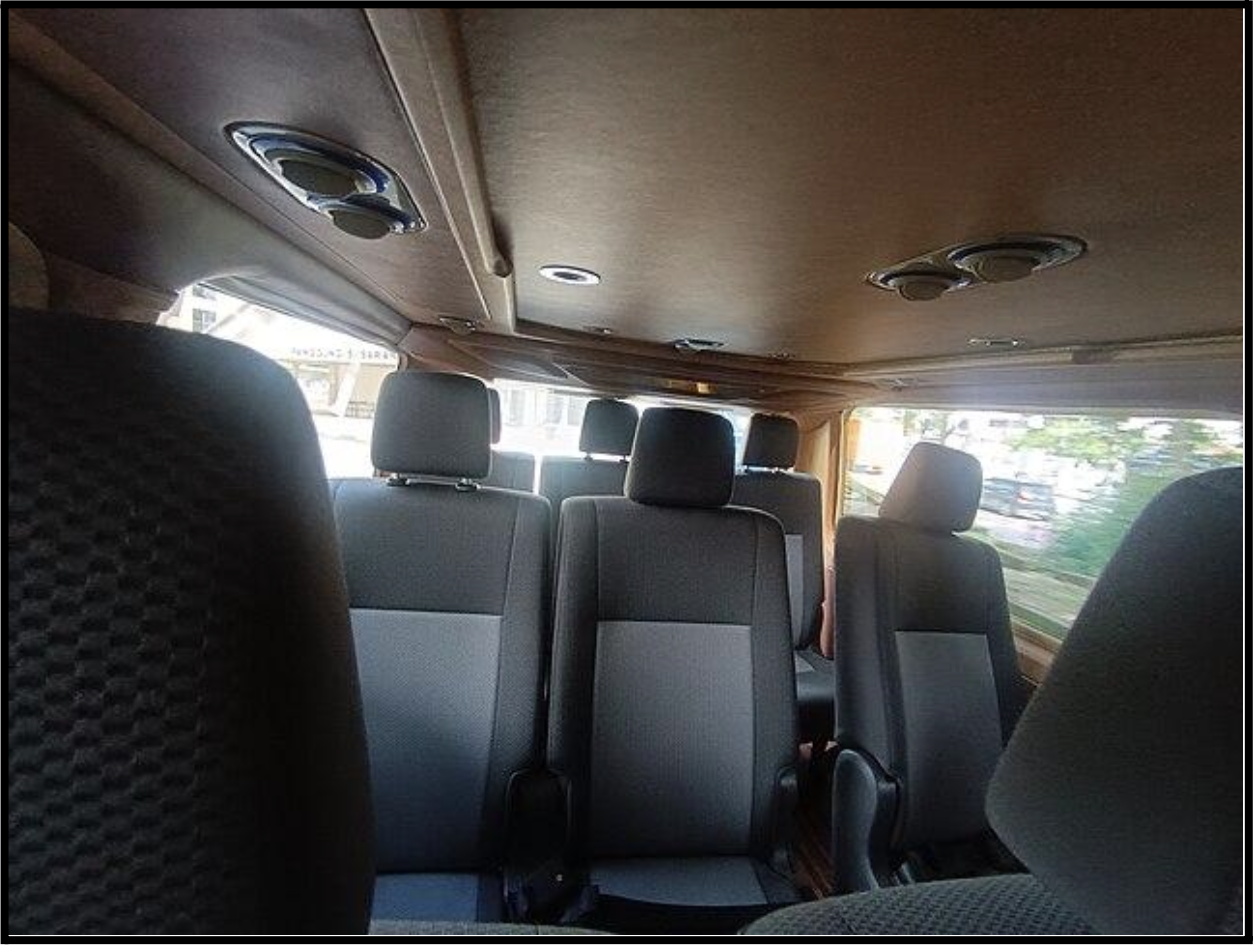
O-oh, my gosh! Finally, this iPad’s working again. Um, yeah, if y-you haven’t deciphered already by my, uh, unfortunate location inside of a moving vehicle, I’ve been kidnapped.
Yeah, I was walking along the side of the road, when this white van pulled up and offered me candy. Me, a sensible, venerable fellow, obviously said no, but it turns out that refusing to follow a stranger’s orders is considered null and void in the face of a lead pipe to the skull.
So, now with a swelling welt, broken left antler, and lowered morale, I guess I’ll just have to wait and see where, or who, I’m being taken to. I’ve been Mr. Whatshisname, and this review – and story – isn’t over yet.
Will Mr. Whatshisname escape his captors and return home? Will ‘Super SmashBros. Ultimate’s’ main campaign be fully discussed? And who exactly is this mysteriousvigil that requests our annoying narrator’s presence? All of these questions and more willbe answered in the next episode of JOYSTiCK Reviews, coming to you soon!
The Official Online Newspaper, Literary Magazine, and Video News of the Highland Park Scots







 Plaid Line + PRIZM + Scottie News