This photo was taken in Sam’s Christmas Village, Somerset, Wisconsin.
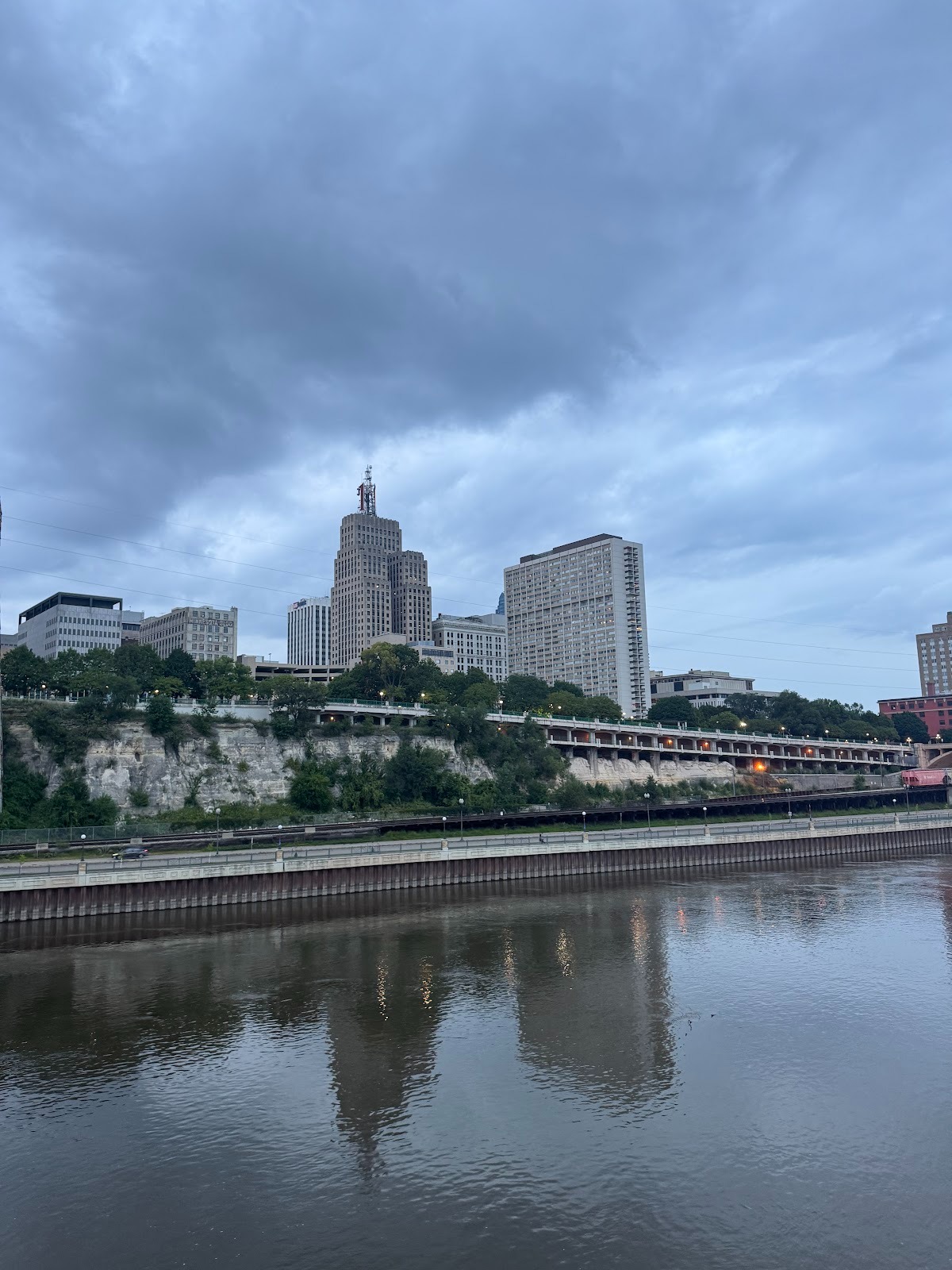
This photo was taken in Downtown Saint Paul, MN admiring the buildings next to the Mississippi River.
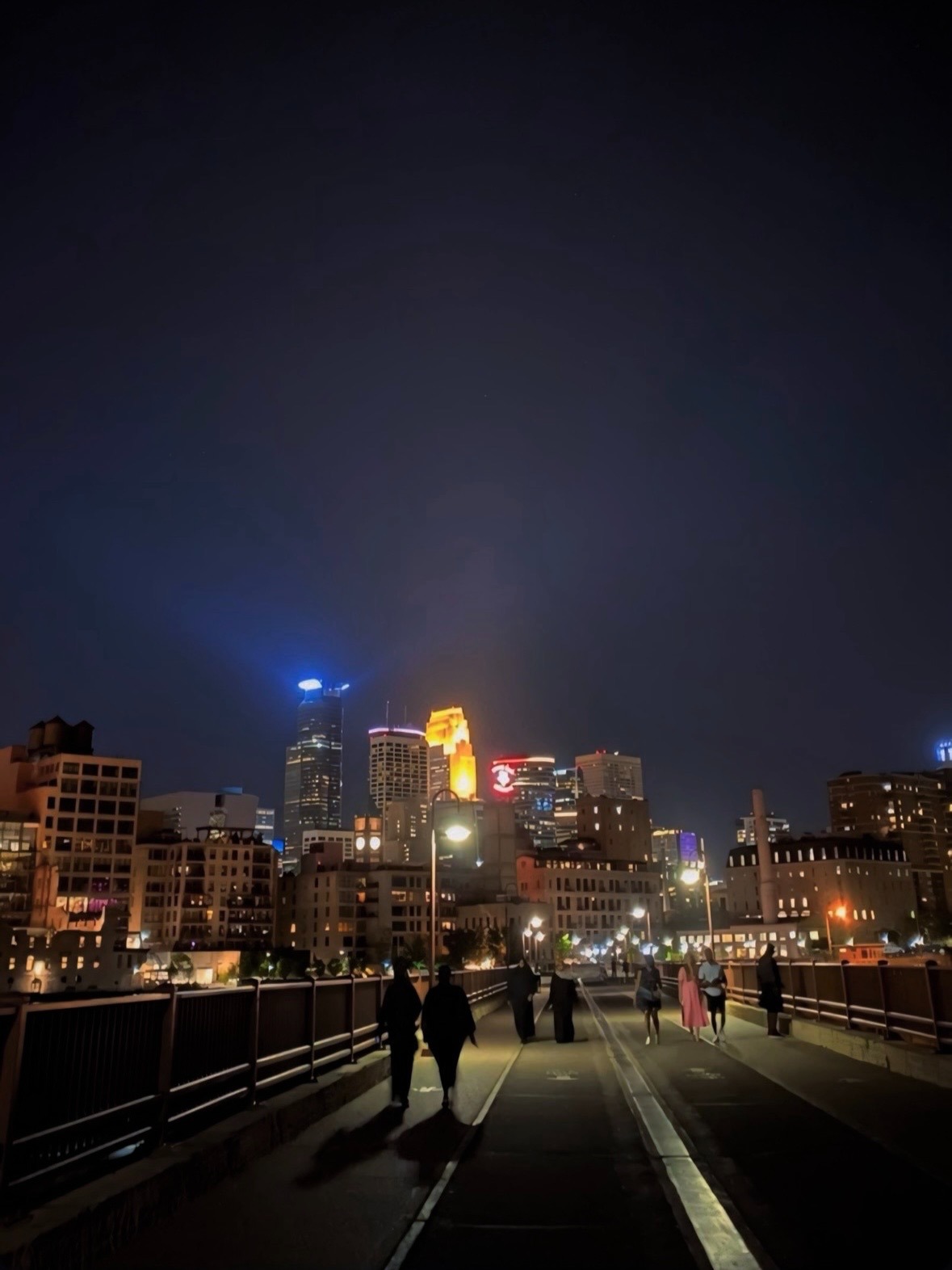
This photo was taken at the Stone Arch Bridge Downtown Minneapolis, MN showcasing the city’s architecture.
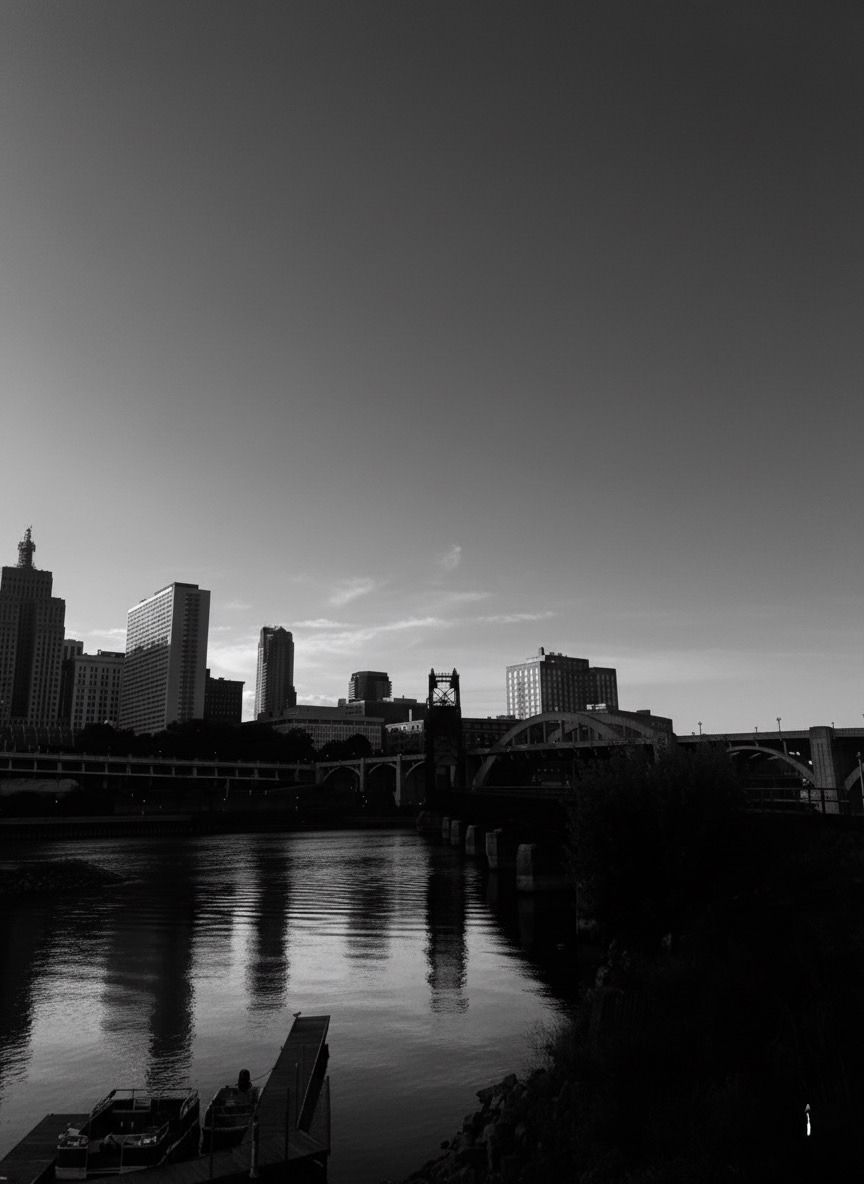
This photo shows the reflection of the city and the shadow depths of downtown Saint Paul. This photo was taken by Harriet island Region Park, Saint Paul, MN.
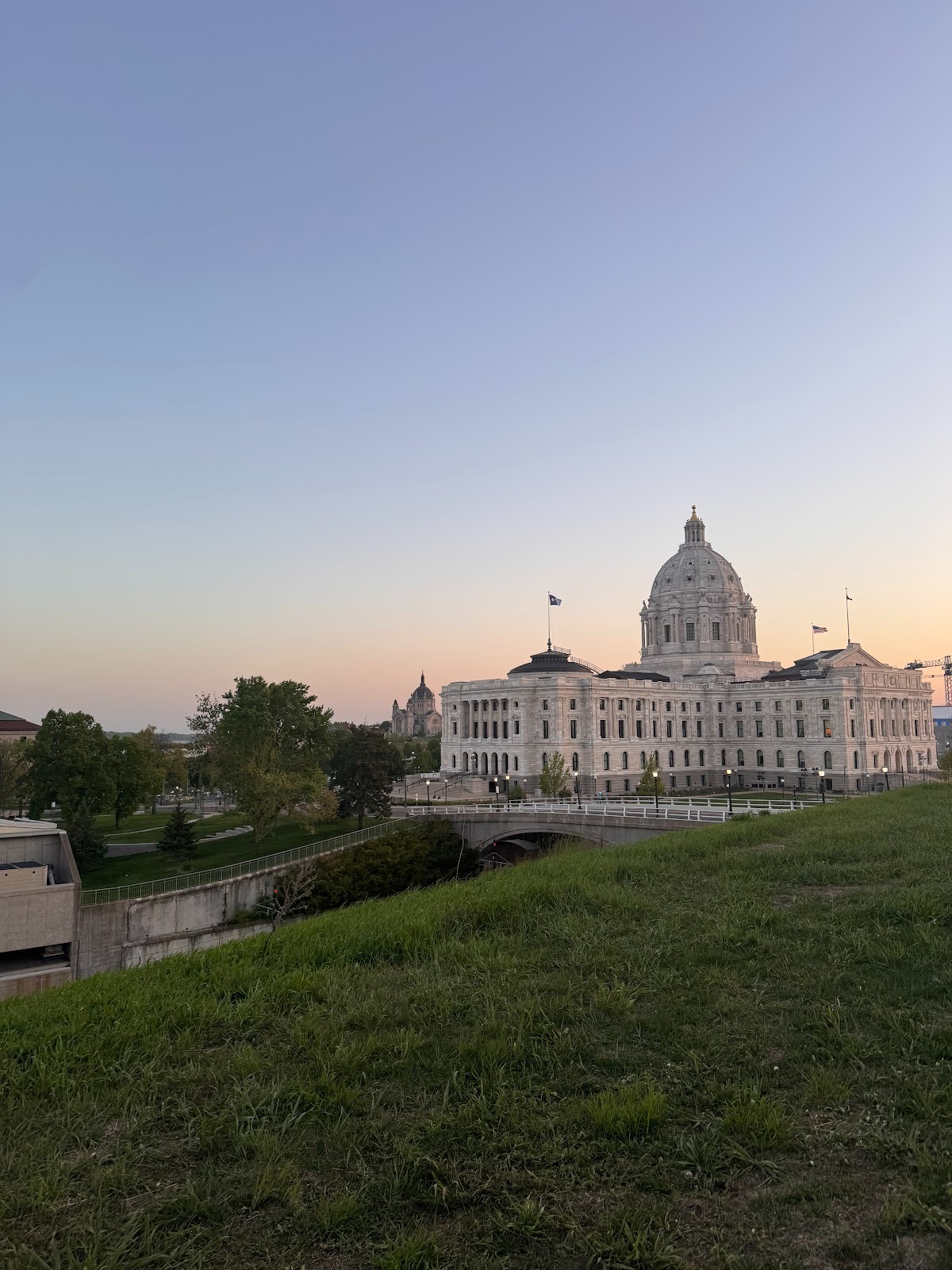
This photo was taken near Casa Gilbert Memorial Park showing the Minnesota State Capitol.Saint Paul, MN.
In the early 1900’s to 1935 St. Paul was known as a safe haven for gangsters andcriminals.
How it started– This system was known as the “O’Connor Layover Agreement”, named after the police chief at the time (John O’Connor). The key conditions of this agreement were that the criminals had to check in with police when they arrived in the city, they had to pay bribes to city officials, and lastly they agreed not to commit major crimes in St. Paul during their stay.
Gangsters who thrived under the O’Connor system– John Dillinger and “Babyface” Nelson both hid in St. Paul after their numerous bank robberies. Alvin Karpis and his gang of kidnappers also used St. Paul as a hideout. The bootlegging kingpin of the city Leon Gleckman used St. Paul not only as a hideout but a headquarters from the St. Paul Hotel.
The degradation of the O’Connor system- In 1930 Chief O’Connor retired from the police force. This left Tom Brown as his successor. Tom Brown portrayed himself as a righteous lawman who would fight crime; this allowed him to obtain the vacant police chief position. Tom Brown disposed of the O’Connor system. Instead of upholding the previous order, he allowed violent crimes by the gangsters hiding in St. Paul to go unpunished. This inevitably raised the city’s crime rate and brought more attention.
The Fall- After a famous shootout with the Karpis gang, Tom Brown was demoted after being questioned by the public and the mayor about how the gang escaped. He still retained a high office in the police department and after numerous scandals relating to the John Dillinger and Karpis gangs he was put under investigation. He was publicly disgraced but faced very little punishment. The FBI then began to hunt down the murderous gangs in the city, killing John Dillinger and many of his associates. Alvin Karpis was arrested for his crime and he served his sentence in Alcatraz. Many other corrupt officers were laid off and this led to reform and less corruption in the St. Paul police force.
By: Angelina Nguyen, Gaohlee Thao and Christine Yang
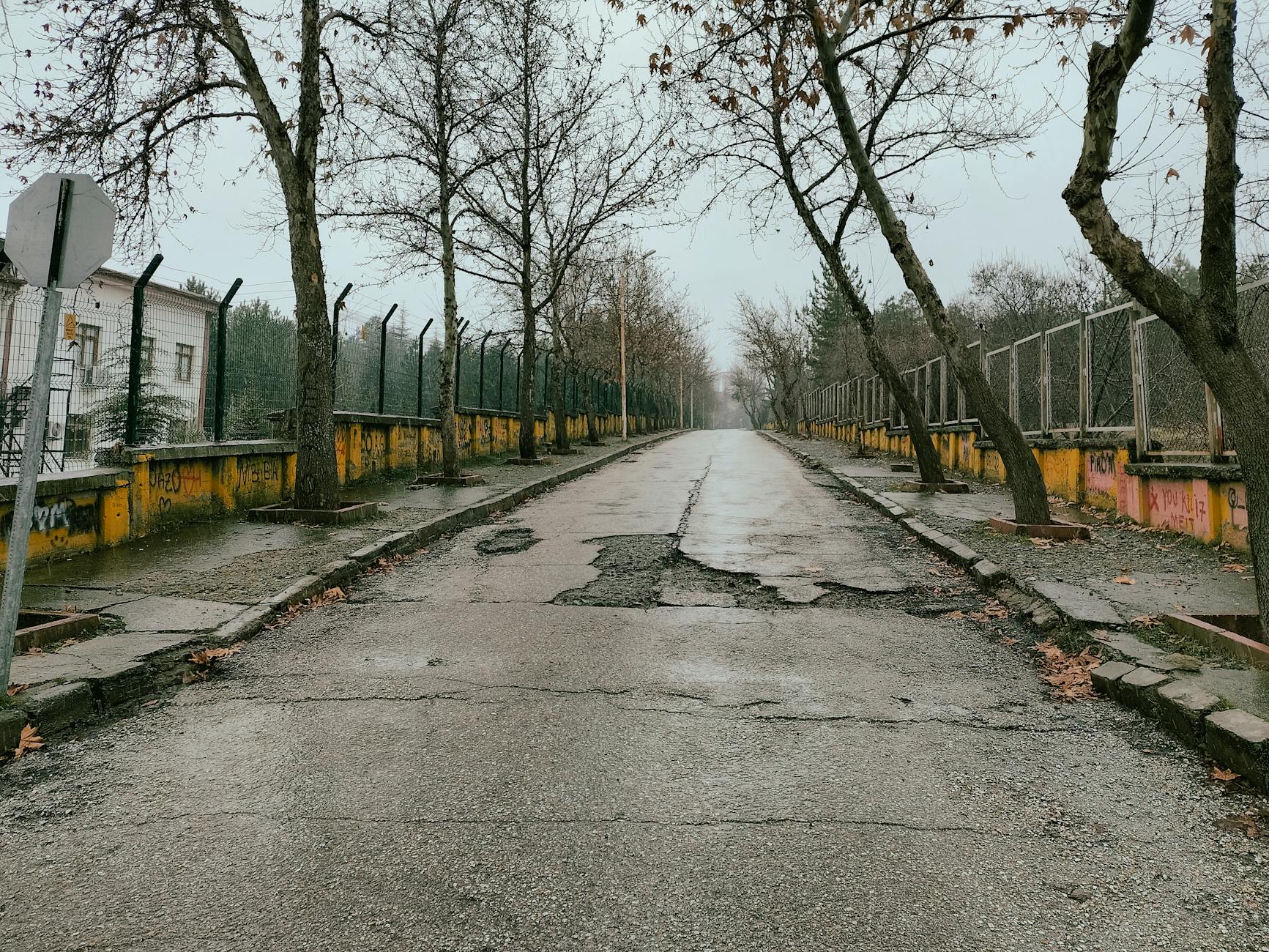
Photo by Zu00fclfu00fc Demirud83dudcf8 on Pexels.com
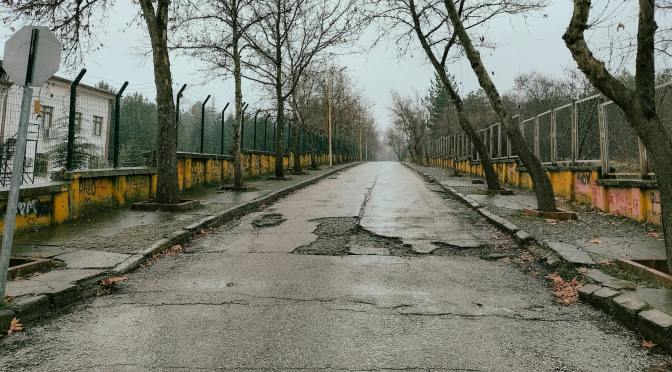
Our goal for the article is to reach local residents of the East Side of Saint Paul and spread awareness about road issues (potholes) in Saint Paul, Minnesota. Spreading awareness about road issue(s), like potholes, can also bring awareness to different areas in Saint Paul so residents across Saint Paul can also drive safely no matter the status and conditions of that area. We also want to incorporate into our article how to help fund Saint Paul with their budgeting to help with road issues and help pothole victims along with other things.
We want to address the problem that Minnesota has with roadway inconveniences that lead to damaged vehicles, injured civilians, and chaos on the road – all caused by potholes. In 2023, Minnesota was rated as the worst state for having potholes because data showed by QuoteWizard, that Minnesota had the most pothole-related complaints of any state. KSTP, a local Minnesota news outlet, created a post relating to the overall issue of potholes in Saint Paul to help inform citizens about repair programs for roads, or reimbursement for cars/injured citizens.
The reason Minnesota roads end up with so many potholes is because it goes through the freeze-thaw cycle, which usually occurs during the winter season; that is how potholes are formed. The freeze-thaw cycle happens when the temperature fluctuates repeatedly below and above 32F. The freeze-thaw cycle hollows the road, and with the added pressure, when people are driving on the weakened roads, this is why potholes look like a dent in the road. Minneapolis and Duluth, or similar cities, face the worst cases of potholes due to the fact that these cities are heavily trafficked and have to deal with harsh climate conditions. These are two main factors that contribute to deteriorating the infrastructure.
Not only are potholes an inconvenience to traffic, but they are also a hassle for residents who may have to pay repair fees on their damaged cars, paying up to $1,000. This kind of fee can be covered by insurance companies or reimbursed by the Minnesota Department of Transportation (MnDOT) by filing a complaint of negligence, but this might not be the case for some residents who are affected. They might not get either of the coverage and might have to pay from their own income. According to the U.S. Census of Saint Paul, the average income per year for a household is $35,000-$70,000, so taking some portion of this family income if they were to pay may not be possible.
Potholes have been a problem in Minnesota, but it doesn’t seem to be a huge concern, and it is not talked about enough. Considering what kind of damages and dangers are caused by potholes – that are frequent to Minnesota roads and occur yearly during the winter months, we think it is about time this topic is reviewed more and is talked about more, to help alleviate the traffic disruption. In the Saint Paul community, it is necessary to look out for other people in the community who might come into danger with potholes and will have to pay the aftermath prices, such as hospital bills or car repair fees. This will cost a lot for a low-income family who might not be eligible for car insurance coverage or reimbursement by MnDOT.
The East Side is one of the areas that struggles with poverty the most, which can be the reason why the roads are in a rougher condition than other areas of Saint Paul. That area, and others, probably are not at the same level of prioritization of road conditions compared to other areas of Saint Paul, or just cities in Minnesota in general, that don’t struggle with poverty as much. This leads to more frequent and severe potholes in those areas that are often overlooked while the “wealthier” areas are being cared for, or focused on, more. The East Side and other areas most likely wouldn’t be able to properly afford the costs of pothole recovery and/or fixing accidents that were a result of the poor road conditions. But even knowing that Saint Paul struggles with finances for road conditions, which leads to the cause of potholes or more road issues not being fixed, can help lead to more people trying to do something to fix the problem.
The average median household income in Saint Paul in 2019-2023 was $17,055, which can be a reflection of Saint Paul’s funding or budgeting. This ties back to institutional oppression because those in low-income areas will most likely have a difficult time finding access to affordable healthcare or insurance to cover possible damages to themselves or their vehicles caused by these harsh road conditions.
Poor road conditions also get in the way of people getting access to education, healthcare, and employment, as many people face delays or have difficulty getting from one place to the other on roads that are poorly maintained. This impacts low-income and minority groups more as they may not have many options for transportation. Also, the costs of car repairs as a result of potholes can be a significant burden for these families, taking money away from other necessities. Whereas areas with higher incomes would have an easier time with being able to afford and get access to the right resources or help that they would need from any damages.
Institutional oppression manifests in budget allocations, with marginalized communities often receiving less funding for road work, paving, and timely repairs. In turn, this neglect influences cycles of poverty, as deteriorating roads contribute to unsafe driving conditions, car damage, and hindrances to economic mobility. Furthermore, these potholes can lead to environmental problems, as the streets in these communities may not be fit to handle certain climates like flooding, stormwater, and other weather conditions that can make existing inequities worse. Potholes deepen disparities, impacting transportation, health, safety, and community resources.
By now, you probably already know that Donald Trump has won the 2024 US Presidential election. What you might have missed, however, are the other races that defined this election.
The president cannot make laws and do things all on his own. He needs to work together with both houses of congress, the House of Representatives and the Senate.
These two chambers are responsible for creating the laws that the executive branch is in charge of putting into place. In addition, the president often has to petition congress in order to get his agenda passed and put into effect. For this reason, it is much more difficult for the president to enact their agenda if the party in charge of congress does not align with the president’s party.
Each state has two senators, who serve six year terms. Every two years, roughly a third of the senators are up for election. In this election, one of Minnesota’s senators, Democrat Amy Klobuchar, was up against Republican challenger Royce White. The Associated Press has called this race for Klobuchar, but they have also declared that Republicans will take a majority in the senate, having flipped a number of other Democratic seats. This is good news for president-elect Trump, since it means the senate will align with him as he attempts to enact his agenda as president.
In addition, the nation is divided into 435 congressional districts, each having one representative. These districts are distributed roughly proportionally to population, and redrawn every ten years in order to better represent groups of people as demographics shift. Highland Park is a part of congressional district MN-4, which has been represented by Democrat Betty McCollum since 2001. She has been elected to her thirteenth term in congress, easily defeating Republican challenger May Lor Xiong. AP has also projected that Republicans will win the house, having officially secured the 218 seats required for a majority. This is good for President elect Trump, as the house aligns with his party making it easier for him to pass legislation he wants enacted.
In addition to the federal government, each state also has their own government, which passes laws that only affect us in that state. Minnesota’s government works similarly to the federal government, with a governor and two chambers of congress. The Minnesota House of Representatives has elections every two years, while the Minnesota Senate holds elections every four years, with election years being the non-presidential even years.
This year, state senator Kelly Morrison stepped down from her position to run for US congress in district MN-3, which she has now won. This caused a special election to occur in her district, which had the potential of flipping the state senate. The Minnesota Star Tribune has called this race for DFL candidate Ann Johnson Stewart, meaning the DFL will retain control of the senate in Minnesota. Meanwhile, the state’s House of Representatives appears to be deadlocked with both major parties having 67 seats, but a recount of two seats could narrowly give the house to the republicans. If this occurred, it would make things difficult for our democratic governor.
There were also a few ballot measures in Minnesota and across the country. In Minnesota, the state asked whether state lottery funds should continue to be used to protect the environment, which passed with 77.5% of the vote.
Here in Saint Paul, two additional referendums were included. The first asked whether city property taxes should be increased to pay for childcare funding. This failed with 59.9% of the vote, according to the Star Tribune. The other ballot measure, asking whether city elections should be moved to presidential years, passed with 60.7% of the vote.
Two soldiers met at Fort Snelling in the late 1830s. One of which was Edward Phalen. He wasn’t known to be trustworthy and had a criminal past, but he was going to be discharged at the perfect time. The United States had just signed a treaty in 1837 allowing White settlers to occupy lands on the Mississippi River across from Fort Snelling. Phalen saw this opportunity, but was short on cash, so he enlisted his friend Hays.
Hays was the polar opposite of Phalen: affable, trustworthy, cordial. Hays however was slated to be discharged much later, and by that time all the best land would be taken. Thus, the two of them decided to work together. According to Minnpost.com “Phalen left the army on June 8, 1838. He then rushed to claim two land parcels in what later became downtown St. Paul, along the Mississippi from the foot of Eagle Street to the Robert Street Bridge.”
Once Hays was discharged on April 25th, 1839, he and Phalen decided to begin farming. Allegedly, multiple neighbors heard them get into many heated arguments throughout the next few months. Hays later disappeared in September of 1839. According to Phalen, he had left to find a lost calf. However, Hays was found dead, floating on the Mississippi River three weeks later.
According to Mprnews.org, Henry Sibley, who would later become the first governor of Minnesota, was tasked with investigating the case. Soon he came to the conclusion that Phalen was behind it. Phalen was soon arrested and tried for the murder, making it the first murder in Minnesota to make it to the US courts. Phalen lied in his testimony and his story contradicted what had happened, but against all odds he was found not-guilty due to a lack of evidence.
According to Mprnews.org, it was reported that a Native American had made a deathbed confession admitting to the murder of Hays a couple years later, but most people still believe Phalen was behind it.
Although Phalen was almost certainly a murderer, many things in the Saint Paul area were named after him due to his early land claims. Some of these being: St. Paul’s Lake Phalen, Phalen Creek, Phalen Boulevard, and the Payne-Phalen neighborhood. People have objected to these names since as early as 1876. Williams, the 19th century historian, wrote, “It is a disgrace that the name of this brutal murderer has been affixed to one of our most beautiful lakes.”







 Plaid Line + PRIZM + Scottie News