Tag Archives: social-media

Effects of phones on people’s education

By: Chloe Rocha

The phrase “It’s because of your phone” is something that is commonly heard amongst adolescents. In some cases, that phrase can apply, but in others it is not necessarily accurate.

This phrase however, can apply to the education of kids during school. Cell phones have been something that is used in our day to day lives because they provide convenience and also connectivity. But at the same time they can also be proven to be a distraction while in the classroom.

There have been proven to be many negative effects of cell phone use while in the classroom, and according to an article by ‘Why Edify’, these are the top 10 reasons:

  1. Distraction
  2. Cyberbullying
  3. Academic dishonesty
  4. Social isolation
  5. Physical health issues
  6. Sleep disruption
  7. Privacy concerns
  8. Inequality
  9. Reduced physical activity
  10. Addiction

Distraction:

Decreased focus and attention in the classroom can occur because students become distracted by their phones, whether it be social media, or playing video games. These platforms are made by design to hook the user and keep them entertained. This can also be known as “doom scrolling” in some situations.

Cyberbullying:

In some cases students use their cell phone to send hurtful messages. Many adults don’t know how big of an impact cyberbullying can be and how frequently it is seen in classrooms. Nearly 42% of kids have been bullied online, according to an article by Annapolis, MD. When these children experience cyberbullying by their own classmates, it can cause them to be fearful or anxious about going to class and in the long run can have harmful effects on their education.

Academic dishonesty:

It is a very well known fact that AI has been evolving and also becoming more frequently used during people’s day to day life. Specifically in class, students have become more reliant on using AI to guide them in their class work. A global survey, that was conducted by Statista, showed that 86% of students used AI in the year of 2024. Students may also cheat during exams or assignments, simply because they have access to the answers or the information on their phones.

Social isolation:

When students use their phones excessively, it can cause them to spend less time interacting face-to-face with their own peers. Face-to-face interactions are crucial during a child’s adolescence because it allows them to develop many crucial social skills. Some of these skills include empathy, effective communication, the understanding of nonverbal cues, peer dynamics, and forming a strong sense of identity.

Physical health issues:

When cell phones are used excessively, they can begin to cause physical health problems, such as poor posture, eye strain and many other health issues.

Sleep disruption:

Cell phone use before going to bed can cause disruptions to people’s sleep patterns. When sleep patterns are disrupted, it can lead to fatigue and also a decrease in their academic performance. Sleep is important because it improves your brain performance, your mood, and also your health.

Privacy concerns:

Students may share their personal information or photographs and this can raise concerns about their privacy.

Inequality:

In many classes, a digital divide can be formed among students because not everyone may have access to a cell phone. This can cause students to feel left out from their peers.

Reduced physical activity:

This issue applies to both in school and out. During school, cell phones can discourage students from engaging in physical activity during recess or during their breaks. Outside of school, when a child has access to a cell phone, they often don’t release their energy in a physical way, like going outside, instead they go on their phones while in the house.

Addiction:

As mentioned before, many apps on your phone are by design very addictive. Mobile apps can stimulate the release of dopamine and this leads to the formation of habits. Some very popular apps that you may use that are also addictive are Facebook, Instagram, Snapchat, Youtube, and TikTok.

For more information, please visit:
How “Brainrot” and “Doomscrolling” affect your brain

By: Karl Salkowski

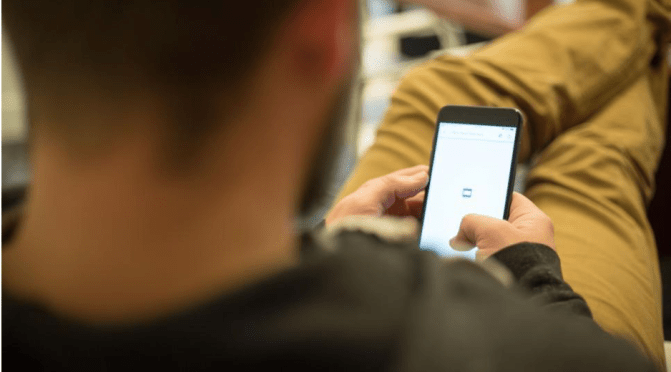
(Image credit: freerangestock)

Oxford has recently announced “brainrot” as the word of 2024. But what is brainrot? Well, the dictionary defines brainrot as “the supposed deterioration of a person’s mental or intellectual state, especially viewed as the result of overconsumption of material considered to be trivial or unchallenging”.

The term brainrot is not a recent term. The word has been used for over 20 years. Originally, brainrot was used to describe the use of email. According to Theguardian.com, email’s “constant cognitive overload had a more negative effect than taking cannabis, with IQs of participants dropping an average of 10 points.” If email can have such drastic effects, it’s hard to imagine how damaging short form online content and electronic devices such as smartphones can be.

Over the past couple of years more and more information has come to light about the effects of consuming large quantities of short form content. Institutions such as the University of Oxford and Harvard Medical School have found that consuming this content in large quantities can shorten our attention spans, weaken memory, and mess with our cognitive processes.

According to Dr. Gloria Mark, a professor at the University of California, attention spans have drastically shortened over the past 20 years. In 2004 the average attention span was 150 seconds, by 2012 the average was 75, and by 2018 it was down to 47 seconds. This massive decline is partly due to the rise of social media.

According to Theguardian.com, the average Gen Z teenager in the UK has an average screen time of somewhere between 5 ½ and 6 ½ hours every day, with the average adult spending 4 hours online every day.

Doomscrolling is a somewhat newer phenomenon. Doomscrolling is defined as, “the excessive consumption of short-form videos or social media content for an excessive period of time without stopping.” The term began to gain popularity in 2020 partly due to the COVID-19 pandemic.

Doomscrolling is a form of internet addiction. An estimated 31% of Americans doomscroll on a regular basis. This increases greatly among young people with an estimated 51% of Gen Z addicted. Social media plays a significant role, allowing users to infinitely scroll through short form videos uninterrupted.

Multiple medical institutions have found that doomscrolling can worsen depression and anxiety. Overall, doomscrolling and brainrot have contributed to worsening mental health among teens and adults. It might be time to put down your phone.

If you want to learn more about the effects of social media, please go to:

The ban of TikTok

By: Samson Belihu

Hello, and today I will be talking about the ban of TikTok that’s GOING to happen in the U.S.

You may ask why the U.S. government wants to ban TikTok. Well, let me tell you.

The main concern that the U.S. recognizes is that TikTok collects a lot of data on users, including location, browsing history, and even device details and since it’s owned by a Chinese company, critics worry that this data could be shared with the Chinese government. The government could then use that information for spying or to influence American politics. Though TikTok denies sharing data with China, U.S. lawmakers point to China’s laws that could force companies to cooperate with the government. Many of the lawmakers are politicians, particularly from the Republican Party.

Another worry is that TikTok could spread fake news or propaganda, affecting elections or creating social unrest. Though TikTok has taken steps to try and stop the spread of misinformation, many U.S. lawmakers still see it as a national security threat.

The push for banning TikTok mainly comes from conservative politicians like Senators Josh Hawley, Marco Rubio, and others, who argue the app is a threat to national security. They worry that TikTok could be used for spying or spreading fake news for the Chinese government.

TikTok has been told to either sell to an American company, create a new U.S. controlled TikTok, or make sure they store all data safely and away from China. If they don’t do one of those things, they could face a ban in the U.S. The owner tried to file an appeal to the Supreme Court, but failed due to the concern of the information that could potentially be sent back and forth.

In my opinion I find myself stuck between both of their sides.

If TikTok is a way to sell people’s info to the Chinese government I find that troublesome, but I also think TikTok has become a way for people to express themselves and find support, and if it’s banned all of it will be taken away. People’s lives have been changed for the better due TikTok

Lawyer X

By: Baarika Suresh

In an effort to try to bring certain legal cases to light, this is the 1st of a possible series of articles on cases that deal with legal ethics.

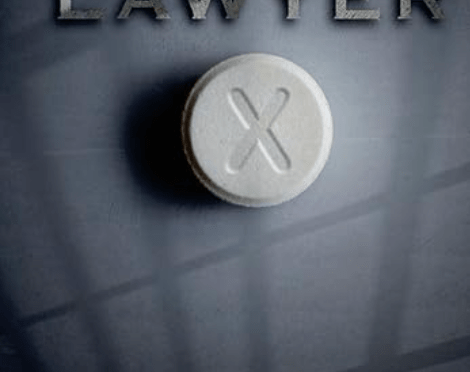
Cover of a book that was written about this case

A scandal like no other, Lawyer X was a royal commission in Victoria, Australia created to examine the actions of Nicola Gobbo and the Victorian police working as a lawyer and acting as a registered informer. The police fought hard to keep Gobbo’s identity a secret and she was a target for the clients she defended, but also did not want to jeopardize their high profile convictions. The scandal took many years to play out, and left the premier of the time, Daniel Andrews, with no choice but to call a royal commission into the events.

In response to the royal commission judgment by Ms. Margaret McMurdo it was revealed that Lawyer X received 3 million dollars plus other payments from Victoria Police for providing information about her clients whilst she was representing them. McMurdo found that police “tolerated bending the rules to help solve serious crime” and that the police claimed that the reason they waited to get legal advice on Gobbo was because “they did not want to be told they could not use Gobbo the way they intended”.

The fact that Gobbo was representing her clients while also informing about them clearly violates attorney client privilege, making most of the cases an unfair trial. She made a name for herself during the Melbourne gangland killings, but was first registered as an informer when she was just a law student, giving the police information about her drug dealer boyfriend/housemate. She was also a registered informer on a colleague who she claimed was laundering money.

This brings the question of ethics to mind: Where is the bar set that violating attorney client privilege is ok? In response to the royal commission, policies were discussed requiring those who might come into the possession of legally privileged information, to be approved by the Victoria Police ethics committee before being registered as an informer.

In total, the royal commission heard from 82 witnesses, including over 50 police officers during the 129 days of hearings. The full transcripts of the royal commission are available online.

For more information, please visit: