Tag Archives: science

The life cycle of stars

By: Hannan Mohammed

Did you know that stars have a life cycle the same way that humans do? While stars can live for millions or even trillions of years—much longer than a human’s lifespan—they have their own stages of life too; they grow and die like us. So, what is the life cycle of a star?

To begin with, all stars start in large clouds of gas and dust called molecular clouds, or nebulae. These clouds can range from 1,000 to 10 million times the mass of the Sun and they can span up to hundreds of light-years. In these clouds, gas clumps together due to the low temperature, and these clumps collect more matter and gain more mass, which strengthens their gravitational force. However, some of these clumps will collapse from gravity while friction heats the matter up, leading to the formation of a new star, called a ‘protostar’. Several of these protostars can be formed in one molecular cloud.
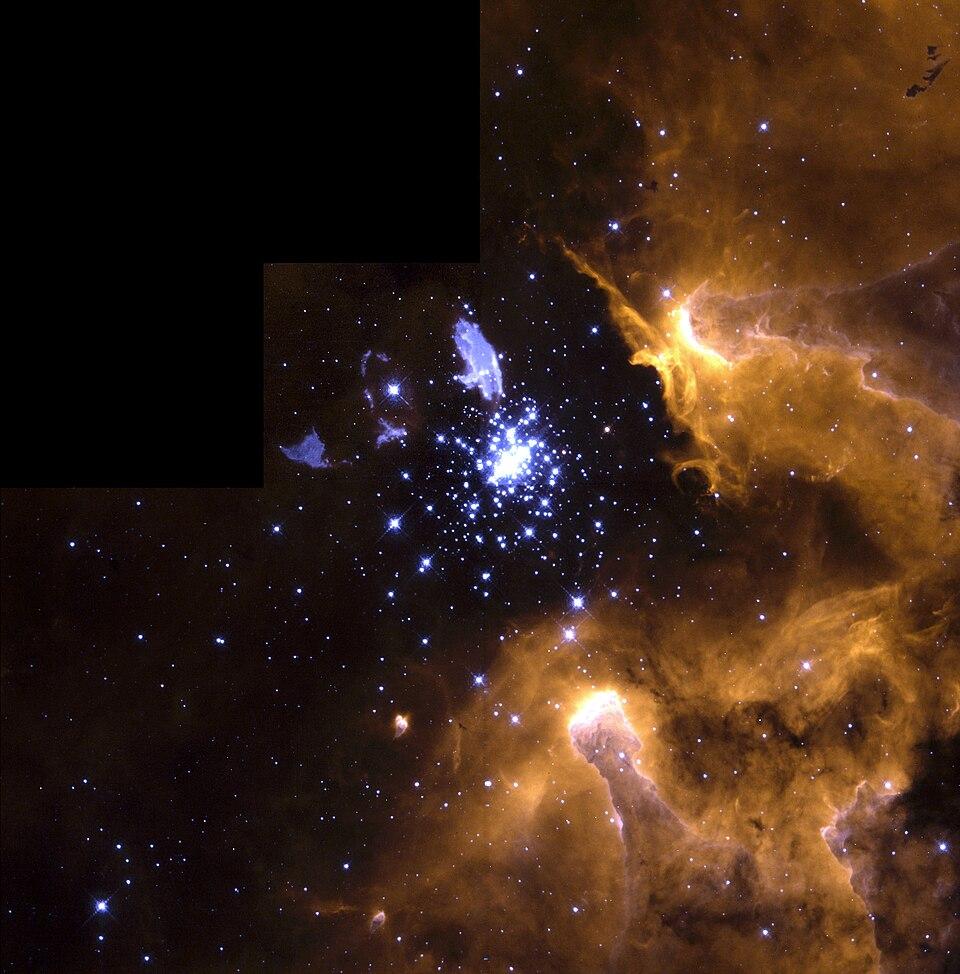
Image by NASA via Wikimedia Commons

After the protostar’s creation, most of its energy comes from the heat released due to its earlier collapse. However, the mean temperature of the star isn’t high enough for nuclear fusion to occur yet. This is called the T-Tauri phase, lasting for around 100 million years before the star enters its longest life stage: the main sequence.

In the main sequence phase, the star’s core temperature is high enough for nuclear fusion to occur by the higher temperature and immense pressure squeezing the nuclei of hydrogen atoms together to form helium. The energy released from this process heats up the star and prevents it from collapsing due to gravity. The Sun is currently in this phase.

A star’s mass determines its lifespan; lower-mass stars will burn longer and thus, live up to trillions of years. Higher-mass stars, however, require more energy to keep itself from collapsing, and so they burn faster and can live up to only a few million years. A star’s mass can also determine how it will die later on.

For all stars, the beginning of the end of a star’s life begins when their cores no longer have any hydrogen to fuse into helium. The core will start to collapse due to the lack of energy balancing gravity’s tendency to pull matter together, while the star starts to puff up from the increased temperature and pressure. From this point, however, the mass of a star is the main determining factor in how a star will die.

With a lower-mass star, its core will fuse helium into carbon as its atmosphere expands, and it either becomes a subgiant or a giant star. Eventually, all of the star’s outer layers will blow away, create a cloud of dust and gas called a planetary nebula, and leave behind its core, now called a white dwarf. Its size is about the same as Earth’s, and it’ll cool down over billions of years.

Higher-mass stars, however, will have a more explosive end. A higher-mass star’s core will begin to convert carbon into heavier elements like oxygen and magnesium after running out of hydrogen to fuse into helium, which becomes its fuel. While converting more elements produces energy for the star, this isn’t a permanent solution. In a few million years, once a star starts fusing silicon into iron, it will run out of fuel in just a few days since it will lack the energy required to fuse iron into a heavier element.

The core collapses until forces between the nuclei push and rebound, causing a shockwave that moves outward from the star and creates an explosion called a supernova. The explosion moves the star material far away into space, leaving behind the core, which can either implode into a neutron star or become a black hole.
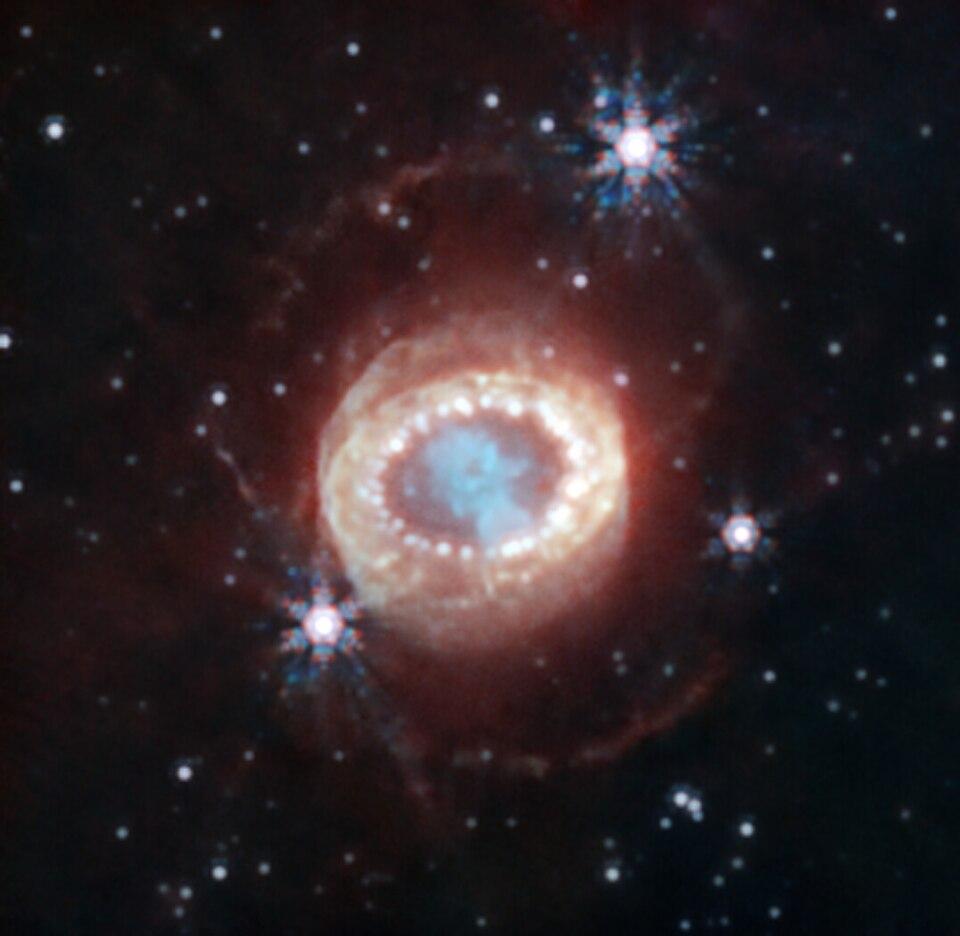
Image by NASA via Wikimedia Commons

For more information, please visit:

Why are our winters getting warmer?

By Hannan Mohammed

Image by Kenneth Allenvia Wikimedia Commons

In recent years, you may have noticed that our fall season has become much warmer, and so has our winter season as well—snow comes later in the year, and according to an article by NPR, the 2023-24 winter season saw the 48 lower states in the U.S. had their warmest winter in 130 recorded years. And in the U.S., winter is the season that’s warming faster than any other. However, why is this change occurring?

The main cause of these warmer seasons is climate change, and in particular, global warming. While Earth’s climate has changed across time, with ice ages and warmer periods, this current global warming is caused by human activity; specifically, how we add heat-trapping gasses to the atmosphere. When we do this, we produce gases such as carbon dioxide that come into the atmosphere and trap more of the Sun’s energy on Earth, which is warming up the planet. According to NASA, Earth’s average surface temperature has increased by 2 degrees Fahrenheit since the late 19th century, caused mostly by carbon dioxide emissions.

As these average temperatures rise, the coldest season is being affected the most. According to the Climate Reality Project, average winter temperatures across the 48 contiguous states have increased by 3 degrees Fahrenheit since the pre-industrial era. Because of this, many areas are beginning to see warmer winters overall. But how else is climate change affecting winter weather?

One of the other effects of climate change on winter, besides warmer overall temperatures, is that there’s more precipitation during the season, which can either be rain or snow. This happens because a warmer atmosphere can hold more moisture within; this excess moisture is released from the atmosphere as precipitation.

Another effect of climate change on winter is that severe winter storms, such as ice storms and blizzards, are becoming both more frequent and more powerful. This happens because there’s increased energy in the atmosphere from the Earth’s general warming, which can make these events more volatile. Furthermore, a powerful air current called the jet stream is starting to change easier. Because it can influence weather patterns, its shifts may lead to sudden changes in both temperature and precipitation.

For more information, please visit:

About comets

By: Hannan Mohammed

Image by Philipp Salzberger via Wikimedia Commons

What are comets?

Comets are bodies made of ice covered in dark organic material, including dust. These comets are leftover from the dawn of our solar system about 4.6 billion years ago, and it’s speculated that comets may have brought water and organic compounds to Earth and other planets.

There’s a belt of icy bodies beyond Neptune where dark comets orbit the Sun around Pluto. Some of these comets are pushed closer to the Sun from gravity in other orbits, and they take around 200 years to orbit the Sun. These are called short-period comets, and their appearances are easier to predict. However, there are also long-period comets; these comets come from a region called the Oort Cloud about 100,000 AU (astronomical units) away from the Sun. Long-period comets can take about 30 million years to complete just one orbit around the Sun.

But how are comets structured? Each comet has a nucleus that’s a few miles wide; this part contains ice, frozen gases, and some embedded dust. As a comet orbits around the Sun and gets closer to it, the comet heats up and develops its own atmosphere, which is called a coma. As the comet heats up, the ice in the nucleus becomes a gas and makes the coma grow in size, and the coma can extend to thousands of kilometers. Pressure from sunlight and solar winds can also blow gas from the coma and dust away, creating a trail or a ‘tail’ on the comet.

Notable Comets

Image by NASA/Kuiper Airborne Observatory via Wikimedia Commons

A particularly famous comet is known as Halley’s Comet, which has been observed for around 2,000 years. It’s named after English astronomer Edmond Halley, who accurately predicted that the comet would return in 1758, thus proving that comets orbit around the Sun and don’t pass through the solar system once, which was a popular belief beforehand. Halley’s Comet takes 76 years on average to orbit the Sun, which makes it a short-period comet. It was last seen from Earth in 1986, and it will likely be next seen in 2061.

Image by International Gemini Observatory via Wikimedia Commons

One notable comet right now is the 3I/ATLAS comet, which NASA first made observations on in July 2025. It is named after the ATLAS (Asteroid Terrestrial-impact Last Alert System) telescope that first recorded the sight of the comet. It doesn’t follow a closed orbit around the Sun, and its origins are outside the solar system, making the comet interstellar. The 3I/ATLAS comet reached its closest point to the Sun on October 30, 2025, at which point it became too close to the Sun to observe. However, it’s expected to reappear on the other side of the Sun in early December 2025, and it will be able to be observed again.

For more information, please visit:

What is the p53 gene?

By: Hannan Mohammed

According to the National Institute of Health, the human body has over 30 trillion cells, each in their own cycle of growing, dividing by mitosis or meiosis, dying, and being replaced. There are around 200 different kinds of cells in our bodies, but during the cell cycle, any one of these cells could begin to replicate uncontrollably, leading to cancer.

However, there is a small gene in the nucleus of each of these cells that can protect our cells from dividing uncontrollably and becoming cancerous tumors. This is called the p53 gene.

What is the p53 gene?

The p53 gene, or the tp53 gene, is located on chromosome 17, in the nucleus of many of our cells. The gene specifically controls instructions that are required to make a protein named tumor protein p53, which binds directly to the DNA in the nucleus of the cell. But, what does the protein itself do?

Image by Thomas Splettstoesser via Wikimedia Commons

What it does and why we need it

As implied in the name (tumor protein p53), this protein helps to prevent the creation and growth of tumors by controlling cell division to ensure that damaged cells don’t divide uncontrollably.

Because the p53 protein is bound directly to the DNA in each cell, it can detect whether a cell’s DNA is damaged. A cell’s DNA can be damaged by many things, including radiation or exposure to toxic chemicals, which can cause the processes of cell growth and cell division to go wrong; this is where the p53 protein becomes extremely important.

The protein plays an important role in determining how the regulation of damaged cells will occur. For example, if the DNA in the cell can be fixed, the p53 protein will activate other genes to repair the damaged DNA. However, if the damage to the DNA can’t be repaired and the cell still poses a risk of uncontrollable growth and division, the p53 protein will send signals to tell the cell to begin the process of apoptosis, or self-destruction.

The p53 gene and protein’s importance lies in its function of regulating cell division, which is crucial in preventing many types of cancer throughout our bodies. However, some people have mutations of the p53 gene.

What this means is that the p53 protein no longer functions as it should, which can lead to fast and unregulated cell growth and division without the protein to prevent this. These non-inherited (or somatic) mutations are linked to half of all cancers. An inherited mutation can lead to a cancer syndrome called Li-Fraumeni syndrome, which increases a person’s risk of developing multiple kinds of cancer, such as breast cancer and bone cancer.

For more information, please visit:

Empty nets and a dying ocean

By: Maya Vossen-Nelson

Image created with Canva

The ocean absorbs large amounts of heat without a large increase in temperature. Given this property, the ocean has always played a central role in stabilizing Earth’s climate system, but in the past 100 years humans have created a climate that produces heat at an intensity that has overwhelmed the ocean. According to the US National Oceanic and Atmospheric Administration (NOAA), the most telling sign of the overworked oceans is that over the past 100 years, the average global sea surface temperature has increased by approximately 2.2 degrees Fahrenheit each decade. This is significant because a large amount of heat needs to be absorbed by the ocean for water temperatures to rise even slightly.

According to NASA, 90% of global warming is occurring in the ocean. The ocean is not able to keep up as efficiently as it used to and is creating devastating consequences. 

When the ocean temperatures begin to rise, this is an indicator of extreme levels of carbon and methane in the atmosphere that are trapping solar rays and damaging the ozone, thereby trapping heat in the Earth’s atmosphere. The levels of carbon dioxide dissolving from the atmosphere into the ocean have become so high that the water has become acidic.

Fisheries and fishing boats are reporting more frequent marine heat waves and whole fish community die-offs. At the very least, in response to the warming sea temperatures, many fish populations are migrating to colder waters. This has become so noticeable that many fishing businesses are being forced to change their fishing strategies and some are even considering calling it quits.

A perfect example is the seafood industry on the east coast. Boston NPR station, WBUR, reports that “The Gulf of Maine is warming faster than most of the world’s oceans. As a result, iconic New England species like cod and lobster have shifted north or moved deeper into the ocean in search of colder water.”

Without any interventions, it will only be a matter of time before the world’s fishing industry is turned on its head.

Daydreaming: The reason behind it

By: Fletcher Pike & Hermekay Dehaney

Image generated by ChatGPT

Daydreaming can be defined as “[A] series of pleasant thoughts that distract one’s attention from the present.” We’ve all been in a situation where you have zoned out, lost in thought, completely unaware of what’s happening around you. Daydreaming manifests in different ways and constantly surrounds our mind daily, whether thinking about an old memory, imagining a future conversation, or just making up a random scenario in your head.

People typically spend up to 30% of their lives engaging in daydreaming. Although daydreaming can sometimes distract us from our tasks, it is still a part of human nature.

But why do we daydream?

Research has revealed why our mind wanders. The regions in our brain, made up of the medial prefrontal cortex, posterior cingulate cortex, and temporoparietal junction make up the Default Mode Network (DMN). The DMN becomes active and consumes energy when the brain is at rest. According to Scientific American, it says, “[M]ost things we do consciously, be it sitting down to eat dinner or making a speech, mark a departure from the baseline activity of the brain default mode.” The DMN is also involved in processing memories and scenarios.

The hippocampus is a brain structure that involves the formation of our memories. Essentially, it helps store your memories. When you daydream, you activate the hippocampus, which is why we may sometimes play back memories when we daydream.

The benefits of daydreaming

Daydreaming is considered a normal habit and can even be beneficial for creativity. Those who daydream will likely have a more creative outcome because they can process their thoughts and explore other ideas. Many people get their creative ideas as a result of daydreaming, such as book ideas, drawings, or even articles.

Daydreaming can also help in problem-solving situations by being able to concentrate on the task at hand by blocking out distractions. It can help accomplish a goal by focusing on finding a solution quicker as your brain is actively searching for a way to solve the problem.

Daydreaming itself can reduce stress and anxiety as daydreaming is a period of relaxation. When you daydream, you allow your mind to cancel out troubling thoughts and worries that you might have. It can also help boost your mood if you’re having a rough day.

Downsides of daydreaming

It is estimated that 2.5% of people experience excessive daydreaming, also known as maladaptive daydreaming. Maladaptive daydreaming occurs when a person experiences excessive daydreaming that can interfere with their everyday life and can have serious consequences. It is an unhealthy coping mechanism for issues such as anxiety or severe stress. Maladaptive daydreaming usually includes highly vivid and prolonged daydreaming that can go on for hours on end.

Maladaptive daydreaming can be possibly triggered by a history of childhood trauma or abuse, or having traits such as high creativity. Maladaptive daydreaming itself has symptoms that can overlap with other mental health conditions, such as OCD (Obsessive-compulsive disorder) and ADHD (attention-deficit/hyperactivity disorder). As a result, the overlapping of these symptoms makes maladaptive daydreaming harder to recognize and treat.

Overall, daydreaming has both positive and negative effects that can vary from person to person. Daydreaming is a unique brain function that helps us express creativity and our thoughts. We hope that this article provides you with some interesting information about daydreaming and the reason behind it.

For more information, please visit these websites:

The amazing genetic mutations

By: Maeve Brady

In life, our DNA is vital to who we are as people by making up our genetic coding. Now, you may know about DNA and its properties, but what happens if there is a mutation in your DNA sequence? What would that mean for your genetic traits? Today, I will be giving you a more in depth explanation as to what a genetic mutation is and how it occurs whilst also explaining the basics for those who don’t know. Understanding what genetic mutations are is vital to humans because they are not only the foundation of evolution,  but they also drive genetic diversity, along with many other factors.

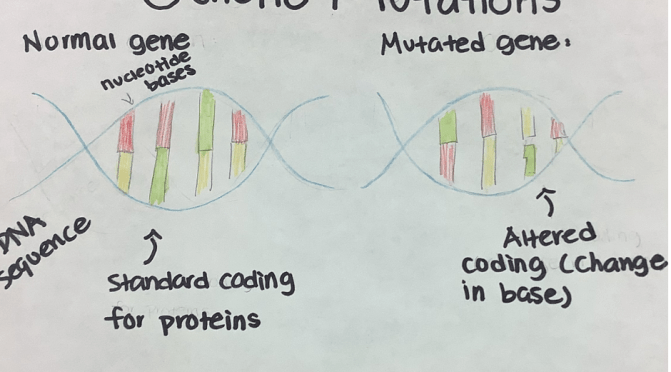
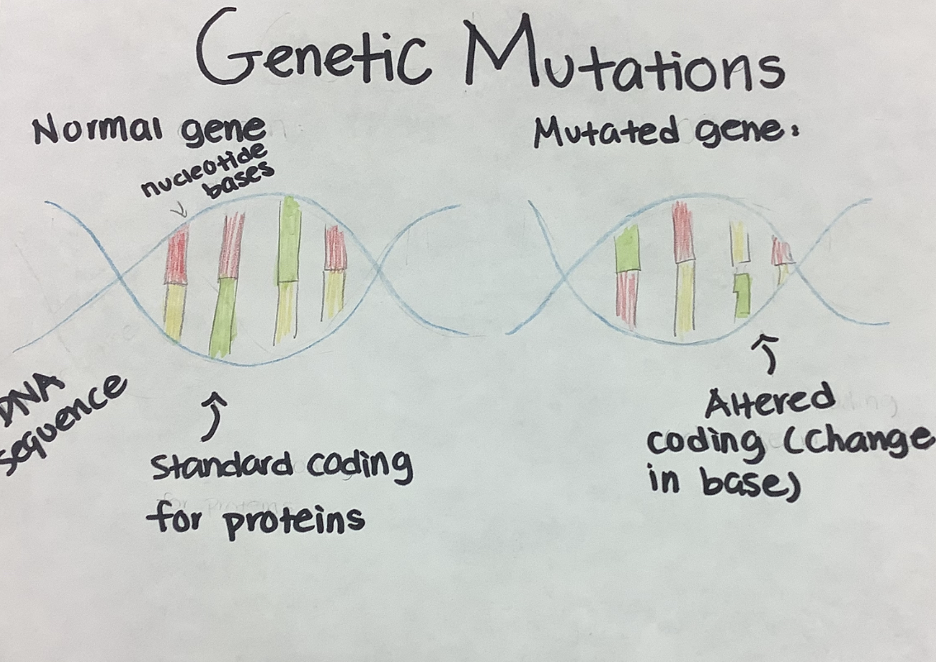
First, to better understand what a genetic mutation is, we have to review the basics. DNA, which is also known as deoxyribonucleic acid, is a molecule which carries out all of our genetic coding and just information in general. DNA is in the shape of this sort of double-helix structure, has a sugar-phosphate backbone, and has four nucleotide bases, also known as the “rungs” of this ladder shape of a structure. These bases include adenine (A) with thymine (T), and cytosine (C) with guanine (G), and, the order of these four bases ultimately determines the genetic information of a being. 

RNA is essentially described as the modified variant of DNA, with many hypothesizing that DNA stemmed from it. Chromosomes are a structure which are compact with strands of DNA, and it is located in the nucleus of a cell. Within the DNA strands, which make up a chromosome, that’s where genes are found.

Now to describe genes, they are a segment of DNA that are described as the building blocks for heredity. They contain the instructions – amino acids – for building proteins, and these proteins help determine our physical traits and other bodily functions. And, this is where genetic mutations come in.

To fully comprehend why a genetic mutation occurs, we must understand what exactly a genetic mutation is. Genetic mutations are changes to your DNA sequence that happen during cell division, and in terms of evolution, it refers to when the genetic sequence has an error when it’s being passed down. According to Ruth Jessen Hickman, a health and medical writer, “Genes contain the information, or ‘code’, needed so your body can make the many proteins it needs to function. A genetic mutation is an alteration in the genetic code found in DNA. A mutation changes the specific instructions of the gene, coded through small components of DNA. Because a genetic mutation changes the genetic coding, the resulting protein might not work the way it was initially supposed to, which can lead to disease.” This demonstrates that a mutation is usually defined as an alteration in genetic coding and can have dire results.

Proteins are typically located outside of the nucleus, where DNA resides. So, in order for the gene’s instructions to reach the proteins, which are located in ribosomes outside of the nucleus, DNA must be transcribed into RNA, since RNA can act as a messenger and bring the instructions outside of the nucleus. In order for the RNA to get to the regions where proteins are produced, DNA must change into a messenger RNA. Now, how it does this is by an enzyme called an RNA polymerase attaching itself to a segment of DNA, also known as a gene. And, each group that helps code for the amino acids which will make up a protein are called codons, and in this process of transcription, the enzyme causes the double helix structure to unwind. After the DNA is unwound, it is split into two halves, and the half that stays the same is called the non-template strand, and the strand that then becomes the RNA strand is the template half. The template half does this by using the existing genetic sequence of that half as a guide to building a complementary one to the original DNA strand. How this relates to mutations is because when a mutation action occurs, this process endures alterations.

Now, like any scientific property, there are different variations, and, for genetic mutations, there are a couple. First of all, point mutations. Point mutations occur when a DNA sequencing has a nucleotide base change because of various factors, and this overall influences the RNA sequence and then the protein coded from it.

Next, frame-shift mutations. These mutations are caused when a base is not changed but instead added, and because RNA reads the coding in codons, also known as groups of three, this changes one of the sequences, and overall alters the protein’s sequence too. Now, in general, frame-shift mutations usually have a larger impact on the protein coding since adding a base can alter around two of the proteins final coding while point mutations only change a base meaning it has less of an impact.

Continuing on, there are also nonsense mutations. Nonsense mutations usually disrupt the normal reading of the genetic code, causing the protein to be prematurely terminated, causing a huge cut off in a protein sequence.

]And finally, missense mutations. Missense mutations occur when a change in a codon leads to a different amino acid being inputted. The protein will then have a different amino acid at the position where the mutation originally occurred. But, if the new amino acid has similar properties to the old one, then there may be a neutral effect on the protein.

Now, there are many reasons for genetic mutations. Some reasons may be because of being exposed to harmful chemicals and radiation, though many identify that many mutations occur because of internal issues within the DNA’s replication processes, and are without too heavy of influence from the outside.

Although I gave you a more in depth explanation of what genetic mutations are, there is still so much to cover. I hope this gave you a better understanding of genetic mutations, and maybe just how a protein is coded in general!

For more information, please go to:

The beauty of covalent bonding!

By: Maeve Brady

Chemistry, and just science in general, correlates with everything in our lives. Now, something that directly relates to the water we drink, the air we breathe, and the DNA we contain is covalent bonds or also known as covalent bonding. Now, after hearing about this, you may be wondering, what exactly is covalent bonding? Well, after the further analysis I will provide in this article, I hope you gain a better understanding about its properties and how it appears in our everyday lives.

A covalent bond is a common occurrence in our lives. In simpler terms, according to the distinguished researchers at the University of Hawai’i at Mānoa, “The puppies represent atoms. The bones represent one of their electrons. Both puppies share both bones” Covalent bonding is a phenomenon where elements may share electrons in order to fill their valence electrons to get a full set. This is unlike ionic bonding, where elements steal electrons instead of sharing electrons. Covalent bonds have the goal of sharing their valence electrons to completion.

For context, in the periodic table, all of the elements have valence electrons who are located in the outermost electron shell of an atom. According to its properties, every element wants to become more stable by gaining a full set of eight valence electrons, this minimizes their energy usage and with this full set, or close to full set, of valence electrons, the element becomes less reactive. In certain circumstances, depending on the group in the periodic table, we may see different results in how reactive they are. You can check what group they are in.

If an element is in group five, then it has five electrons existing in it. And if it is in group sixteen, then it has six electrons, not sixteen.  So, in the case of group eighteen, these elements are known as “noble gases”, and they have a complete set of eight valence electrons, meaning they have a full set and are not reactive; they don’t have a reason to bond with different groups in the periodic table besides themselves.

But there are a couple exceptions to this principle. One example is Helium. Helium is a noble gas with only  two valence electrons instead of eight. This is because helium’s single electron shell is already completely filled. Therefore, it still demonstrates this stable and sparse reactivity.

The aspect of covalent bonding is the formation of a complete set of valence electrons after two elements share the adequate amount of electrons with one another. And with this type of bonding there are subcategories of polar and nonpolar covalent bonding.

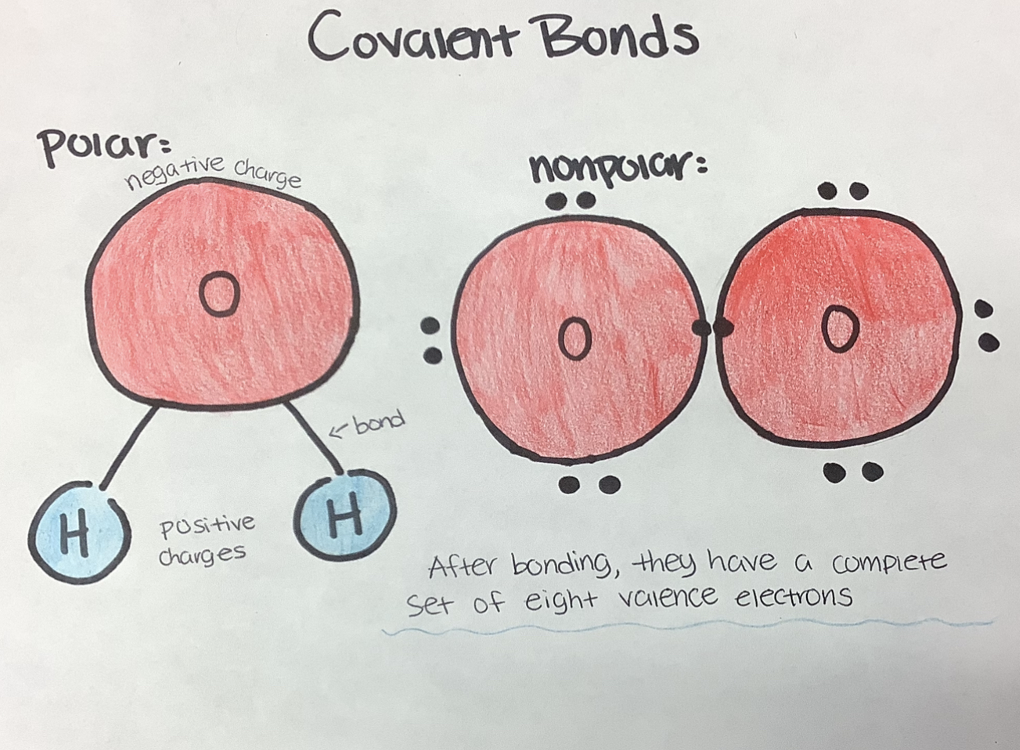
An example of polar covalent bonding would be the bonding of two hydrogen atoms and an oxygen molecule, the chemical structure of water. Oxygen has six valence electrons while each hydrogen molecule has one. This means that oxygen is almost stable and only needs two more electrons for full completion. And this is where the word “polar” comes in. “Polar” is essentially this sense of having polarity, and in the context of covalent bonding, it means a non-uniformed and unequal way of bonding. So, in the case of the chemical formation of the water molecule, oxygen and the hydrogen atoms both share their electrons, which gives them both a full set of valence electrons. But because oxygen has a higher electronegativity-oxygen has the tendency to attract electrons towards itself-so it tends to “hog” the valence electrons, hence, creating this negative charge to the originally neutral element. And with this, it creates these positive charges to the two hydrogen atoms.

Now, on the other hand, there is nonpolar bonding. Nonpolar bonding is described as the more uniformed way of bonding and in the context of covalent bonding, it is when two elements equally share valence electrons. Now, in general, you may come across more nonpolar bonds between the same elements, but that is not always the case. In fact, nonpolar bonding can be executed between two different elements as long as they share valence electrons relatively equally. The most prominent example of nonpolar covalent bonding is when two oxygen atoms can each contribute two valence electrons to complete the others’ set.

Now for the big question. How can we find Covalent Bonding in our everyday lives? Well, that is simple to answer. If we truly analyze it, we can tell that covalent bonds are in more than we may have initially thought. For example, one of the most popular examples is the properties H2O. According to the distinguished researchers at the University of Hawai’i at Mānoa, “The unequal sharing of electrons between the atoms and the unsymmetrical shape of the molecule means that a water molecule has two poles-a positive charge on the hydrogen pole (side) and a negative charge on the oxygen pole (side). We say that the water molecule is electrically polar.” This demonstrates that a polar covalent bond is how H20 comes about. And we use water in our everyday lives. It is the basis of everything, and something we rely on so heavily. Besides water, covalent bonds also may be found in our air and more, as mentioned in the first paragraph.

Thank you so much for following me along as I explain the basics on covalent bonding! I hope you now have a better understanding of this process and how it appears in our everyday lives.

What is this strange effect?

By: Maeve Brady

Many of us may know about the infamous placebo effect. But have you truly taken the time to analyze it and its components? If you did, do you understand it?  Even after wondering about it for a long time, many still can’t comprehend it. Today, I will be explaining the placebo effect and how it affects our youth in schools and the broad picture of it.

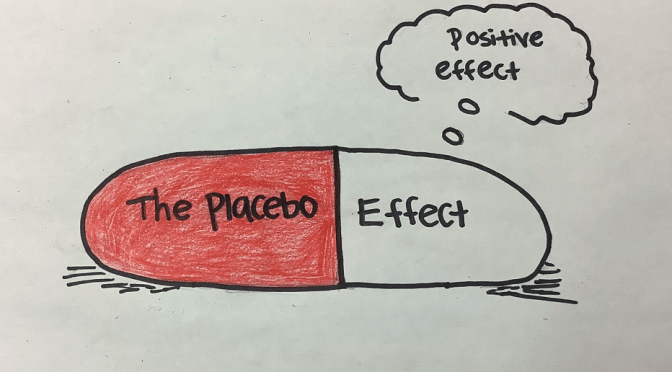
Have you ever heard of a placebo? Well, it’s the reason the placebo effect even exists. A placebo is an inactive treatment, surgery, and more. Also, under certain circumstances, a placebo can also be considered to be an action. A placebo directly correlates to the placebo effect because the placebo effect is the feeling you get after you take the placebo. The placebo effect works by turning on the body’s natural mechanisms that may help us feel better. Our brains make many substances that can lessen pain, anxiety, nausea, and more. This is also known as placebo analgesia.

Like I said, the placebo effect derives from the mind rather than the actual effect the drug has. This can be seen in the fact that you can be aware that you are taking a placebo for the effect to still work. Many believe that you have to be unconscious of the placebo in order for it to work, but in reality, if you have the expectation of the placebo having a positive effect on you, then it may. There is also such a thing as the Nocebo effect; it’s the opposite of the placebo effect where you believe that a placebo has a negative effect on you.

According to Olsen (2021), a Senior Media Relations Officer at Dartmouth, in a recent research conducted by Tor Wager and Diana L. Taylor, who are distinguished professors in Neuroscience, “‘Our findings demonstrate that the participants who showed the most pain reduction with the placebo also showed the largest reductions in brain areas associated with pain construction.’” After further research, according to Olson (2021), “With the large sample, the researchers were able to confidently localize placebo effects to specific zones of the brain, including the thalamus and the basal ganglia.” Scientists believe that because these two areas are involved in the sequence of connecting pain to action, the placebo effect may occur in them and largely impact these regions. Scientists also believe that the prefrontal cortex may have something to do with it.

The placebo effect may affect our youth in many different ways. In recent research conducted by psychologists Ulrich Weger, Ph.D. and Stephen Loughnan, some students were under the impression that the material they studied was enriched and better for the test while some believed that it was worse. According to the two psychologists, “Participant performance was indeed enhanced, compared to a group that did not think the priming process would improve their knowledge.” This demonstrates that the students’ actions could overall affect their academic performance.

The placebo effect is a very complex phenomenon whose properties are still being researched. I hope that from this text you’ve learned a little about the basics and how it affects our youth.

For more information, please visit:

NASA’s Artemis program

By: Karl Salkowski

(Image credit: freerangestock)

NASA is the National Aeronautics and Space Administration. NASA was created on October 1st, 1958 after president Eisenhower signed the National Aeronautics and Space Act. NASA is a government agency of the United States, and it is responsible for U.S. space exploration, space technology, Earth and space science, and aeronautics research.

In total, 24 astronauts have made the journey from earth to the moon. Half of those astronauts only orbited the moon while the other half landed on it. Neil Armstrong and Edwin “Buzz” Aldrin were the first two people to walk on the moon. It’s been over 50 years since anyone has walked on the moon, but why is that?

The main reason is money. Building these rockets was incredibly expensive and NASA relied heavily on funding from the government. Once the Apollo 11 mission in 1969 was a success and the U.S. had won the space race, NASA faced major funding cuts. Originally, there were 20 Apollo missions, but due to a lack of funds the last 3 were canceled.

Since then NASA has focused on other projects. One notable example being the International Space Station. However, one of NASA’s new projects aims to land humans back on the moon.

NASA’s Artemis program consists of 4 main parts: an uncrewed flight test around the moon, a crewed flight test around the moon, sending humans to explore the region near the lunar south pole, and finally establishing a scientific base on the moon. These missions will aptly be named Artemis I, II, III, and IV respectively. With these missions, NASA’s goal is both to “explore the moon for scientific discovery and to inspire a new generation of explorers” according to Nasa.gov.

Artemis I launched 2 years ago and was a huge success for NASA and its partners. However, the crewed mission (Artemis II) which was slated to launch in late 2025 has now been delayed to April 2026. Artemis III also suffered delays and is currently being projected to launch no-earlier than mid 2027.

If you want to learn more about the Artemis missions, please go to: