Tag Archives: Review

JOYSTiCK Reviews Ep. 18: ‘Fatal Fury’ (1991) – I Couldn’t Think of a Subtitle for This One

By: Daniel Kendle

Hey guys, welcome back to JOYSTiCK Reviews, the leading choice in video game serials for those seeking writing comparable to the Infinite Monkey Theorem’s. It’s been a long summer away, but at last we’ve returned to my boiling vat of video games (yay!) and opinions (boo!).

‘Fatal Fury’ is an arcade fighting game released by SNK in 1991, later being brought to home consoles like the SNES and Sega Genesis by Tamara LTD. W!WALOZA!(‘Wow! What A Load Of Zany Acronyms!’) The game is the first in the franchise of the same name, one cemented alongside ‘Street Fighter,’ ‘Mortal Kombat,’ ‘Tekken,’ and ‘Super Smash Bros.’ as a cornerstone part of its genre.  

Overall, a legacy title whose influence on future generations of games is prevalent all these years later. It’s a shame it was released the same year as ‘Street Fighter 2,’ arguably the most predominant fighting game out there for its introduction of genre staples. It’s ALSO a shame that ‘Fatal Fury’ kinda sucks!

Yeah, I didn’t really love this game, despite its importance. But why is that, and what could’ve been improved? As always, let’s find out.

‘Fatal Fury’ is a 2D fighting game, like I said before. Upon booting it up you get the choice of 3 playable characters: Terry Bogard, Andy Bogard, and Joe Higashi. The story remains mostly similar for all 3, as each character instead gets completely different movesets. I solely used Terry for my playthrough, so he’s the only one I can really speak on.

To begin, the game’s combat is similar to other fighting games from its time: 1v1 matches with health bars to denote hits taken. Combos and multi-button inputs are here in spades as well, along with a unique feature to the series: unlike its contemporaries, ‘Fatal Fury’ lets fighters switch between the foreground and background, or as I’ll call them: planes. The 2 planes act the same, but switching between them lets you attack, opening up new opportunities for combos and the like.

This distinction is neat, and I think is a lot cooler in a PVP setting. For the campaign mode it becomes less of a core facet of combat, however. From my playthrough the lane-switching mechanic acted more like a rudimentary parry. By mashing the attack button you’re able to attack as you switch lanes, so as you and the opponent hop back and forth, it culminates in the 2 of you waiting to see who’d eventually mistime an input and be hit first. An alright addition in theory, but the AI on display here doesn’t make the most of it.

On the topic of AI, here comes the primary issue with the game: its difficulty. Critiquing a game’s level of challenge is always a risky venture, but I think public scrutiny has to step aside for a second because yeah, this game is disturbingly-annoying to play.

It’s common knowledge that older games often made up for their short runtime by amping up their difficulty, thus making them artificially-longer. ‘Fatal Fury’ is a prime example of this: the story can be beaten in about an hour if you know what you’re doing. If not? Well, welcome to the trenches, kiddo!

For the few fights there are in this game, each’s respective challenge fluctuates wildly. Raiden, this luchador guy, sucks! Every move in his kit combos into one another flawlessly, so even poking him is enough for him to play ‘Operation’ with your dead, flailing body. Meanwhile, the subsequent fight against Billy Kane features a brain-dead easy infinite combo you can perform against him. By repeatedly breaking his staff, you turn what should be a tricky fight into a cakewalk.

Then there’s Geese Howard, the final boss. Going in, I knew he was notoriously-tough, but brushed any trepidation aside. So how did the fight against him go? Well, let me put this lightly:

I would rather rip my fingers apart than rematch Geese Howard.

I would rather eat a bag of nickels than rematch Geese Howard.

I would rather hot-glue rusty nails into my leg than rematch Geese Howard.

I would rather guzzle gasoline than rematch Geese Howard.

I would rather coat myself in tar and feathers, tie myself to a log, and plummet over the Niagara Falls 11 TIMES than fight Geese Howard.

This fight is horrible, truly. He spams a ground-based projectile the size of a small island nation, making blocking a constant. Couple that with his various close-range grabs and pummels, and I can confidently say that this is the only boss fight in any video game where I think the programmer responsible genuinely had some sort of malice for the player. I’m joking, of course…kinda.

Geese Howard is the worst of this rollercoaster of difficulty, though make no mistake: playing through ‘Fatal Fury’ in 2025 isn’t a walk in the park. I’ll die on this hill – though hopefully not with my credibility.

The pixel art is pretty good, albeit a bit “shiny.” The backgrounds are lavishly-decorated, and while animations for moves rely on key poses a lot, said poses look really nice in motion! Any indoor spaces especially look nice; I’m a big sucker for pixel art of rooms with interesting perspective-points.

The music’s also nice. Nothing stand-out, except for maybe, er… (inhales) ‘Haremar Faith Capoeira School – Song of the Fight [Believers Will Be Saved] (Richard Meyer’s Theme).’ It’s kinda catchy, which surprised me. Richard Meyers’ fight in-game blew, but hey-what a nice song!

Anyways, I think that’s about it. ‘Fatal Fury’ is a short arcade title that strives for combat depth almost as much as it strives for your quarters. The result? A tough-as-nails fighting game that will do 1 of 2 things: make you a lifelong fan of the franchise, or make you want to jump off a cliff. Fortunately for me, it did both!

While the various challenges presented to me irked my opinion of the game, I can’t say I don’t look back with pride on my accomplishment of finishing. It’s not for everyone and doesn’t hold up the best, but there’s an eternal charm here that some will love. I’m giving it a 5/10.

That concludes today’s JOYSTiCK Review. Thanks for reading, and have a good day!

Crepe recipe and review

By: Nils Hileson

Ingredients:

  • 2 eggs
  • 3/4 cup of milk
  • 1/2 cup of water
  • 1 cup of flour
  • 3 tablespoons of melted butter

Steps:

  • Add all ingredients to a bowl and whisk vigorously for 10-20 seconds until smooth.
  • Put the batter in a bowl with a lid and place in the fridge for 1-2 hours
  • Put a pan on a burner at low-medium heat and add butter
  • Add 1/3 cup of batter in pan
  • Swirl pan until the surface is coated with a thin layer of batter
  • Let sit until the edges start to peel off the pan then flip the crepe
  • Wait until it’s only a little crispy and then put on a plate

You can add toppings like;

  • Butter & sugar
  • Jam & whipped cream
  • Nutella & banana
  • Butter, sugar & cinnamon
  • Scrambled egg

The crepes were really good, I made three; one with Nutella and banana, one with cinnamon and sugar and one with scrambled egg. Crepes are really good due to how many different things you can put on them. While most crepes are made sweet you could make one more savory.

They are also pretty easy to make but it’s easy to accidentally cut them due to how thin they are.

The crepes tasted really good the egg one might’ve been my favorite as the cheese I put in the egg and the crepe itself worked really well together. The other crepes also tasted really good though, both being sweet in different ways.

Due to how much batter I had we ended up with a lot of extra crepes since the crepe doesn’t take much batter to make due to being so thin. When making crepes the first one will almost always come out really bad as the pan isn’t quite ready yet so the first one will look bad.

Overall crepes are really good and pretty easy to make.

This recipe was a modified version of my dad’s.

‘The Life of a Showgirl’

By: Charlotte Aver

On August 12th at 12:12 am the countdown ended. Taylor Swift announced her 12th studio album by putting a countdown on her website that ended at 12:12 am resulting in a pre pre-order of ‘The Life of a Showgirl’. The album cover was a light green blur with an orange sparkly lock.

The next day she was featured on her boyfriend’s podcast where she showed the album cover and revealed the track list which is, 1. The Fate of Ophelia, 2. Elizabeth Taylor, 3. Opalite, 4. Father Figure, 5. Eldest Daughter, 6. Ruin the Friendship, 7. Actually Romantic, 8. Wi$h Li$t, 9. Wood, 10. CANCELLED!, 11. Honey, and last but not least track 12. The Life of a Showgirl feat. Sabrina Carpenter. She also revealed the release date which was October 3rd.

Leading up to the announcement of her 12th studio album, almost every time she was seen in public she was wearing plaid, this led to much confusement within the swiftie community. The supposed reason for her wearing plaid was a clue to the album’s release date October 3rd, which is also Plaid day. The album’s main theme colors are orange and green.

During the album rollout there have been seven countdowns on her website. One led to the pre pre-order in which you could not see the album cover but the track list was still a mystery. Two led to the album cover reveal as well as deluxe CD’s. Three, four, and five led to vinyl variants. Six led to a cardigan for the album, and the seventh led to hand signed CD’s.

Taylor is known for her use of Easter eggs, which are little clues for her fans to pick up on and guess what her next move within the music industry is going to be. To Easter egg this album she had many outfits and visuals on her eras tour that led to this. One of these Easter eggs was the orange door that showed up during the finale of the Eras Tour each night that she only exited through on the very last show of the tour. Fans speculated that this was a metaphor for her entering her next era, which was confirmed on the podcast she released the album on.

Another thing that she did to hint at her upcoming album was when she brought Sabrina Carpenter out as a surprise guest; Sabrina was wearing a white baby doll dress referencing Taylor’s 11th studio album, ‘The Tortured Poets Department’. Taylor herself was wearing an orange flowy dress that was referencing her upcoming album which Sabrina would be featured on, ‘The Life of a Showgirl’.

The craziest Easter egg she left was during her Midnights era (which was her 10th studio album) three years before ‘The Life of a Showgirl’ was announced. She made a music video for her song “anti-hero” that included two versions of her: one was self conscious and wore multiple white and gray outfits, the other version of her was loud and seemingly happy, this version wore an orange and green sparkly romper. Throughout the music video the two versions did many things together one of the notable things was that the happier version of her slammed a guitar into the ground 12 times possibly referencing her 12th studio album. The main theory about this music video is that the self conscious Taylor was referring to ‘The Tortured Poets Department’ and the happier Taylor was referring to ‘The Life of a Showgirl’.

She has also announced a movie coming to theaters October 3-5, in which the debut of the “Fate of Ophelia” music video, brand new lyric videos and her own personal insights on the songs. I will be deconstructing each song with information I gather from the movie and also my personal insights. Coming soon!

For more information, please visit:

Review of Part 1 of the hit Netflix TV show ‘Lupin’

By: Karl Salkowski

(Image credit: Unsplash)

‘Lupin’ is a crime drama directed by Louis Leterrier set in modern-day Paris, France. Part 1 premiered in January of 2021 to wide critical acclaim which guaranteed it several more seasons. As of October 2025, ‘Lupin’ has premiered both its second and third seasons, with a fourth season recently confirmed to release at some point in mid- to late 2026. 

This television series takes inspiration from a collection of French novels by Maurice Leblanc titled ‘The Adventures of Arsène Lupin, Gentleman-Thief.’ Arsène Lupin is often described as the French equivalent to Sherlock Holmes and has inspired several adaptations over the last century. 

The lead actor Omar Sy delivers an incredible performance throughout the series, demonstrating his ability to display both his vulnerability and his charm. He is able to make the character of Assane Diop instantly likeable. Many of the supporting actors did very well throughout the series as well, especially Ludivine Sagnier, who plays Assane Diop’s ex-wife. 

‘Lupin’ is complicated with twists and turns, but it never becomes too convoluted or hard to understand. Time definitely plays a role in the writing, as much of the background information is told through flashbacks and memories rather than hinted at in conversation. Rotten Tomatoes calls it “an engrossing espionage thriller that lives up to its source material and then some.”

This show tackles a number of important themes and issues, including race, class, and identity. ‘Lupin’ is a commentary on who gets seen, heard, and believed. These themes persist throughout the entire season, which helps everything to feel important and interconnected. There is a sense of purpose within each scene, and the pacing doesn’t seem to be too slow or too fast.

Although it sometimes requires suspension of disbelief, ‘Lupin’ is incredible and is definitely one of the most captivating heist shows released in the past few years. The show is very engaging and displays lots of incredible acting. Its use of setting a mood really helps it to develop such an amazing atmosphere that draws the audience in. This is a must-watch TV show for anyone interested in crime-dramas or mysteries, and I would rate it a 9 out of 10.

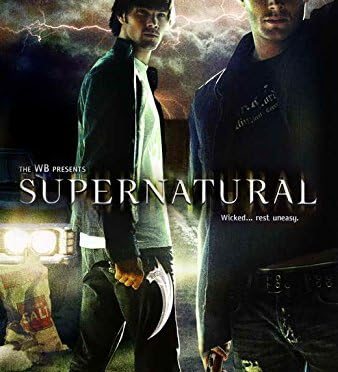
‘Supernatural’ episode 1 review and summary

By: Ivy Dahl

*Warning: this review includes spoilers

Summary:

The first episode of ‘Supernatural’ begins with a normal family consisting of John Winchester, the father, Mary Winchester, the mother, and two young brothers, Sam and Dean Winchester. Mary puts Sam into his crib before later coming back to check on him and seeing a man, who she assumes to be John, holding him. She goes downstairs and to her horror, sees John laying asleep in the living room. She sprints back up the stairs and John wakes up to his wife’s screams.

He runs up to Sam’s room and is momentarily relieved to see Sam safe in his crib, but notices a drop of blood fall on Sam’s forehead. He looks up and sees Mary on the ceiling, suddenly bursting into flames. He grabs Sam and then Dean before running out of the house onto the sidewalk, only able to watch helplessly as the house burns down.

The show cuts to Sam 19-years-later in his first year at Yale university, happy with a girlfriend and bright career prospects of becoming a lawyer. But one night he hears strange noises coming from his and his girlfriend’s apartment, and upon venturing out of his bedroom he immediately starts sparring with a shadowy, unknown intruder. Pinned to the ground, he looks up and realizes it’s his older brother Dean, who he hasn’t seen for a year after leaving for Yale.

Dean tells him that their father, John, has gone on a “hunting trip” and hasn’t returned. Sam immediately understands what Dean means. After their mother died, their dad started hunting monsters and trained him and his brother to do the same. So hunting for them means monsters and not animals. Dean wants Sam’s help to find him, and Sam reluctantly agrees, not eager to disrupt his normal life. Dean tells him that their dad disappeared while investigating multiple disappearances that happened over the span of twenty years on the same highway.

The next scene is of a teenager driving down a dark road when he sees a woman wearing a white dress standing by the road. He pulls over and offers her a ride, and drives to an abandoned building at her request. She mumbles “I can never go home” before vanishing into thin air. The man, terrified, accidentally crashes through a bridge.

Sam and Dean are at a gas station, a quick stop sandwiched between yesterday’s day of long driving and tomorrow’s. They start driving again and come across a bridge with a crashed car and lots of cops on it. Dean pulls the car over, and pulls a fake ID out in front of the cops, beginning to question the cops, while posing as a US Marshall. A cop said that he knew the latest victim and that his girlfriend is putting up missing posters for him.

Sam and Dean track down the victim’s girlfriend, Amy, and lie to her that they are his uncles who are looking for him also. They go to a diner where they run into Amy’s friend, who mentions a local legend about a girl who died on that highway and how her ghost now hitchhikes on that highway.

At the local library, Sam and Dean research online and come across an article about a woman who committed suicide after her two kids mysteriously drowned. Sam and Dean go to the bridge where people are disappearing that night and while they wait, they get into an argument about their mom after Sam dismisses her. They are interrupted by the figure of a woman dressed in white at the other side of the bridge throwing herself off it. They run over to where she jumped and see nothing below them. A loud roar of a car engine brings their attention to their car on the other side of the bridge, which has started driving towards them with no one in the driver’s seat. With no other option, they dive over the side of the bridge into the water. Though dirty, they escaped the ghosts’ attempt to hurt them.

Sam and Dean try to check into a motel when the clerk mentions another man who rented a room for a whole month.

The pair of brothers find the man’s motel room, and immediately recognize it as their dads. The one he was staying in before he disappeared. It’s covered in investigative papers, and has a salt line in front of the door, which is known to ward off supernatural creatures. They conclude from this that their dad was trying to keep something out. They see that their dad solved the case and conclude that the woman they read about in the article was in fact the ghost, and their dad must have burned the woman’s body to get rid of the ghost, but it was somehow still around. Sam tracks down and talks to the dead woman’s husband to try to find where she’s buried. Sam learns that his dad visited the husband a couple of days ago to ask the same questions. He figures out that he was unfaithful to his wife, which led to her ending herself and their kids, before becoming the ghost known as the woman in white, who kills unfaithful men on the highway.

Dean is interrogated at a police station and told he’s a suspect in the men’s disappearances. They show him a journal they found in his dad’s motel room. Dean’s interrogation is interrupted by a phone call and the police officer leaves Dean handcuffed to the table he’s sitting at to answer it. Dean picks his handcuffs with a paper clip and escapes before anyone can notice he’s missing. The first thing Dean does is call Sam, who’s driving in their car. Dean immediately calls him out as the one who made the phone call to distract the police officer. Dean also tells him that their dad left their journal behind, even though he usually goes nowhere without it.

There were also coordinates within the journal and their dad has left to go to them. Suddenly, the woman in white appears in front of Sam’s car, and then next to him in the passenger seat of his car. She asks to be taken home. When he refuses, she takes control of the car and drives it to the abandoned house. When there, she attempts to seduce him, which Sam refuses.

Enraged, she starts to transform into a horrible monster, but is stopped suddenly by the appearance of Dean. Dean shoots her. Sam is startled and drives the car straight through the house, getting pulled from the wreckage immediately afterwards by Dean. The ghost pins them down with telekinetic powers and is about to hurt them, when the ghosts of her children show up. The kids snatch their mother into the netherworld. Sam and Dean, now free, get into their car and drive off.

On the way back to Sam’s apartment, they figure out that their father is in a place called Blackwater Ridge from his journal, and Sam decides to not follow his trail and expresses his desire to return home. Dean doesn’t like this decision, but respects it and drops Sam off at his place.

Sam returns home to his and his girlfriend’s apartment, laying on their bed, glad to be done with his family drama. A drop of blood falls onto his forehead. He opens his eyes and sees his girlfriend on the ceiling, bursting into flames. Dean appears, saving him from the sudden fire by pulling him out of the house. Devastated by what happened to his girlfriend, Sam decides to go with Dean and find their dad.

Review:

‘Supernatural’ is an amazing, iconic tv show, which clearly shows even in the first episode. It sets up an interesting, complex brother relationship between Sam and Dean. It also establishes unique world building with the portrayals of supernatural creatures and ways to fight against them, as well as creating a compelling question of how the brothers are going to find their father.

The first episode also explores how Sam and Dean reacted to their father’s monster hunting training in different ways, with Sam rejecting it and Dean embracing it.

I would give this episode a 10/10. You can watch ‘Supernatural’ on Netflix.

Review on ‘(500) Days of Summer’

By: Marina Yang

This is my review of the movie ‘(500) Days of Summer’ by Scott Neustadter and Michael H. Weber, produced by Mark Waters. The plot of this movie revolves around two co-workers/main characters, Tom (our protagonist) and Summer (the supposedly “antagonist”). Tom is the typical “lover boy”, falling heads over heels for his “soulmate”, believing love to be like a fairy tale. This is compared to Summer (his “soulmate”), who’s more laid back on the topic of love, and isn’t so serious but has her moments.

This movie is very intriguing as we revolve between the two, not truly knowing if either or both are the “antagonist” of this story; truly shaping people’s different perspectives and ideas on it. The two sides of the story are so simple yet complex, it causes the crowd to be in a dilemma between determining who’s truly in the wrong. Leading to no true answer.

But for me, I would say both are in the wrong and right, we are all humans with our own wants and morals. Tom took the friendly gestures to heart, taking them as signals that she “liked” him, and considered him as a “boyfriend”. While Summer used his devotion towards her for her own wants, only using him physically yet still seeing him as a “friend”. Though I can’t truly blame Tom for thinking like this, he really had no right to go berserk on her behalf and grow obsessive, because she never verbally confirmed the status of dating. But that does not make her innocent either. She played with him knowing he was affectionate towards her, easily being able to skim over conflict and start back at square one. I definitely found myself in a conflict at times throughout this movie, because although I resonated more with Tom, I understood Summers’ perspective too.

Despite my opinion, I would recommend this movie, like I said before it’s intriguing and I believe it could be a valuable lesson for some of us. It contains explicit language and behavior, but it lightly goes over it, so it’s not much of an issue.

I would give ‘(500) Days of Summer’ a 4.5/5. If you want to watch this movie, you will have to either buy or rent it as it is not streaming for free anywhere at this time.

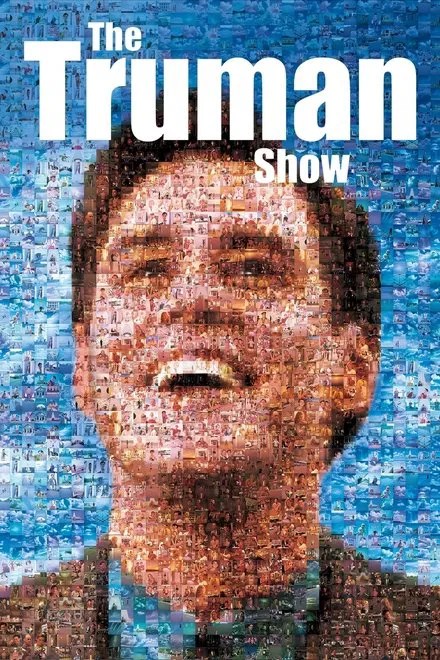
Movie review of ‘The Truman Show’

By: Norah Hoglund

*Warning: This review contains spoilers.

Brief Summary

Essentially, the plot of ‘The Truman Show’ is that a TV company adopted Truman as a baby and are filming his entire life through hidden cameras all over this island that he lives on. The whole thing is a set. He does not know this. He thinks he is just a regular guy. The producers staged Truman’s dad dying, which made him afraid to ever touch the water or even go over a bridge.

The reason he first became suspicious was that he saw his father dressed as a homeless man, many years after he died, which was, of course, the same actor that had snuck back onto the set. Truman begins to pay more attention to everything and realizes everyone is paying attention to him and doing everything for him. He has to find a way to trick the cameras and escape the island.

Review

‘The Truman Show’ is not a typical movie. The plot is very creative and the movie is a little bit unsettling and weird, but I like that about it. I also liked how captivating it was. I found myself on the edge of my seat a lot because Truman was so close to finding out the truth. I felt a lot of empathy for him because everyone was trying to make him think he was going crazy and he had just lived a whole life of mental manipulation.

I wish that they would have included more about what happened to Truman after he escaped the show, because I wanted to see him reunite with the girl he fell in love with but the movie did not go that far.

Something that didn’t make sense to me was how the producer of the show wanted Truman to come back to the show after he knew the truth. What would be the point of the show then? The viewers only liked it because Truman was not acting and he was real and authentic. I don’t understand why he was talking to Truman and trying to convince him to return to the island.

Overall, this was a very good and intriguing movie. I rate it an 8.5/10.

You can watch ‘The Truman Show’ on Amazon Prime.

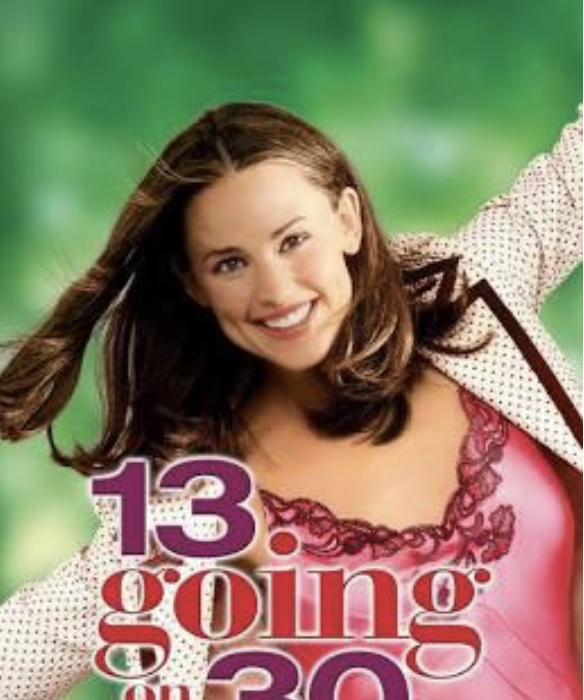
Review of ’13 Going on 30′

By: Sasha Deans

*Warning: this review contains spoilers

’13 Going on 30′ is a romantic comedy and a coming-of-age movie that I really enjoyed watching. It’s about a teenage girl named Jenna Rink who feels awkward and unhappy on her 13th birthday. She’s not popular and just wants to fit in with the “cool kids” at school. At her kind of terrible birthday party, she makes a wish to skip all the hard and embarrassing parts of being a teenager and become “thirty, flirty, and thriving.” Then something magical happens and when she wakes up the next morning, she’s suddenly 30 years old, living in a big fancy apartment in New York City, in the year 2004!

At first, Jenna is super excited. She has a glamorous job at a fashion magazine, lots of stylish clothes, and everyone seems to think she’s super cool. But as she starts living her adult life, she realizes that being grown-up isn’t as perfect as she thought. Even though she has success and money, she also became a person she doesn’t like, someone mean, selfish, and not very nice to others and someone she just never wanted to be or thought she would be. She lost touch with her family and even with her best childhood friend, Matt Flamhaff.

Jenna finds Matt again, and even though he’s all grown up too, she realizes how important he was to her. He reminds her what it’s like to be kind, to love someone, and to be true to yourself and be a good person. She starts to wish she could go back and make better choices. Things get even more emotional when she realizes that she’s fallen in love with Matt all over again but he’s already engaged to someone else!

In the end, Jenna gets another magical chance. She goes back to being 13 again, right after she made the wish. This time, she doesn’t make the same mistakes. She makes different choices and stays close to Matt. The movie ends with a sweet and happy flash-forward where Jenna and Matt are all grown up and getting married. It’s a really nice ending that shows how second chances can change everything.

Some important themes in the movie are:

  • Be careful what you wish for: growing up too fast isn’t always a good thing.
  • Stay true to yourself: popularity and success don’t matter if you lose who you are.
  • Friendship and love are more important than fame and popularity.
  • People can change and it’s never too late to try and make things right.

I think ’13 Going on 30′ is funny, sweet, and kind of magical. It teaches some really good lessons, but it also has fun music, cool clothes, and funny moments. I would recommend it to teenagers and adults and kids of the 90s because they would definitely relate because it shows how growing up isn’t always what you expect, and being a good person matters more than anything.

You can watch ’13 Going on 30′ on Netflix.

JOYSTiCK Reviews Ep. 17 (Season Finale): ‘Psycho Soldier’ – Path of the Psycho

By: Daniel Kendle

…a psycho-path, if you will.

Hey gang, it’s me – Mr. Whatshisname, and welcome back to JOYSTiCK Reviews. After another year of writing for this serial, we’ve reached another milestone: the end of season 2! It’s been fun, but alas, the road’s end has come upon us. As customary, at the end of today’s review we’ll be taking a look at a brief ranking of all of the game’s I’ve reviewed thus far, with both season 1 and 2 titles included. This is so we can not only look back on the series as of yet, but doing so also lets me update scores as I see fit.

Of course, any review to be included alongside the aforementioned ranking ought to be short and sweet. Thus, I’ve dove into my “archive” (fat closet) of video game personals and have chosen the title ‘Psycho Soldier,’ released by SNK for arcades in 1987. The game is yet another retro title, the first I’ve reviewed since ‘Tetris.’

‘Psycho Soldier’ is a side-scrolling “shmup” (shoot-em’-up) game following Athena Asamiya and Sie Kensou, a pair of soldiers who, believe it or not, possess psychic powers used to fight back against an alien invasion of Japan. The game follows whichever one the player picks – though Athena is often seen as more of the game’s main main character between the two – as they descend into the Earth’s crust while fighting monsters and aliens.

Combat involves a handful of Psycho abilities, with a gauge in the bottom-left of the screen dictating the amount you have left. Attacks have you shoot out exploding orbs, lasers, and even let you transform into a different beast form depending on which character you choose, despite both functioning similarly.

I played through the game on a console, so it wasn’t required that I insert coins or tokens to continue playing after dying. This is the case for a lot of arcade-to-console ports, and I think that’s part of the reason the gameplay overall really didn’t click for me. It also goes that I’m not really a person who frequents high-score games often; I just don’t find them all that compelling compared to games with a definitive end point. These factors combined led to my experience with the game culminating in me dying, respawning, and continuing the level without worrying about my loss of points. I’m willing to admit that this is less so the game’s fault as it is my own, so I can’t really degrade it for my own personal values.

What I can degrade, however, are the controls. It’s not rare for older arcade titles to be fairly limited in movement when ported over to console controls, especially modern ones. ‘Psycho Soldier’ is no different: Athena’s movements are particularly stiff and slow, creating a bevy of problems when precise aiming is required for certain enemies. The issue is found with bosses too; some have attacks that involve them quickly darting out and striking you, which can become difficult to avoid if you aren’t in an ample spot for dodging. Since they usually take up the right half of the screen when encountered, your limited space to maneuver, er, limits the practicality of dodging these attacks.

Other than that, powerups and enemies are pretty forgettable, nothing to run home about. I suppose there’s a sort of brainless fun to be had when mowing down aliens and destructible blockades, but that feels like a lame “positive” for a video game.

“B-but Mr. Whatshisname! What about the game’s theme song, the first ever recorded for a video game character? You couldn’t possibly leave out that,” you wail, somehow ignorant to the raised cudgel being aimed at your head. I tolerate mindless whining about as much as I tolerate insubordination – I suppose you can connect the dots from there.

You’re correct in your nagging, though: ‘Psycho Soldier’ was the first-ever video game to feature a song with vocals included for one of its characters, creatively-dubbed as the “Psycho Soldier Theme”. After listening to the VHS version, ‘Super Smash Bros. Ultimate’ remix, and various instrumental versions of the song, I honestly think it’s a solid song, despite its age. Nothing crazy, really: given the technical restraints present during the 80’s, I could never expect the most radical of melodies, but it’s still aged decently-well. It’s my favorite part of the game, truthfully!

That’s about it, honestly. ‘Psycho Soldier’ is a simple little package, though one that I ultimately never found myself very interested in during my playthrough. It’s around 40-ish minutes in length, so it thankfully never felt like a waste of time. Still, I give it a 5/10.

But now that that’s done with, let’s move onto my ranking of all games reviewed so far – ‘Psycho Soldier’ included! Like any YouTube personality who doesn’t know what “personality” even means, my opinions are pretty, uh, quirky OwO.


#17: ‘Cocomelon: Play with JJ’ (2/10)

#16: ‘A Minecraft Movie’ (4/10)

#15: ‘Minecraft Story Mode’ (4/10)

#14: ‘Psycho Soldier’ (5/10)

#13: ‘Reigns: Three Kingdoms’ (6/10)

#12: ‘Pokemon TCG Pocket’ (6/10)

#11: ‘Splatoon 3’ (6/10)

#10: ‘Kirby and the Forgotten Land’ (7/10)

#9: ‘Pokemon Scarlet’ and ‘Pokemon Violet’ (7/10)

#8: ‘Wingspan’ (8/10)

#7: ‘Minecraft Dungeons’ (8/10)

#6: ‘Portal’ (8/10)

#5: ‘Super Smash Bros. Ultimate’ (9/10)

#4: ‘Pokemon Legends Arceus’ (9/10)

#3: ‘Cuphead’ (9/10)

#2: ‘Tetris’ (10/10)

#1(!): ‘Metroid Dread’ (10/10)

And with that out of the way, the season’s officially done with! A shame that the very first game I reviewed is still the best, but it’s whatever. Hopefully next year we can see some tough competition, but until then, thanks for reading, and see you for season 3!