By: Seng Yang & Christine Yang
Background information about Hmong dishes:
A lot of Hmong dishes originate from different South and East Asian countries since Hmong people originate from southern China. That’s why some Hmong dishes are actually Chinese but have a twist. But later on some Hmong people migrated mostly to Laos, Vietnam and Thailand, which is why many Hmong dishes are from those countries too but again, not every dish are the same as the “originals”.
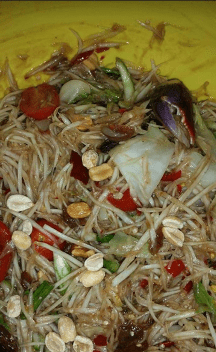
Qaub Taub Ntoos (papaya salad):
Background information: Papaya salad is a dish that originated from Laos, which influenced recipes in Cambodia, Thailand Vietnam, and West Asia.
Ingredients:
- 2 cups of shredded green papaya
- 2 tbsp of roasted peanuts (optional)
- 2 cloves of peeled garlic
- 1-2 fresh birds eye chili (or more depending on tolerance)
- 1 tbsp of dried shrimp (optional)
- 7 cherry tomatoes
- ½ juice of lime
- 1½ tbs of fish sauce
- 1-2 tbsp Thai snake beans (or green beans) cut into 1 inch sticks
Directions:
- Peel the papaya, shred it with a shredder (or a mandolin slicer) to thin strips and soak it in cold water
- Cut the green beans into one-inch pieces
- Take the chilies and peeled garlic and give them a gentle bash with mortar and pestle (bits and pieces) and add crushed peanuts and mix well (optional)
- Add shredded papaya and continue bashing (not too hard)
- Add tomatoes, beans, lime juice and fish sauce while lightly bashing
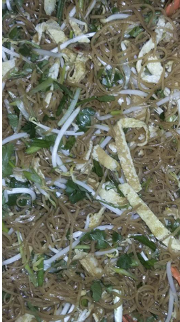
Fawm Kib (pho nooldes stir fried):
Background information: The dish is a very popular Lao dish known as Khua Mee or also known as Lao stir fry noodles.
Ingredients:
Noodles
- 28 oz (1 lb 12 oz) dried pho/rice noodles soaked in hot water
Sauce
- 2 tbsp oil (vegetable or garlic oil)
- ½ cup chopped shallots
- ½ cup crushed palm sugar (4oz)
- ¼ cup water
- ½ cup Kwong Hung Seng sweet soy sauce (5.5oz)
- ¼ cup oyster sauce (2.5oz)
- 2 tbsp Golden Mountain seasoning sauce (1.2oz)
- 2 tbsp fish sauce (1.5oz)
- 2 tbsp dark soy (1 oz)
- 1.2 tsp salt
- 1 tsp chicken bouillon
- ½ to ⅔ cups garlic oil
Eggs
- 12 large eggs
- 1 tsp black pepper
- 2 tsp fish sauce
- Garlic oil to fry
Garlic Oil
- 1 cup oil
- ¼ cup minced garlic (1.25 oz)
Mix in and Garnish
- 3 cups chopped cilantro (stem included)
- 2 cups green onions (slice thin, julienne)
- Sliced omelet
- Bean sprouts
- Fried garlic (optional)
Directions:
Noodles
1) In a bowl, add in 28oz dried noodles. Soak in cold water overnight. Once soaked, drain well and then pour in hot boiling water over the noodles. Stir and cook for about 30 secs to 45 sec until the noodles are cooked to your liking. It should be cooked but also chewy and slightly firm. Do not overcook the noodles or leave the noodles in the hot boiling water for too long or else they will break apart while mixing. Depending on which size noodles you use, cooking may take longer.
2) Once cooked, drain the noodles and rinse with cold water to stop the cooking process. Drain well for at least 15-20 before adding in the sauce.
Sauce
1) In a pan, add in 2 tbsp of oil and chopped shallots. Cook and sweat the shallots for a good 1 minute or so. Then add in the crushed palm sugar and 1/4c water. Cover for 1 minute or so under medium heat to allow the steam to melt and break apart the palm sugar. Then add in all the other sauces and seasoning. Stir well for a good 30 seconds or so to incorporate it in with the shallots and palm sugar. Then take it off the heat and let it cool before adding it into the noodles if you desire. Feel free to taste the sauce before adding it into the noodles. You may want it to be sweeter, saltier, etc.
2) Make the garlic oil as well if you desire. 1 cup oil in w/ 1/4 cup minced garlic. Medium cook until the garlic are golden crispy. Drain the oil and separate the fried garlic to be used later.
MIXING
1) Pour the drained noodles into a big mixing bowl along with all the sauce. Add in the 1/2 cup of garlic oil and mix everything well. You will notice it may be a little wet in the bottom of the noodles. That’s okay. Let it sit for a good 15-20 minutes to allow the noodles to soak up all the sauce. Taste and adjust at this step if needed. Make sure to mix it every 5 minutes or so while it’s sitting to ensure the noodles are fully coated with the sauce.
Toppings
1) Add 12 eggs into a bowl along with the black pepper and fish sauce. Mix well. Then cook it on a non stick pan brushed with garlic oil. Cook like an omelet so we can cut it into strips. If you have a big pan you may do 2 rounds of cooking the eggs. I did four rounds so I can get a medium thin thickness.
2) Wash and cut the cilantro and green onions to your liking
3) Wash the beansprouts
Finishing
1) Once the noodles are well soaked in with the sauce, add in the chopped cilantro, green onions, fried garlic from earlier, and sliced eggs. You can also add bean sprouts at this point too. However, if you want to save some noodles in the fridge for tomorrow, don’t mix in the beansprouts with the noodles overnight due to the amount of moisture they contain. Just garnish the bean sprouts when you want to eat a plate of noodles.
2) Serve with fried garlic, shallots, and other herbs/proteins you desire. Serve cold, room temp, or warm.
http://foodgeneralist.blogspot.com/2009/08/khua-mee-fried-noodles.html
Fawm Kauv (steamed rice rolls):
Background information: Steamed rice rolls is a Cantonese dish originating from Guangdong Province in southern China. Steamed rice rolls are also one of the popular Vietnamese dishes, bánh cuốn. Even though fawm kauv/Hmong steamed rice rolls are the “same” as those countries or more, the ingredients are different to some of them.
Ingredients:
Rice Roll Crepe
- 1 pack rice flour (16oz)
- 1 pack tapioca flour (16oz)
- 1 tsp salt
- 1 tbsp oil
- 14 cups water
Pork Filling
- 2 lbs pork
- 1 tsp salt
- 2 tsp chicken bouillon
- 1 cup cilantro
- ½ cups green onion
Dipping Sauce
- 4-6 Thai pepper
- ½ tsp salt
- ¼ msg
- Roasted peanuts (optional and as much you like)
- Water (as much you like)
Directions:
Dipping Sauce
1) Put 4-6 Thai pepper into the mortar with ½ tsp salt, ¼ msg, and roasted peanuts (optional and as much you like)
2) Crush them with a pestle
3) Add water (as much you like)
4) Stir
Meat Filling
1) In a frying pan, add in the ground pork. Saute until the meat is cooked. Then add in the seasonings and herbs. Taste and adjust. Set aside.
Rice Roll Crepe
1) In a big mixing bowl, add in the rice flour, tapioca starch, and salt. Mix well. Then add in the water. Mix well to get starches from the bottom well incorporated with the water. Set aside
Cooking, Rolling and Filling
1) Have a bowl of oil and a brush ready. Brush a flat tray with oil so you have that ready for the cooked crepe as well as your non-stick cooking pan. Heat the pan on medium heat. Add about 1/4 cup of the batter into the pan and swirl it around until the bottom of the pan is well coated with the batter. Cover with a lid and let it cook for 30 seconds. Uncover and quickly flip it over the oiled flat tray. Fill with the meat filling and roll the ends and then bottom all the way up (just like a burrito). REPEAT THE PROCESS until all the batter is used up.
2) MAKE SURE to stir the rice roll crepe batter once in a while because the starches will settle down to the bottom.
Kan Yuab (egg rolls):
Background information: Lika most Hmong dishes they’re mostly inspired by different countries/cultures from Asia. Egg rolls originate in China (date back to ancient China).
Ingredients:
- 1 (10 ½ ounce) bag rice thread noodles
- 24 egg roll wrap
- 1 (10-12 ounce) package coleslaw mix (or 1 sm cabbage and 2 carrots shredded)
- 1 bunch green onion
- 1 ½ lb ground pork
- 1 egg (+ xtra 1 for sealing egg rolls)
- 2 teaspoons black pepper
- 2 teaspoon salt
Directions:
1) Soak noodles in very hot water for 10 minutes.
2) Drain.
3) Rinse with cold water.
4) Cut into 3-inch lengths; set aside.
5) Chop green and yellow onions and cilantro (also, cabbage and carrots if not going with the packaged coleslaw).
6) Mix all ingredients together.
7) Heat oil (med high heat).
8) Peel rice skin wraps apart, put about 1/2 cup mix on egg roll wrap.
9) Roll it up.
10) Seal with egg.
11) Cook for about 10 minutes.
https://www.food.com/recipe/hmong-egg-rolls-37355
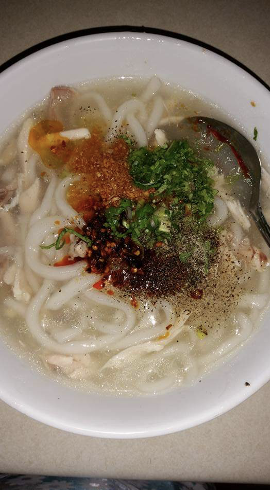
Qhaub Piaj (thick chicken noodle soup):
Background information: Qhaub piaj (thick chicken noodle soup) is a Hmong and Laotian dish, it’s also called khao piak sen in Laotian.
Ingredients:
Noodles
- 1 cup rice flour
- 2 cups tapioca starch
- 1 ¼ cups of boiling water
Broth
- 2 cups shredded cooked chicken
- 48 oz chicken stock
- 1 stalk lemongrass
- Salt (choice of amount)
- Pepper (choice of amount)
- Fish sauce (choice of amount)
- 1-2 cups of water if needed
Directions:
1) Put rice flour in a stand mixer
2) Add 1 cup of boiling water and mix
3) Add a little bit of water at a time
4) Add a little bit tapioca starch until the dough puts together
5) Divide the dough into thirds
6) Roll ⅓ of the dough until it is ⅛ inch thick using tapioca starch on the surface so it doesn’t stick
7) Cut it into ¼ thick (or depending on how thick you like)
8) Dust the noodles in tapioca starch to prevent sticking to each other
9) Add noodles in boiling water
10) Stir so they don’t stick to each other
11) Noodles are done when they float
12) The broth will be thick
https://chawjcreations.com/qhaub-piaj-thick-chicken-noodle-soup/






 Plaid Line + PRIZM + Scottie News