
By: Hannan Mohammed
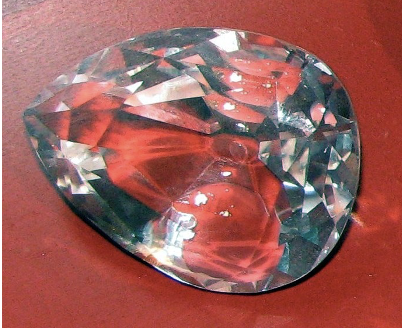
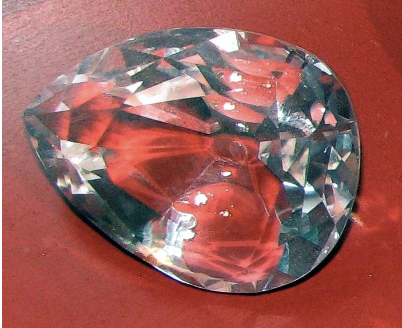
Diamonds are known today as one of the most popular gemstones. You can find them in wedding rings as a symbol of love, or you can find diamonds that are famous for their size or color, such as the Cullinan 1 or the ‘Star of Africa’, which is the largest cut diamond in the world. But, how did diamonds become so well-known throughout the world?
Geologically, diamonds were formed about 3.3 billion years ago from intense heat and pressure within a layer of Earth called the mantle, which consists of volcanic magma. They’re made from pure carbon and can produce more brilliance than other gemstones, but they weren’t used as decoration when humans first discovered them.
The first discovery of diamonds is believed to have been in sediment in India’s rivers of Penner, Krishna, and Godavari around 2500 BCE. As mentioned, they weren’t used in jewelry at the time, because they were more valued for their durability and hardness and thus they were used as tools during this time period. The alluvial deposits in the rivers were India’s only source of diamonds for centuries and would become the sources for some of the famous diamonds of today, such as the Koh-i-Noor diamond.
Eventually, in the 4th century BCE, India began to trade diamonds, although the supply was limited and only the country’s wealthy classes could afford to buy them. However, diamonds would begin to be used in jewelry among European kings in 322 BCE, because they symbolized strength and invincibility; in fact, the name for diamonds comes from the Greek word adamas, which means unconquerable. Their rarity would lead to them being associated with divine protection, and as trade routes expanded, diamonds were also bought by nobility and aristocracy. In Europe, diamonds became symbols of wealth as well as strength and divine protection.
Diamond cutting became established as an industry in 1330 CE in the city of Venice, Rome, which was known as a trade capital at the time. The first form of this was a point cut, which was achieved with eight symmetrical facets in the shape of an octahedron. This cut was soon improved into the table cut, in which the point cut diamond had a part of its top half cut off to make a table shape.
But how did diamonds become a symbol of love? That was first started in 1477, when the Archduke Maximillian of Austria created an engagement ring to propose to Mary of Burgundy. The ring had a diamond set in the shape of an ‘M’ to symbolize the Archduke’s commitment and love. The other element of love added was that it was worn on the third finger of the right hand, which is believed to contain a vein running to the heart, or the vena amoris. Thus, it became a precedent among European nobility to put diamonds into their engagement rings as a symbol of lasting love, which would continue and evolve over centuries.
Throughout the 17th century, diamonds were worn as a symbol of ultimate wealth among the upper classes, and elaborate diamond jewelry was seen as essential in royal courts, often inherited from older generations as family heirlooms. India continued to be known as the world’s only source of diamonds, adding to the gemstone’s value, until the early 1700s, when diamonds were first discovered in Brazil. They were discovered while gold miners sifted through gravels in local rivers, which boosted global supply as Brazil began to dominate the diamond trade for the following 150 years.
When the late 1700s came, however, there was also a shift in the buyers of diamonds, as the old ruling classes across Europe were experiencing decline and events such as the French Revolution changed the distribution of wealth. In the 1800s, western Europe and the United States became more wealthy and diamond demand increased, until December 1866 and February 1867, when diamonds were first found from a transparent rock found near the south bank of the Orange River in South Africa.
This brought a mad rush for diamonds in the 1870s-80s and the annual world production of diamonds increased by tenfold during this decade. The Northern Cape held the mines producing 95% of the world’s diamonds, and today South Africa is still one of the leading producers of diamonds.
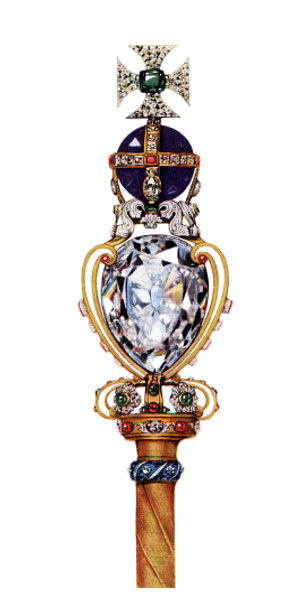
In fact, in 1905, the Cullinan Diamond was found and mined at the Premier Mine near Pretoria, named after Sir Thomas Cullinan, the chairman of the mine. It weighed a total of 3,106 carats, making it the largest rough diamond ever found. This diamond was given to King Edward VII as a gift and was cut into many stones; the largest cut diamond, known as the Cullinan 1, was set into the British Sovereign’s Sceptre, which is part of the British Crown Jewels and used in coronation ceremonies.
And finally, how was the brilliant cut established for diamonds? In 1919, a Belgian mathematician and gemologist named Marcel Tolkowsky developed the Ideal Cut for round brilliant diamonds, using calculations to emphasize a diamond’s sparkle and brilliance. His efforts led to the development of the Modern Brilliant Cut, which is the most widely-used diamond cut to this day because of how its design maximizes the gem’s sparkle and light return.
For more information, please visit:
 Plaid Line + PRIZM + Scottie News

