

By: Hannan Mohammed
Did you know that stars have a life cycle the same way that humans do? While stars can live for millions or even trillions of years—much longer than a human’s lifespan—they have their own stages of life too; they grow and die like us. So, what is the life cycle of a star?
To begin with, all stars start in large clouds of gas and dust called molecular clouds, or nebulae. These clouds can range from 1,000 to 10 million times the mass of the Sun and they can span up to hundreds of light-years. In these clouds, gas clumps together due to the low temperature, and these clumps collect more matter and gain more mass, which strengthens their gravitational force. However, some of these clumps will collapse from gravity while friction heats the matter up, leading to the formation of a new star, called a ‘protostar’. Several of these protostars can be formed in one molecular cloud.
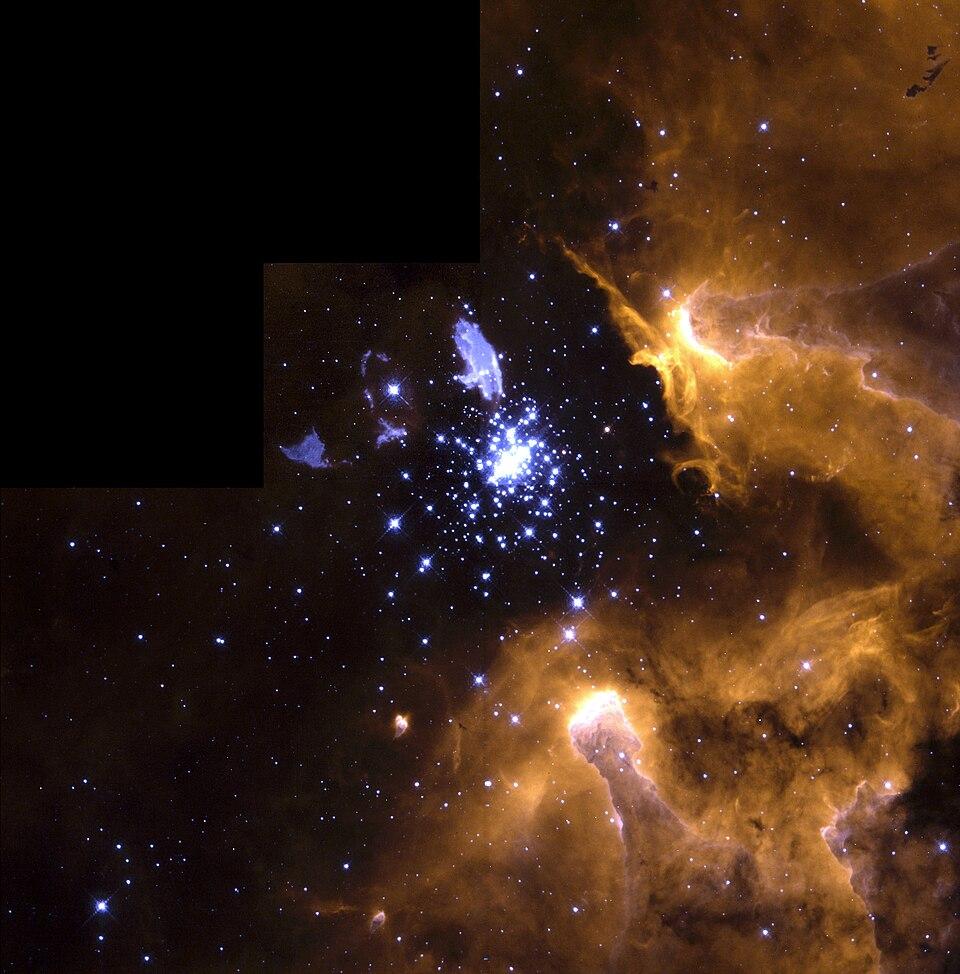
After the protostar’s creation, most of its energy comes from the heat released due to its earlier collapse. However, the mean temperature of the star isn’t high enough for nuclear fusion to occur yet. This is called the T-Tauri phase, lasting for around 100 million years before the star enters its longest life stage: the main sequence.
In the main sequence phase, the star’s core temperature is high enough for nuclear fusion to occur by the higher temperature and immense pressure squeezing the nuclei of hydrogen atoms together to form helium. The energy released from this process heats up the star and prevents it from collapsing due to gravity. The Sun is currently in this phase.
A star’s mass determines its lifespan; lower-mass stars will burn longer and thus, live up to trillions of years. Higher-mass stars, however, require more energy to keep itself from collapsing, and so they burn faster and can live up to only a few million years. A star’s mass can also determine how it will die later on.
For all stars, the beginning of the end of a star’s life begins when their cores no longer have any hydrogen to fuse into helium. The core will start to collapse due to the lack of energy balancing gravity’s tendency to pull matter together, while the star starts to puff up from the increased temperature and pressure. From this point, however, the mass of a star is the main determining factor in how a star will die.
With a lower-mass star, its core will fuse helium into carbon as its atmosphere expands, and it either becomes a subgiant or a giant star. Eventually, all of the star’s outer layers will blow away, create a cloud of dust and gas called a planetary nebula, and leave behind its core, now called a white dwarf. Its size is about the same as Earth’s, and it’ll cool down over billions of years.
Higher-mass stars, however, will have a more explosive end. A higher-mass star’s core will begin to convert carbon into heavier elements like oxygen and magnesium after running out of hydrogen to fuse into helium, which becomes its fuel. While converting more elements produces energy for the star, this isn’t a permanent solution. In a few million years, once a star starts fusing silicon into iron, it will run out of fuel in just a few days since it will lack the energy required to fuse iron into a heavier element.
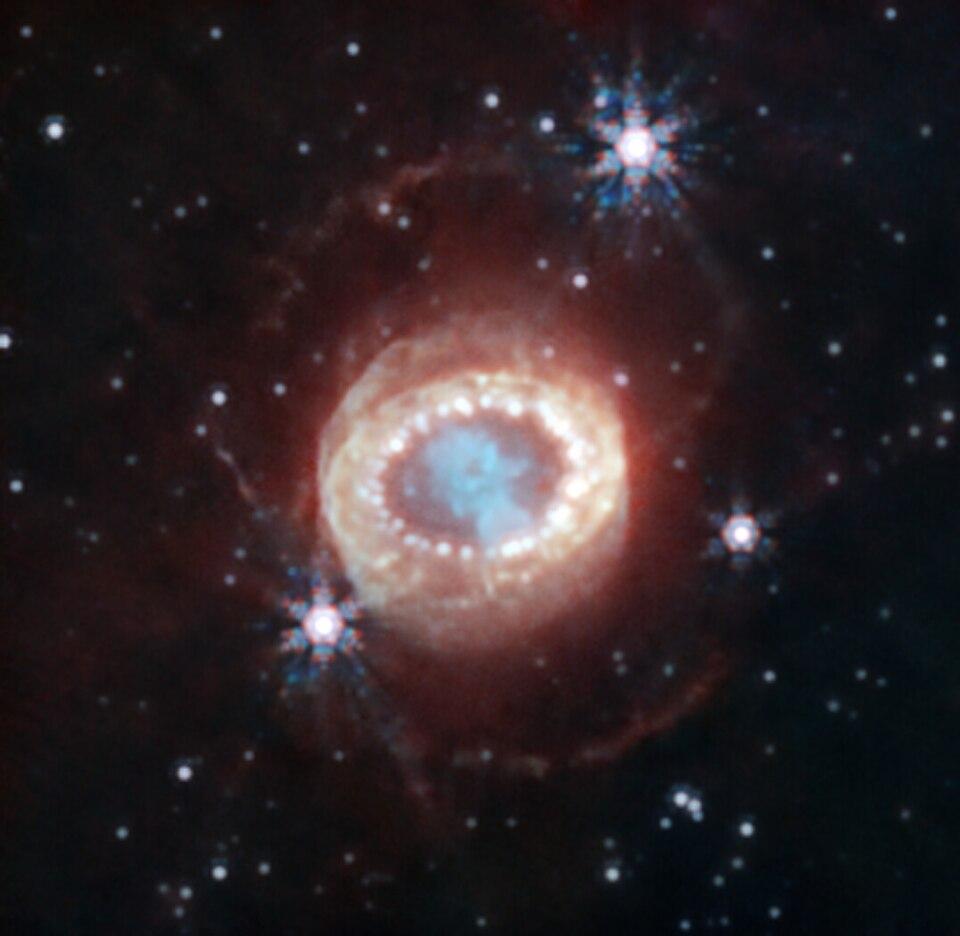
The core collapses until forces between the nuclei push and rebound, causing a shockwave that moves outward from the star and creates an explosion called a supernova. The explosion moves the star material far away into space, leaving behind the core, which can either implode into a neutron star or become a black hole.
For more information, please visit:


 Plaid Line + PRIZM + Scottie News

_(SN1987a-1).jpg)

