Category Archives: Science/Nature

Benefits of composting

By: Trump Vang

In our world today, trash is a substantial part of our lives. Just in the United States alone, according to Trashcansunlimited.com, there is 146.1 million tons of waste in landfills, which is equivalent to the weight of 24 Great Pyramids of Giza. It’s an enormous problem in our lives, as it continues to pollute and spread into our environments and systems.

There are a few ways that trash can be mitigated. You’ve most definitely heard of recycling before, which is the process of converting waste and garbage into new materials and objects. One other common method is composting.

What is Composting?

If you didn’t know, composting is the process of recycling organic matter into a nutrient-rich soil or mulch through decomposition. You may see it in your school or at a local dump but its ability to turn food waste into compost is unmatched and integral in diminishing waste.

What Can I Compost?

Just like recycling, you can compost at home too! Though it’s important to know what you can compost. Put simply, try to only compost fruit and vegetable scraps. This can be anything from fresh, cooked, or moldy. Alongside this, it also accounts for leaves, coffee grounds, and grass cuttings.

There are other things that you can compost, but it’s often not recommended to do so. These items include meat and dairy products, which can spoil and attract pests, as well as lawn trimmings which may contain pesticides.

How Can I Compost?

You can either place your compost at a drop off center, or you can compost yourself in a compost bin. To compost, there are four different things that you need to create, and you need a proper combination of these elements to create a good compost: nitrogen, carbon, air, and water.

To achieve these individual elements you need specific things: Greens for Nitrogen, Browns for Carbon, and Oxygen and Water. Often greens, such as grass clippings and food scraps have proper nitrogen for the mix. Browns such as dead leaves, twigs and paper can be added to achieve a proper amount of carbon. For those last two elements, it’s integral to keep proper aeration and moisture within the environment.

Placing all of the materials in a compost bin, you would always want 3 parts brown to 2 parts green to get a proper combination. Make sure to place your compost bin within a dry area for the best growth.

It can often take 2 weeks to a few months for the compost to be ready. When ready, you can use compost for your garden and properly give your plants a nutritious start in their soils.

Going out of your way to compost your waste can go a long way in the big scheme of things. If everyone just decided to limit their trash going into landfills, we all could have a healthier lifestyle on Earth, saving the planet one piece of trash at a time.

The Earth’s Twin: Venus

By Trump Vang

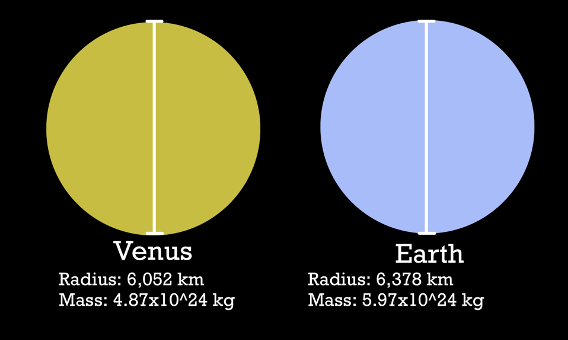
Venus is the second planet from the Sun, neighboring both Mercury and the Earth in its orbit. For the second planet in the solar system, Venus is quite the large terrestrial planet in our system. Its size and mass are roughly the same as the Earth’s and many call the planet the “Earth’s Twin” due to these physical aspects. Though looking deeper, it’s easy to see the differences between the two celestial bodies.

As of today, and even in ancient times, Venus is the second brightest object in the night sky, after the moon. In the past, many astronomers and scientists believed that Venus was a good candidate for life, though their assumptions were wrong. If you didn’t know, Venus has a thick atmosphere that obscures its surface and conditions. With their limited technology at the time, Venus’s atmosphere was able to conceal the planet’s secrets, and make astronomers believe that it could be like the Earth.

All of these thoughts changed when a space probe was first sent to the planet though. In 1970, Russia rocketed a space probe, by the name, Venera 7, to Venus to gather more data on the secretive planet. Despite many people’s beliefs, photos were captured, showing a yellow and orange wasteland covering the planet, disproving any hopes for life. The probe would only last 23 minutes before it was ultimately destroyed by these harsh conditions.

Upon first view, Venus is a yellow planet, covered by a thick atmosphere. Many may think that the planet is a paradise, though the reality is much harsher than most people’s imaginations. Below the thick atmosphere is a hellish landscape and environment. Temperatures can reach, on average, 867 degrees Fahrenheit, or 464 degrees Celsius; it’s enough to melt lead. Moreover, the atmospheric pressure on Venus is 90 times greater than the Earth’s. These conditions on Venus make it much harder to imagine that life actually lives on its surface. With the oppressive heat and pressure, it is impossible for components for life to exist.

Looking at the history of Venus, the planet had possibilities in hosting life itself. Just like the Earth, it had the proper conditions for sustaining life: Good Temperature, Size & Mass, and Organic Material. As the sun grew in its infancy, it became much wilder and much hotter in the process. Since Venus is 30% closer to the Sun than the Earth, its temperatures are higher than on the Earth. Through this and some greenhouse gasses on Venus, the planet exploded in temperature, leaving it to what it is today.

As of today, the planet is still the same with its temperatures and its deathly environment. Though further research has suggested that life may still exist on the planet, just not on its surface. The possibility of life expands, when Venus’s atmosphere is brought into the conversation. There is a specific area within Venus’s atmosphere that provides a warm and prosperous environment for life to flourish within, though no confirmed life has actually been stated to have been found there.

The future looks bright for Venus exploration, especially as many missions have been planned to go there, NASA plans to send two space probes there in the next decade, and ESA is planning to send another one to the planet.

On the surface, Venus is Earth’s Twin in many aspects, though looking deeper both of the planets are highly different in their own ways. Venus is a hellish landscape with high temperatures, while the Earth is a place of flourishing life and comfortable temperatures. As we continue to learn more about the planet and its conditions, we can learn more about its possibilities for life and the future of our own planet.

For more information, please visit:

Effects of de-icing methods

By: Mira Kaufman

As this year’s winter slowly becomes a frozen land, there will be a great need for de-icing methods. Stores across the midwest are selling salt, sand, and underpayment installed heaters which make every day activities a lot safer but are they worth the effects on our earth?

Salt, one of the most popular de-icing methods, is used to melt ice, creating grip and friction on pavements. To use ice, a person, machine, or a special truck will sprinkle road salt onto roads and sidewalks, which will allow patches of ice to melt. A very efficient way of making cities safer in the winter.

According to the EPA, road salt can greatly damage environments by contaminating drinking water, kill wildlife, increase erosion in soil, and cause damage to properties. Road salt is the most common substance for de-icing roads and sidewalks and is made of sodium chloride. The EPA also claims that “Nearly half a million tons is used annually in Massachusetts alone for winter road maintenance.”

In cities, salt must also be spread by trucks and machines that run on gas and oils. With these trucks constantly running, pollutants get added to the air at a much more consistent rate than many other vehicles. These trucks, and the damage caused by ice, can lead to high prices for families, communities, and cities too. These costs can come from damage caused by the chemicals in salt, but also can be found in the higher price of maintenance. According to Bridge Stone Tire, the damage of salt is estimated to cost highway and automobile industries $3.5 to $7 billion per year in the U.S. This price has continued to increase every year.

Stones and sand are also popular de-icing methods but they cause issues of their own. While sand appears harmless because it looks as though it fits into the environment, it is known to clog runoff drains and pipes. The sand used for de-icing may also be non-native to the area, causing a change in the environment and plants that can rely on the soil with its new properties.

Many newer built homes and buildings apply heaters under their pavement to not allow ice or snow to stick. This method of de-icing is the safest for humans, animals, and cars, and can be very environmentally friendly too. While the underground heaters do in fact take a decent amount of energy to use, if the energy is coming from home solar powers, or environmentally friendly city energy sources, then this is a great way to make winters safe while staying friendly to the environment. Unfortunately, this method is quite expensive because the heaters must be installed under the pavement which makes it a luxury, and not an option for many homes and buildings.

Top 10 most endangered animals

By: Cleo Newton

Image created with Wonder

According to an article by UUF.UK, the top 10 most endangered animals include the following:

Number 1: The Javan Rhino.

This rhino used to be found throughout South-East Asia. There are only around 75 of these rhinos left. Because they are so low in numbers, they are one of the rarest rhino species. Reasons for their decline include: habitat loss, and hunting.

Number 2: The Amur Leopard

There are about 100 Amur Leopards left in the wild. Because they are only found in a small region in the far east of Russia and north-eastern China, they have been critically endangered since 1996. Some threats that Amur Leopards face include: habitat loss, prey scarcity, and fragmentation (meaning they are spread far apart geographically).

Number 3: the Sunda Island Tiger

Also known as the Sumatran Tiger, they are the smallest tiger species: they weigh up to 140kg. These tigers are only found on the Indonesian island of Sumatra. There are only about 600 of these tigers left in the wild. Some things contributing to their population decline include: habitat loss, and the expansion of the human population.

Number 4: the Mountain Gorilla

These gorillas live in a landscape belonging to Virunga. The area they live in has a history of being politically unstable. Because there are already over 500,000 people living near the mountain the gorillas live on, it would be more harmful if more humans were to move there. They have a population of just over 1000 in the wild. The Mountain Gorillas have been doing better thanks to the conservation efforts and other help from through the International Gorilla Conservation Programme.

Number 5: the Tapanuli Orangutan

The Tapanuli Orangutan are the most endangered great ape species, with only 800 living in the wild. They live in a tropical environment. Unfortunately, the Tapanuli Orangutan have suffered from losing over 40% of their forests in the province of North Sumatra from: mining, agriculture, hydroelectric and geothermal development.

Number 6: the Yangtze Finless Porpoise

Back in 2018, there were still around 1000 of these porpoises in the wild. But because there haven’t been any sightings of these porpoises in a while, China moved them up to “first level protected” in 2021. Things that have impacted their population number include: water pollution and overfishing.

Number 7: the Black Rhino

Most Black Rhinos live in Kenya, Namibia, South Africa, and Zimbabwe. Their biggest threat is poaching; they are killed for their horn. Poachers kill them then take their horn for illegal horn trade. Over the last 10 years, almost 10,000 rhinos have been killed.

Number 8: the African Forest Elephant   

Like the Black Rhinos, the biggest factor contributing the their population decline is poaching. Some other factors include: habitat loss and agriculture. Today, these elephants only take up about 25% of their original habitat space. People don’t actually know how many of these elephants are left, but they think that over the last 31 years, their population might have declined by about 86%.

Number 9: the Sumatran Orangutan

There are less than 14,000 Sumatran Orangutans left in the wild. They are critically endangered and deal with threats like: agriculture, logging and plantations. These apes have lost about 60% of their habitat between the years 1985 and 2007.

Number 10: the Hawksbill Turtle

Their population has decreased by at least 80% in the last 30 years due to: nesting habitat loss, illegal trade of their shells, accidental capture in fishing gear, plastic pollution, and climate change. People think there are about 20,000-23,000 of these turtles left in the wild

Animals play a very important role in the environment; they help keep a balance in the ecosystem. Remember, it is important to respect these animals because as they are important to the environment, they are also important to us. Hurting them may also negatively impact humans.

Why do people dream?

By: Chloe Rocha

What causes people to dream? There is a theory that dreaming helps you consolidate and analyze your thoughts. According to HealthClevelandClinic.org some people see dreams as a way to “rehearse” various different situations and challenges that a person can experience during the daytime.

Dreams occur during the REM (rapid eye movement) cycle. During the night you cycle through this stage periodically. Studies show that someone’s brain waves during their REM cycles are almost as active as they are when they are awake. The forebrain is what generates the dreams but the brain stem is what generates REM sleep. If your brain stem is damaged then you will experience dreams but not go into REM sleep. But if it is flipped the other way, and your forebrain is damaged, then you won’t dream but you will go into REM sleep.

It is believed by experts that dreams can stem more from your imagination than from perspective. People living with post-traumatic stress disorder are more likely to experience nightmares when they are sleeping.

Most people dream every single night but they often don’t remember it every time. This is because you will be more likely to remember your dreams if you are awakened during, or just after, the dream. If you write down what you remember of your dream as soon as you wake up, that can help you start to remember them.

There is no good way to study dreams in people, simply because of the fact that the memory of the dream can fade so quickly. However, scientists believe that the relationship between space and time changes when you dream. During a dream, time may seem to last for a very long time or pass very quickly.

The neurotransmitters, or brain chemicals, is something that can have to do with the reasoning behind why dreams can be so strange sometimes. During REM sleep some neurotransmitters can be more pronounced while others are suppressed.

How fruits have been modified to make them more pleasurable.

By: Jefferson Palma

Image by charlesdeluvio via unsplash.com

Why did our ancestor fruits look so different? What did they look like? And what made ancient fruits transform into what we see and eat everyday?

When you go to the grocery store and you purchase some fruits for your next meal did you know that it took around 10,000 years of history to make it look like how it looks today? But how?

Selective cultivation has been a method to change our fruits to make them more tasty, colorful, and bigger.

For example, eggplant was named after the appearance of the egg shaped fruit when English speakers first discovered it, and it had more of a bitter flesh. But through selective breeding, it has transformed into a bright purple, less bitter, fleshy fruit.

Photo by Charlesdeluvio on Unsplash

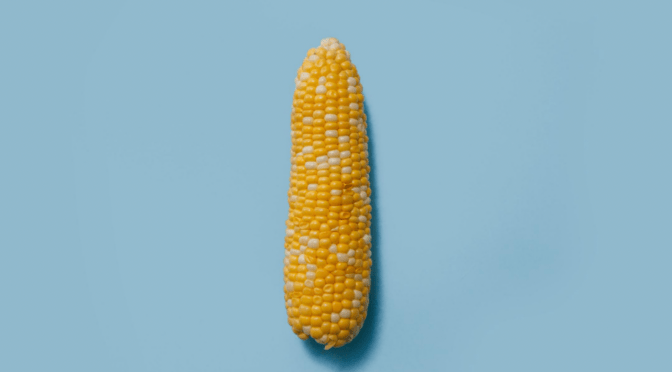
Did you know around 10,000 years ago in Mexico, people took the very first step to domesticate maize (corn). They did this by choosing which seeds to plant, and some were better than others, so they saved the better seeds for the next season’s harvest, and this is how corn has been selectively bred.

There has been a problem that occurred because fruits have been too sweet. For example, zookeepers have been feeding red-pandas and monkeys a fruit centric based diet to mimic their natural wild diet. But it has been discovered that the fruits were too sugary for their diets. The animals’ diet has been changed to a more healthier diet. But this implies that our fruits have been modified to the point that certain animals cannot eat them as they would damage their health.

“Some fruits, such as plums, have almost double the soluble sugar content than what they would have recorded 20 years ago,” said Ranadheera according to the Weather Channel. Which means that in this period of time fruits have been more modified because of improvements in technologies.

Fruits being modified have been the usual for us humans. It has been dated back to 8,000 BC. Today’s fruit have a very long history of small changes to make them bigger, tastier, and more colorful to satisfy our own pleasure.

As stated by Learn.Genetics, “Minor changes to influential genes can produce rapid evolutionary changes.”

For more information, please visit:

What is a solar eclipse and when is the next one?

By: Natalia Gercheva

Image created with Wonder

As many of you may know, on October 14, 2023, an annular solar eclipse occurred. In this article, I will be discussing what a solar eclipse is, the different types, the difference between a solar and lunar eclipse, and when the next one will be, so you have a chance at seeing it yourself!

A solar eclipse happens when the moon passes between the sun and Earth. This obscures the face of the sun either fully or partially, and casts a shadow on Earth. A total eclipse can last anywhere from 10 seconds to 7.5 minutes.

There are 4 different types of solar eclipses which are: total, annular, partial, and hybrid eclipses.

A total solar eclipse is when the moon is completely blocking the face of the sun. The sky will darken, as if it were dusk or dawn.

An annular solar eclipse happens when the moon is at or near its farthest point from Earth. The moon will appear smaller than the sun, and does not completely cover it. As a result, it creates what looks like a bright disk ring around the moon.

A partial solar eclipse happens when the sun, moon, and Earth are not perfectly lined up. Only a part of the sun will appear to be covered, giving it a crescent shape.

Lastly, one of the least common is the hybrid solar eclipse. This occurs because Earth’s surface is curved, and an eclipse can shift between annular and total as the moon’s shadow moves across the globe.

Solar eclipses can often be confused with a lunar eclipse, which is when Earth’s shadow falls upon the surface of the moon, turning it a striking red over the course of a few hours. Solar eclipses are only visible from a narrow strip of land over which the moon’s shadow passes.

Lunar eclipses are visible from the whole nighttime hemisphere due to Earth’s large shadow. Solar eclipses occur 2-5 times per year, but due to the moon’s small shadow being cast on Earth, the same spot only gets to see a total solar eclipse for a few minutes about every 375 years.

Lunar eclipses happen 0-3 times per year, and if you live on the nighttime half of Earth when the eclipse happens, you are much more likely to see it. Luckily, NASA can predict both solar and lunar eclipses for 1,000 years into the future.

It is extremely important to protect your eyes if you are looking directly at the sun while watching a solar eclipse. You can look through solar filters, like eclipse glass, or use handheld solar viewers.

Many of you may remember in August, 2017, there was a total solar eclipse. I remember watching it outside using the solar glasses, but I never understood exactly why the sky was going dark. On October 15th, this year, I was looking out my window trying to watch the annular solar eclipse. Unfortunately, it was an extremely cloudy day, so I was only able to view a small portion of it for a few seconds. The next annular eclipse will be October 2, 2024, and I hope to see it then!

I highly recommend checking the future eclipses website on NASA every few months so you can mark your calendars for the upcoming eclipses. On April 8, 2024, North America will experience a total solar eclipse! It truly is an incredible sight to see, where you get to view the solar system’s wonders through just your window or from your backyard!

TFor more information, please visit:

The Ocean Cleanup

By: Samson Belihu

Image created with Wonder

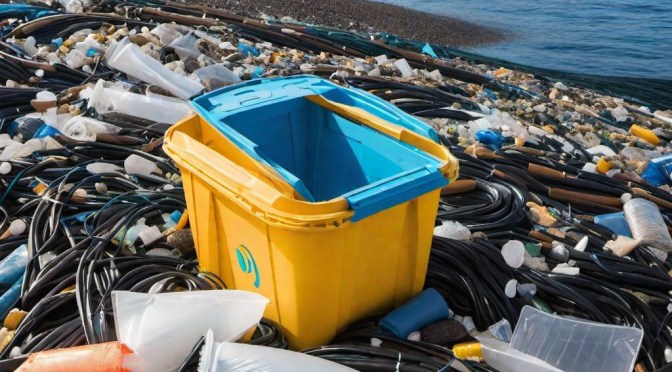
The Ocean Cleanup is an organization working on cleaning the ocean.
Millions of pounds of plastic that are in the oceans as we speak.

Millions?

Yes, millions of pounds worth of plastic under the oceans, and thanks to this organization, they are doing their best to get rid of the plastics in the oceans.

They have impacted the world in a good way. According to their website, they have worked on cleaning 1000 rivers around the world. They said we can halt 80% of river pollution reaching our oceans. And they have also picked up 100 million kilograms of plastic. If we transfer that into pounds, that’s more than 220 million pounds of garbage and plastic.

Imagine what the ocean would have been like without this organization. They have saved the oceans and the animals that reside in the ocean. The Ocean Cleanup is a non-profit that continues to develop and scale technologies to rid the oceans of plastic.

On September 20, 2023, they made a video of the biggest plastic extraction they ever made: 18,360 kilograms, which rounds up to 40,000 pounds worth of trash. If you want to watch the video: here’s the link: https://youtu.be/wjF0gB29OG4?si=rD4kMgL7qu0DaRLz

Their goal is to remove 90% of the plastic that is in the ocean. This isn’t the only time they have gotten thousands of pounds of plastic. They have started this journey ever since 2013. Dutch inventor Boyan Slat founded The Ocean Cleanup at the age of 18 in his hometown of Delft, the Netherlands, and is still going at it. That equals up to 10 years of cleaning up trash from the ocean.

For more information, please visit:

Some of the best frogs to have as pets

By: Isabelle Baidoo

Image created with Wonder

Frogs have become a very common pet in recent years due to their small and cute stature. Although they seem like they would be pretty simple pets, they require lots of care and attention.

Research before purchasing a frog is crucial to proper care. Some things you should know before making a frog part of your household is that all amphibians have very absorbent skin. This skin will easily take in chemicals, natural oils, and lotions found on human hands which are all toxic to frogs. Before handling a frog you must wash your hands thoroughly with filtered water, and make sure you use no lotions or creams on your hands. Then before handling, put gloves on to ensure the frog’s safety.

Another thing you need to know is that frogs don’t understand clear glass barriers, which are commonly found in tanks/aquariums. This can cause the frogs to rub their noses against the glass in an attempt to try and reach things outside their tank. This can be prevented by putting paper along the outside of the tank so they can’t see what’s on the outside.

Most adult frogs do not need to eat daily, and should only be fed every 2-3 days. Juvenile frogs under the age of one should be fed daily to ensure proper growth and health.

Yellow Banded Dart Frog

The first frog recommended as a pet in this article is the Yellow Banded Dart Frog, also known as the BumbleBee Dart Frog. These frogs are in the Poisonous Dart Frog Family and are found throughout South America in tropical rainforests. They are commonly found near water in the wild and are expert climbers. These frogs are still very abundant in the wild, but the majority of pet frogs for sale in the US are bred in captivity.

These frogs are insectivores and commonly eat small fruit flies and pinhead crickets. They are yellow and black in coloration and have yellow and black splotches all over their bodies. They are a relatively small frog at only 1.5 inches long. The Yellow Banded Dart Frog lives for roughly 10 years in captivity and as pets.

These frogs require a 10 gallon tank with 75F-85F temperatures and a high humidity percentage. Without roughly 90% humidity it is much more difficult to keep these frogs healthy. These frogs are not meant to be handled often, and if they are, their handler must wear gloves due to their venomous skin.

White’s Tree Frog

Then there is the White’s Tree Frog, native to Australia and Southern New Guinea. These frogs can grow up to 3-5 inches in length and live for 7-10 years.

In the wild, they spend most of their time in trees so they need lots of climbing enrichment. This can be made by having branches laid vertically across their tanks.

A tall 15-20 gallon tank is recommended for one frog. They need their tanks to maintain a 75F-85F degree temperature during the daytime and 68F-75F in the evenings. Lighting should be subdued and if lighting is needed at night the use of a nocturnal light bulb is crucial. 12 hours of light and 12 hours of dark is recommended for the White’s Tree Frog. Their tank should remain at 60-70% humidity.

The White’s Tree Frog is nocturnal, meaning they’re more active in the nighttime. They are quite sedentary and docile, and often become fairly tame and tolerant of handling so long as their owner treats them well, and the frog itself is healthy.

Their diet ranges from how big and how old the frog is. Fully grown White’s Tree Frogs might take a pinkie mouse on occasion but not often. These frogs are not to be over fed because obesity is a common issue these frogs face. Large frogs should be fed every two to three days, ranging from live bugs such as: crickets, insecticide free moths, beetles, cockroaches, grasshoppers, or earthworms.

Burmese Chubby

The Burmese Chubby, also known as the Asian Painted Frog, is a large frog from Southeast Asia. They are excellent swimmers, climbers, and diggers. They live up to 10 years and adapt to new environments very well and quickly. They’re 2-3 inches long and have brown coloring with cream bands wrapped around their bodies.

These frogs require a 10-15 gallon tank and can be
housed with one other frog with caution. They don’t
croak often and when they do it’s a rather quiet and subdued noise which makes them great for people who don’t want to constantly hear croaking from their pet. Although they are a quiet breed it’s better for them to not be handled, the Burmese Chubby is better off inside its enclosure away from hands.

They can be fed a range of live insects such as: crickets, locusts, flies, and earth worms. As an occasional treat, owners can feed these frogs waxworms and mealworms but not too many and not too often. On average they will eat five crickets every two days.

African Bullfrog

Then lastly, the African Bullfrog, which is loved for its unique size and behaviors. They originate from South Africa and are commonly found in Tanzania. They’re a non-venomous species and they spend the majority of the year buried underground. This is their way of staying cool in hot temperatures and avoiding predators. With good attention and care they can live up to 35 years as pets. They are easygoing and tolerate handling once in a while.

Male African Bullfrogs are much larger than females and can grow up to 10 inches in size. They’re olive green in color and have yellow or cream throats.

They need a 20 gallon tank with plenty of moist dirt for digging and coverage. The temperature of the tank should be 72F to 85F. A temperature drop to 68F during the night may be beneficial to their health.

They need to eat at least 3 times a week due to their larger size, but when they’re less than a year old they should eat daily. These frogs are carnivores and eat small fish fry, brine shrimp, frozen blood worms, small white worms, or earthworms.

A brief history of axolotls

By: Isabelle Baidoo

Image created with Wonder

Axolotls have been on earth for roughly the last 10,000 years, inhabiting central Mexico. Much of their suitable habitat has been drained or dried up, so there are only two spring-fed lakes left that they can inhabit wildly. Axolotls breed very easily in captivity and quickly develop new colors and sizes.

They have feathery gills spouting from either side of their heads, webbed feet, a dorsal fin that runs down their body, and a tail. Although axolotls have gills, adult axolotls have functional lungs and can breathe through their skin. Axolotls are unique compared to other salamanders because they reach adulthood without going through metamorphosis. Instead of going to land once they’re fully developed, they remain aquatic and keep their gills.

These creatures have the ability to completely regenerate their limbs. Regeneration is initiated by injuries or wounds, but not all injuries result in limb regeneration. Small cuts, scrapes, or bruises wouldn’t result in complete regeneration but their healing time is much faster than humans.

Axolotls suck in their prey through their small smiling mouths, they eat crustaceans, mollusks, insect eggs, and small fish.

The pet trade of axolotls started from Paris, France in 1864 when Mexican traders brought axolotls to Europe, Europeans across the continent were intrigued by the exotic creatures. This led to the excessive breeding of axolotls in captivity.

The pink axolotls you commonly see as pets have been bred to be those colors; wild axolotls are mostly gray, brown, or black. Pink axolotls are extremely rare in the wild since they can’t camouflage well.

When keeping an Axolotl as a pet you must take into consideration that they prefer cool water. Their water temperature should be less than 70 degrees F. When feeding your pet, experts recommend you attempt to replicate its natural diet as closely as possible. You can do this by feeding them a combination of earthworms, brine shrimp, and daphnia. Daphnias are a small aquatic crustacean.