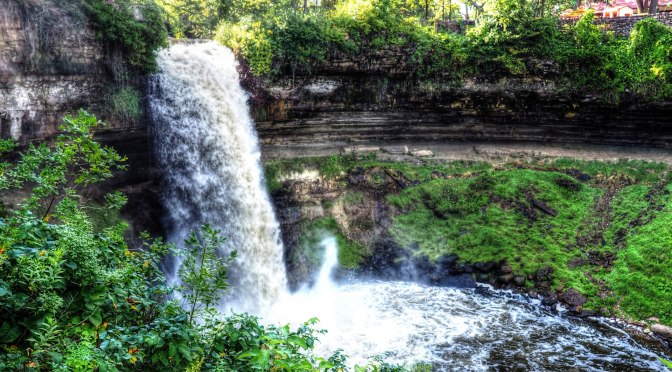
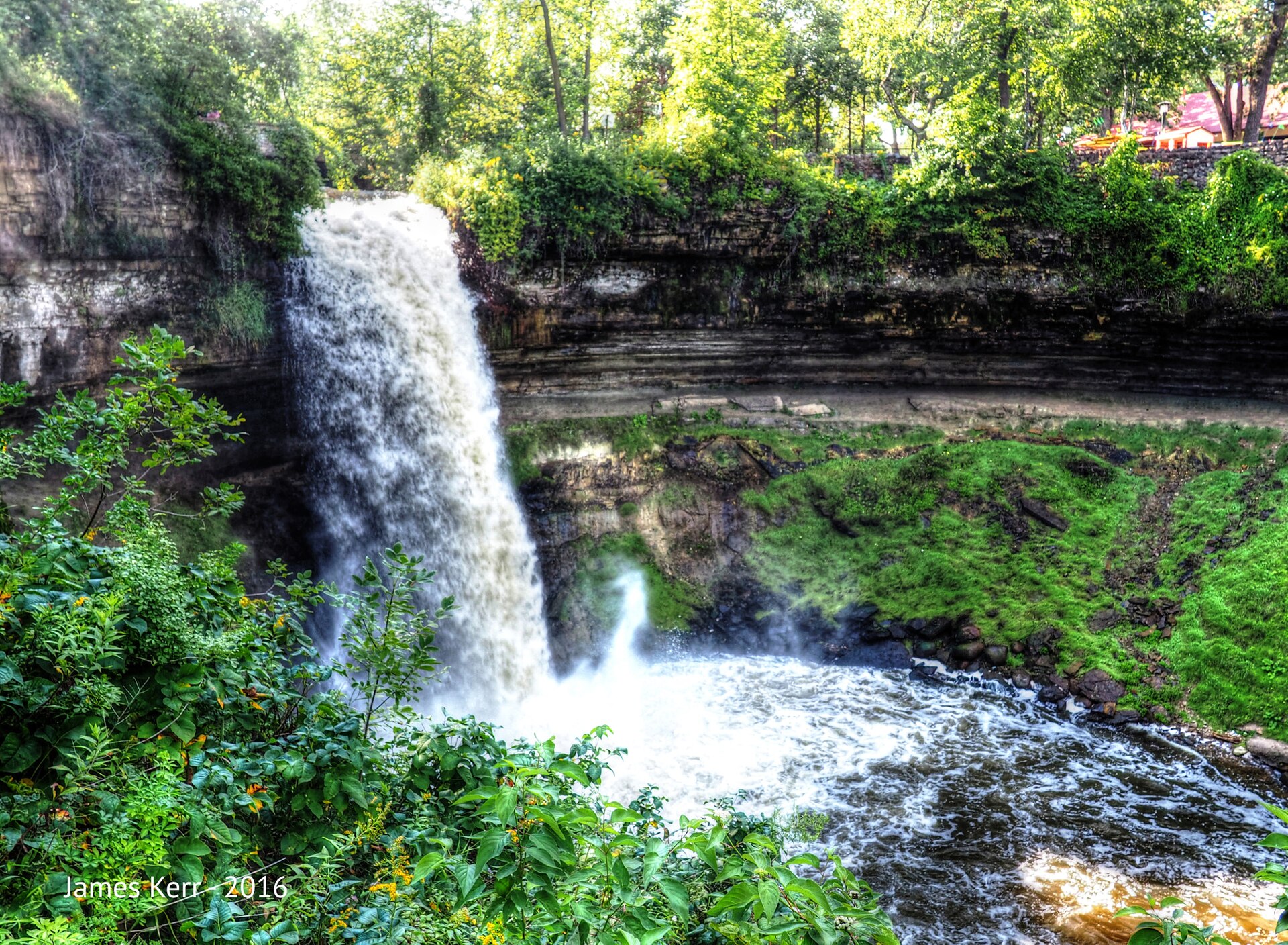
Minnehaha Falls at Minnehaha Park. Before 29, December 2016, by James Kerr via Wikimedia Commons
The random nice day felt so good, and I know a lot of people were excited because it means it’s finally nice out. However, the next day, it went back to 30 degrees after having the 70 degree, almost summer day. People think this is odd, but it’s actually called a “fool’s spring” or “false spring.”
They call it this because it tempts us with a nice day and then reverts to winter, making us even more ready for spring to start. It feels like the Earth is teasing us, but there is a scientific reason for it: it happens when the atmosphere changes and arctic air moves south. Aside from that, it’s a sign that spring is coming, but that it will take time and temperatures will rise slowly, not rapidly.
Going back to last Saturday, March 21st, it was beautiful out with a nice 77 degrees, almost pushing 80. People were out and about enjoying the weather, walking their dogs, biking, and even picnicking at the park. I went to Minnehaha Falls to walk some trails. The snow was gone and the ice on the falls was melting; you could actually hear the cracking of the ice moving, even though there were so many people there.
For more information on when it’s going be nice out, visit:
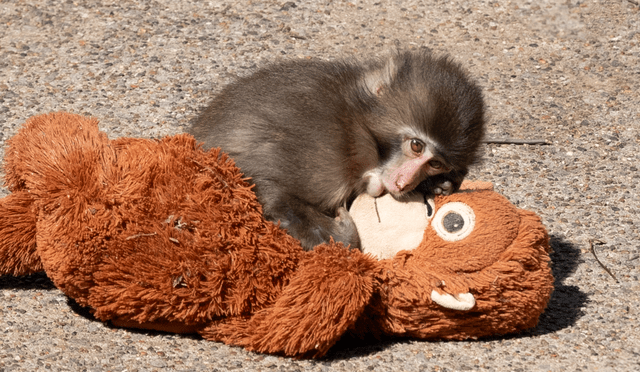
We went and asked some people what they thought about Punch the monkey. He was the monkey that was being bullied by other monkeys in Japan. Because he was abandoned by his mom he had a stuffed animal he was attached to. There was a video that people saw online where they learned about him.
Image of Punch-kun kissing his plush in Ichikawa Zoo by Daiei Onoguchi via Wikimedia Commons
Scientists in Minnesota and around the world use WMI or the Winter Misery Index to show how severe that year’s winter season was after finding out how much it snowed and what the temperature was. Scientists give those certain categories a number ranking that determine where that year’s winter falls on a scale of moderate to severe.
Last year, the 2024/2025 winter season was called mild in the index chart. It was actually shown that it was one of the easiest and calmest winters that we’ve had in decades. The snow was very inconsistent. It would snow 7 inches one day and it would all melt and then it would be a 40° day for the next week and a half.
But this year, the 2025/2026 winter is already a lot different. We have had snow, cold weather, and the snow has stayed making this winter a lot more wintry than last year’s. Even if we end up with only 10 or 15 more inches of snow than last year, the big difference is that the snow will have actually stayed and not just until January like last year when we had the weird 50° days that melted everything in January. We’re now in March and there’s still snow on the ground this year.
The weather has been so steady that the temperatures have stayed and the snow is piling up and not melting, which for some people could be really annoying because they like spring or for some people that could be really enjoyable because they like looking at the snow.
I like winter, but this just shows that Minnesota winters can be very unpredictable and just because last year’s winter wasn’t that cold, and there wasn’t that much snowfall, doesn’t mean the winter after that is the same.
Did you know that stars have a life cycle the same way that humans do? While stars can live for millions or even trillions of years—much longer than a human’s lifespan—they have their own stages of life too; they grow and die like us. So, what is the life cycle of a star?
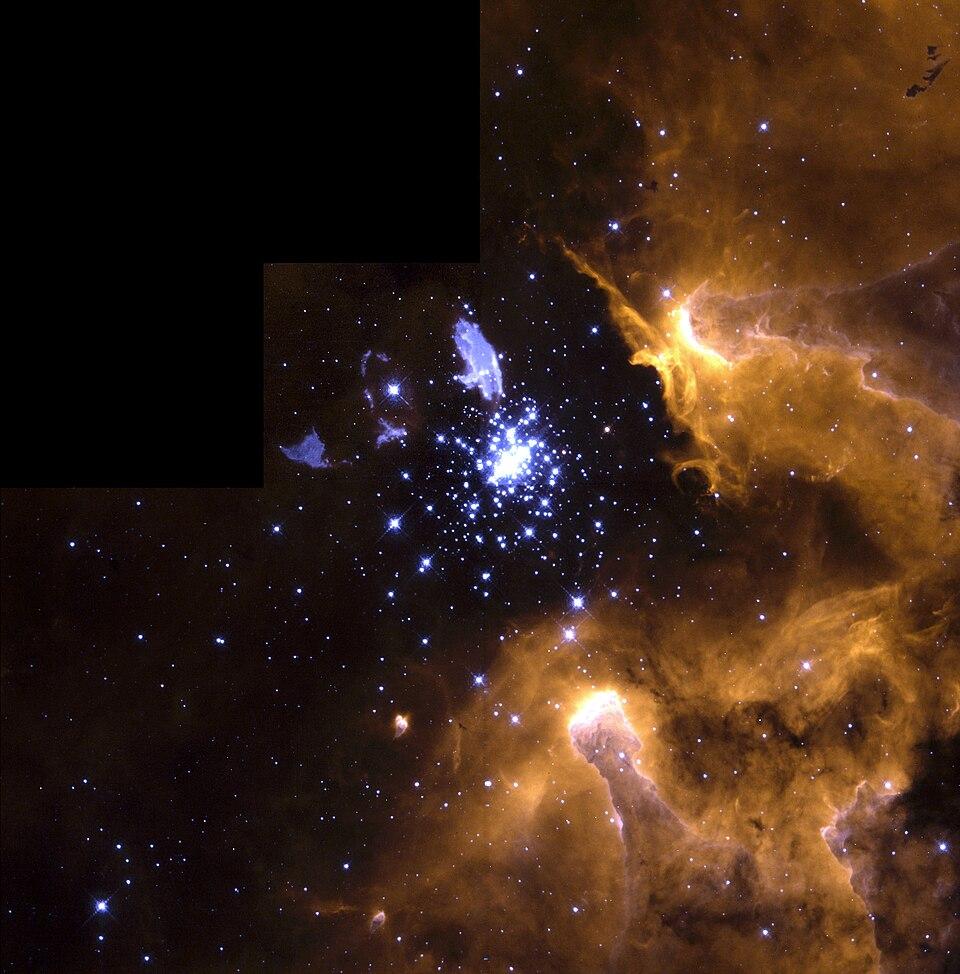
To begin with, all stars start in large clouds of gas and dust called molecular clouds, or nebulae. These clouds can range from 1,000 to 10 million times the mass of the Sun and they can span up to hundreds of light-years. In these clouds, gas clumps together due to the low temperature, and these clumps collect more matter and gain more mass, which strengthens their gravitational force. However, some of these clumps will collapse from gravity while friction heats the matter up, leading to the formation of a new star, called a ‘protostar’. Several of these protostars can be formed in one molecular cloud.
After the protostar’s creation, most of its energy comes from the heat released due to its earlier collapse. However, the mean temperature of the star isn’t high enough for nuclear fusion to occur yet. This is called the T-Tauri phase, lasting for around 100 million years before the star enters its longest life stage: the main sequence.
In the main sequence phase, the star’s core temperature is high enough for nuclear fusion to occur by the higher temperature and immense pressure squeezing the nuclei of hydrogen atoms together to form helium. The energy released from this process heats up the star and prevents it from collapsing due to gravity. The Sun is currently in this phase.
A star’s mass determines its lifespan; lower-mass stars will burn longer and thus, live up to trillions of years. Higher-mass stars, however, require more energy to keep itself from collapsing, and so they burn faster and can live up to only a few million years. A star’s mass can also determine how it will die later on.
For all stars, the beginning of the end of a star’s life begins when their cores no longer have any hydrogen to fuse into helium. The core will start to collapse due to the lack of energy balancing gravity’s tendency to pull matter together, while the star starts to puff up from the increased temperature and pressure. From this point, however, the mass of a star is the main determining factor in how a star will die.
With a lower-mass star, its core will fuse helium into carbon as its atmosphere expands, and it either becomes a subgiant or a giant star. Eventually, all of the star’s outer layers will blow away, create a cloud of dust and gas called a planetary nebula, and leave behind its core, now called a white dwarf. Its size is about the same as Earth’s, and it’ll cool down over billions of years.
Higher-mass stars, however, will have a more explosive end. A higher-mass star’s core will begin to convert carbon into heavier elements like oxygen and magnesium after running out of hydrogen to fuse into helium, which becomes its fuel. While converting more elements produces energy for the star, this isn’t a permanent solution. In a few million years, once a star starts fusing silicon into iron, it will run out of fuel in just a few days since it will lack the energy required to fuse iron into a heavier element.
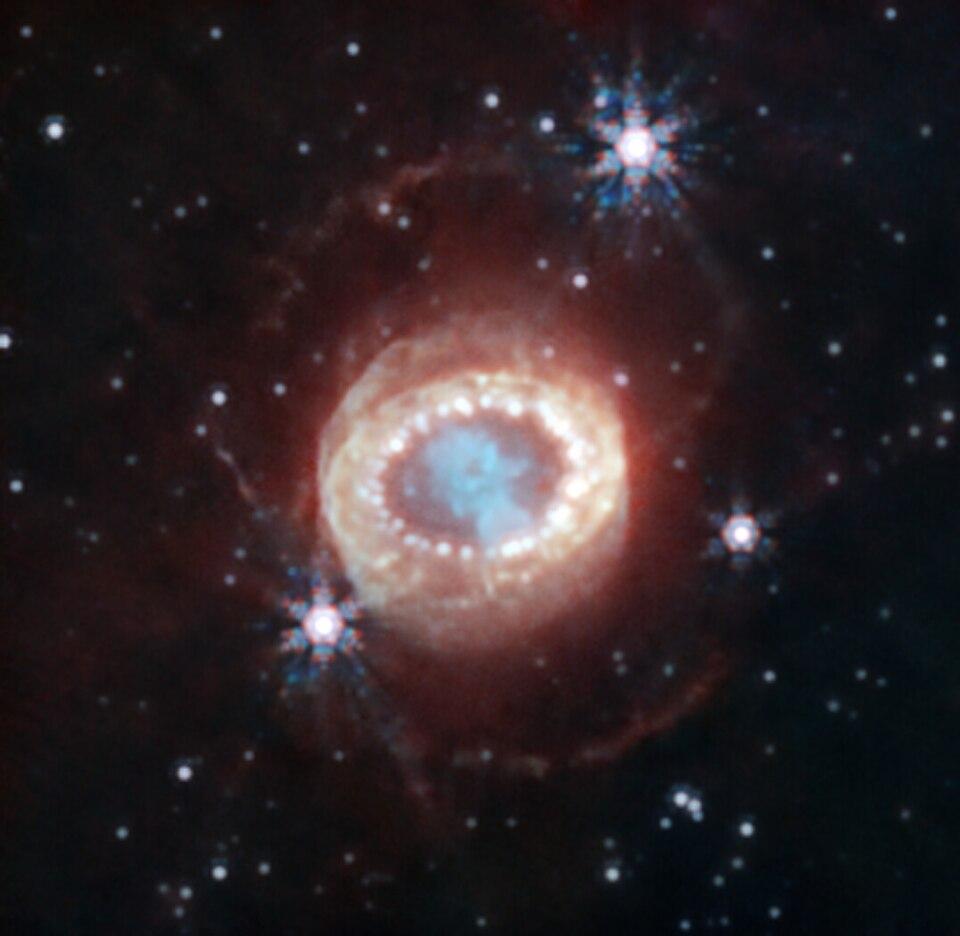
The core collapses until forces between the nuclei push and rebound, causing a shockwave that moves outward from the star and creates an explosion called a supernova. The explosion moves the star material far away into space, leaving behind the core, which can either implode into a neutron star or become a black hole.
Have you ever wondered why, after being perfectly green all summer, trees suddenly explode into bright red, yellow, and orange colors every fall? It’s not magic, it’s science, and it’s a critical way trees prepare for the cold weather ahead.
The Color Change Explained
During spring and summer, leaves act as tiny food factories for the tree. They are filled with a green chemical called chlorophyll, which is essential for photosynthesis, the process of using sunlight to make food (sugar). Because there is so much chlorophyll, it completely covers up all the other coloring chemicals, or pigments, in the leaf, making everything look green.
As summer ends, the days get shorter, signaling to the tree that it’s time to stop food production and get ready for winter. The tree stops producing new chlorophyll, and the existing molecules quickly break down. This disappearance of the green pigment reveals other colors that were hidden all along.
The Colors That Were Always Hiding
As the green fades, the yellow and orange colors, created by pigments called carotenoids, become visible. These pigments are always in the leaf but are simply masked by the strong green chlorophyll.
However, the deep reds and purples are created by a different pigment called anthocyanin, which is not present during the summer. Anthocyanins are made in the fall when the tree seals off the leaf stem, trapping sugars inside the leaf. When these trapped sugars are exposed to bright sunlight, they create a brilliant red color. Scientists believe this red acts like a protective sunscreen for the leaf while the tree quickly pulls out and stores all the important nutrients before the leaf falls.
Why Trees Drop Their Leaves
The color change is the first part of the tree’s survival plan for winter. The main reasons trees shed their leaves is to save water and prevent damage. Leaves constantly lose a lot of water. When winter comes and the ground freezes, the tree’s roots can’t suck up new water. By dropping its leaves, the tree avoids drying out and enters a state of, like a long sleep, to conserve water until spring. Additionally, being leafless prevents heavy snow and ice from building up on branches, which would otherwise cause them to break.
Thus, the spectacular colors of fall are a clear sign that the tree is being smart, preparing for a long, cold winter rest
In recent years, you may have noticed that our fall season has become much warmer, and so has our winter season as well—snow comes later in the year, and according to an article by NPR, the 2023-24 winter season saw the 48 lower states in the U.S. had their warmest winter in 130 recorded years. And in the U.S., winter is the season that’s warming faster than any other. However, why is this change occurring?
The main cause of these warmer seasons is climate change, and in particular, global warming. While Earth’s climate has changed across time, with ice ages and warmer periods, this current global warming is caused by human activity; specifically, how we add heat-trapping gasses to the atmosphere. When we do this, we produce gases such as carbon dioxide that come into the atmosphere and trap more of the Sun’s energy on Earth, which is warming up the planet. According to NASA, Earth’s average surface temperature has increased by 2 degrees Fahrenheit since the late 19th century, caused mostly by carbon dioxide emissions.
As these average temperatures rise, the coldest season is being affected the most. According to the Climate Reality Project, average winter temperatures across the 48 contiguous states have increased by 3 degrees Fahrenheit since the pre-industrial era. Because of this, many areas are beginning to see warmer winters overall. But how else is climate change affecting winter weather?
One of the other effects of climate change on winter, besides warmer overall temperatures, is that there’s more precipitation during the season, which can either be rain or snow. This happens because a warmer atmosphere can hold more moisture within; this excess moisture is released from the atmosphere as precipitation.
Another effect of climate change on winter is that severe winter storms, such as ice storms and blizzards, are becoming both more frequent and more powerful. This happens because there’s increased energy in the atmosphere from the Earth’s general warming, which can make these events more volatile. Furthermore, a powerful air current called the jet stream is starting to change easier. Because it can influence weather patterns, its shifts may lead to sudden changes in both temperature and precipitation.
Comets are bodies made of ice covered in dark organic material, including dust. These comets are leftover from the dawn of our solar system about 4.6 billion years ago, and it’s speculated that comets may have brought water and organic compounds to Earth and other planets.
There’s a belt of icy bodies beyond Neptune where dark comets orbit the Sun around Pluto. Some of these comets are pushed closer to the Sun from gravity in other orbits, and they take around 200 years to orbit the Sun. These are called short-period comets, and their appearances are easier to predict. However, there are also long-period comets; these comets come from a region called the Oort Cloud about 100,000 AU (astronomical units) away from the Sun. Long-period comets can take about 30 million years to complete just one orbit around the Sun.
But how are comets structured? Each comet has a nucleus that’s a few miles wide; this part contains ice, frozen gases, and some embedded dust. As a comet orbits around the Sun and gets closer to it, the comet heats up and develops its own atmosphere, which is called a coma. As the comet heats up, the ice in the nucleus becomes a gas and makes the coma grow in size, and the coma can extend to thousands of kilometers. Pressure from sunlight and solar winds can also blow gas from the coma and dust away, creating a trail or a ‘tail’ on the comet.
A particularly famous comet is known as Halley’s Comet, which has been observed for around 2,000 years. It’s named after English astronomer Edmond Halley, who accurately predicted that the comet would return in 1758, thus proving that comets orbit around the Sun and don’t pass through the solar system once, which was a popular belief beforehand. Halley’s Comet takes 76 years on average to orbit the Sun, which makes it a short-period comet. It was last seen from Earth in 1986, and it will likely be next seen in 2061.
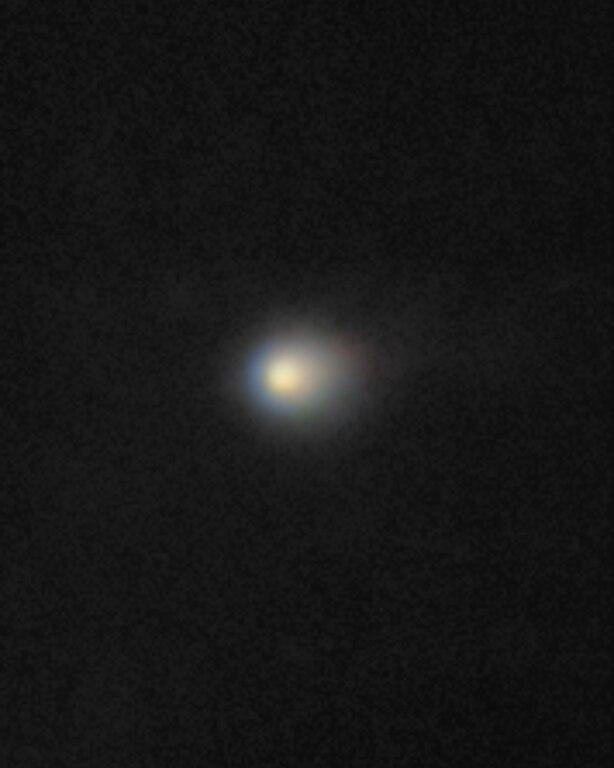
One notable comet right now is the 3I/ATLAS comet, which NASA first made observations on in July 2025. It is named after the ATLAS (Asteroid Terrestrial-impact Last Alert System) telescope that first recorded the sight of the comet. It doesn’t follow a closed orbit around the Sun, and its origins are outside the solar system, making the comet interstellar. The 3I/ATLAS comet reached its closest point to the Sun on October 30, 2025, at which point it became too close to the Sun to observe. However, it’s expected to reappear on the other side of the Sun in early December 2025, and it will be able to be observed again.
According to the Planetary Society, we see around two to five solar eclipses every year and about two lunar eclipses each year as well. When these occur, we like to observe and take photos of these phenomena. But what is an eclipse in the first place? And what is the difference between solar and lunar eclipses?
A solar eclipse occurs when the Sun, Moon, and Earth align in such a way that the Moon blocks sunlight from reaching the Earth and casts a shadow over an area of the Earth’s surface. For this to happen, the Moon needs to be perfectly aligned between the Earth and the Sun. But, a total solar eclipse doesn’t occur very frequently because the Moon doesn’t orbit in the same plane as the Earth and the Sun. Instead, it orbits in the ecliptic plane, where it’s tilted by five degrees, and because of this, the Moon’s shadow often misses Earth.
There are only two times a year where a new moon has an opportunity to show a solar eclipse when it crosses the Earth-Sun plane, called ‘eclipse seasons’. When a total solar eclipse happens, the Moon directly blocks most of the Sun. However, the Moon doesn’t completely block the Sun, allowing the Sun’s outer atmosphere—called the corona—to be briefly visible to us on Earth. A partial eclipse occurs when the Moon and the Sun aren’t aligned well enough to show a total eclipse, so only a part of the Sun is blocked.
But what about the shadow that’s cast on Earth’s surface during a solar eclipse? It has two main parts, called the umbra and penumbra. The umbra is the inner shadow, usually around 50 miles wide, and only within it is a total solar eclipse visible. The penumbra, on the other hand, is the outer shadow that can span around 1,000 miles; only a partial eclipse is visible from this area.
The Moon’s shadow traces a path across the Earth’s surface as it continues to orbit our planet, called the eclipse path, and it takes around four to five hours for the Moon’s shadow to fully pass over Earth. Within the eclipse path, the path of the umbra is called the path of totality, and along the path of totality, a total solar eclipse lasts for about a few minutes.
A lunar eclipse occurs when the Moon is covered by the Earth’s own shadow, preventing sunlight from reaching it. This phenomenon works similarly to how solar eclipses work; when the Earth is positioned between the Sun and Moon and casts its own umbral shadow onto the moon. This doesn’t happen every month for the same reason that total solar eclipses don’t happen frequently: the Moon rotates on its own ecliptical plane, and when it rotates around Earth, it won’t always line up with Earth’s shadow.
However, when it does, we can observe that the Moon becomes a shade of red. Why does the Moon appear to change color? This is due to the Earth’s atmosphere scattering blue light coming from the Sun. As it does so, the edges of the atmosphere reflect a bit of red light onto the Moon’s surface, making it appear red. This is what’s usually called a ‘blood Moon’.
It’s important to note that blood Moons are only seen during a total lunar eclipse; when there’s a partial lunar eclipse, the Moon doesn’t fully pass through the Earth’s umbra, so only parts of the Moon will appear to be red. Lunar eclipses are also much longer than solar eclipses, as a total lunar eclipse can be as long as an hour and 45 minutes.
According to the National Institute of Health, the human body has over 30 trillion cells, each in their own cycle of growing, dividing by mitosis or meiosis, dying, and being replaced. There are around 200 different kinds of cells in our bodies, but during the cell cycle, any one of these cells could begin to replicate uncontrollably, leading to cancer.
However, there is a small gene in the nucleus of each of these cells that can protect our cells from dividing uncontrollably and becoming cancerous tumors. This is called the p53 gene.
What is the p53 gene?
The p53 gene, or the tp53 gene, is located on chromosome 17, in the nucleus of many of our cells. The gene specifically controls instructions that are required to make a protein named tumor protein p53, which binds directly to the DNA in the nucleus of the cell. But, what does the protein itself do?
As implied in the name (tumor protein p53), this protein helps to prevent the creation and growth of tumors by controlling cell division to ensure that damaged cells don’t divide uncontrollably.
Because the p53 protein is bound directly to the DNA in each cell, it can detect whether a cell’s DNA is damaged. A cell’s DNA can be damaged by many things, including radiation or exposure to toxic chemicals, which can cause the processes of cell growth and cell division to go wrong; this is where the p53 protein becomes extremely important.
The protein plays an important role in determining how the regulation of damaged cells will occur. For example, if the DNA in the cell can be fixed, the p53 protein will activate other genes to repair the damaged DNA. However, if the damage to the DNA can’t be repaired and the cell still poses a risk of uncontrollable growth and division, the p53 protein will send signals to tell the cell to begin the process of apoptosis, or self-destruction.
The p53 gene and protein’s importance lies in its function of regulating cell division, which is crucial in preventing many types of cancer throughout our bodies. However, some people have mutations of the p53 gene.
What this means is that the p53 protein no longer functions as it should, which can lead to fast and unregulated cell growth and division without the protein to prevent this. These non-inherited (or somatic) mutations are linked to half of all cancers. An inherited mutation can lead to a cancer syndrome called Li-Fraumeni syndrome, which increases a person’s risk of developing multiple kinds of cancer, such as breast cancer and bone cancer.
Image taken by Josh Backflip via Wikimedia Commons
Bunnies are a very common animal, and oftentimes in the city you will see a few casually around your neighborhood. In the United States, the bunny population is an estimated 6.5 million, 4.3 million of which are wild bunnies, while 2.2 million of them are household pets. This number may seem high, but their population has been decreasing slowly over the past few years. This is because of multiple factors: like habitat loss, changes in available food and shelter, diseases, and increasing predators.
Typically, wild bunnies live up to 8-12 years. They are very small, and cute. They have excellent eyesight, digestion, and hearing. They have a wide variety of colored fur too, some of which are just one solid color, like brown, white, black, or grey, but sometimes they have a mixture of colors of fur.
Bunnies can have multiple litters per year, usually 3-5 every year. Each litter can contain anywhere between 4-12 babies. In the cities, it’s not too uncommon to find a nest of baby bunnies in your backyard.
Bunnies are very social and expressive animals that thrive in groups. Research has actually shown that they are very good at communicating, and they are excellent at forming strong bonds and friendships with each other. Bunnies can actually become very sad if they are deprived of being social with others.
Another thing that really shows how expressive bunnies can be are their binkies. A bunny can express its happiness through a leaping, spinning, kicking behavior called a “binky.” These are a very fun aspect of their behavior.
For the most part, wild bunnies are very calm, and unproblematic to their surrounding environment, although in some cases in the city it can be a struggle to maintain a garden if there are constantly bunnies eating the plants you may be trying to grow.
The Official Online Newspaper, Literary Magazine, and Video News of the Highland Park Scots







 Plaid Line + PRIZM + Scottie News

_(SN1987a-1).jpg)


