Category Archives: News

Daydreaming: The reason behind it

By: Fletcher Pike & Hermekay Dehaney

Image generated by ChatGPT

Daydreaming can be defined as “[A] series of pleasant thoughts that distract one’s attention from the present.” We’ve all been in a situation where you have zoned out, lost in thought, completely unaware of what’s happening around you. Daydreaming manifests in different ways and constantly surrounds our mind daily, whether thinking about an old memory, imagining a future conversation, or just making up a random scenario in your head.

People typically spend up to 30% of their lives engaging in daydreaming. Although daydreaming can sometimes distract us from our tasks, it is still a part of human nature.

But why do we daydream?

Research has revealed why our mind wanders. The regions in our brain, made up of the medial prefrontal cortex, posterior cingulate cortex, and temporoparietal junction make up the Default Mode Network (DMN). The DMN becomes active and consumes energy when the brain is at rest. According to Scientific American, it says, “[M]ost things we do consciously, be it sitting down to eat dinner or making a speech, mark a departure from the baseline activity of the brain default mode.” The DMN is also involved in processing memories and scenarios.

The hippocampus is a brain structure that involves the formation of our memories. Essentially, it helps store your memories. When you daydream, you activate the hippocampus, which is why we may sometimes play back memories when we daydream.

The benefits of daydreaming

Daydreaming is considered a normal habit and can even be beneficial for creativity. Those who daydream will likely have a more creative outcome because they can process their thoughts and explore other ideas. Many people get their creative ideas as a result of daydreaming, such as book ideas, drawings, or even articles.

Daydreaming can also help in problem-solving situations by being able to concentrate on the task at hand by blocking out distractions. It can help accomplish a goal by focusing on finding a solution quicker as your brain is actively searching for a way to solve the problem.

Daydreaming itself can reduce stress and anxiety as daydreaming is a period of relaxation. When you daydream, you allow your mind to cancel out troubling thoughts and worries that you might have. It can also help boost your mood if you’re having a rough day.

Downsides of daydreaming

It is estimated that 2.5% of people experience excessive daydreaming, also known as maladaptive daydreaming. Maladaptive daydreaming occurs when a person experiences excessive daydreaming that can interfere with their everyday life and can have serious consequences. It is an unhealthy coping mechanism for issues such as anxiety or severe stress. Maladaptive daydreaming usually includes highly vivid and prolonged daydreaming that can go on for hours on end.

Maladaptive daydreaming can be possibly triggered by a history of childhood trauma or abuse, or having traits such as high creativity. Maladaptive daydreaming itself has symptoms that can overlap with other mental health conditions, such as OCD (Obsessive-compulsive disorder) and ADHD (attention-deficit/hyperactivity disorder). As a result, the overlapping of these symptoms makes maladaptive daydreaming harder to recognize and treat.

Overall, daydreaming has both positive and negative effects that can vary from person to person. Daydreaming is a unique brain function that helps us express creativity and our thoughts. We hope that this article provides you with some interesting information about daydreaming and the reason behind it.

For more information, please visit these websites:

Capybaras

By: Maya Song

Image by Clodomiro Esteves Junior via Wikimedia Commons

Capybaras are in the rodent family, some cousins of the capybara would be guinea pigs, and rock cavies. The capybara is the largest living rodent with a height of about 2 feet and a length that ranges from 3 to 4 feet. They can weigh between 60 and 174 pounds with most of the weight being fat.

The capybara is native to South America; their habitat is in areas with dense vegetation and plenty of water bodies. They also are semi-aquatic and enjoy spending their time in water.

Capybaras are also mammals and are pregnant for about 130 to 150 days. Which means they are pregnant for about 4 ½ to 5 months. The capybaras litter usually consists of four to five pups but there can be up to eight. After a week of being born the pups can start to eat grass but continue to drink milk. The pups stay with their mothers for 16 weeks while still drinking from the females in the group.

The capybaras diet mainly consists of vegetation as they are herbivores. 80% of the capybara’s diet is different types of grasses; they also eat water plants such as reeds, water hyacinths, and water lilies. The adult capybara could eat 6 to 8 pounds per day. While the capybara’s main diet is grasses and water plants the capybara also eats fruits and grains like melons, bananas, squashes, rice, and corn.

Capybaras tend to travel in groups as they are very social animals. These groups of Capybaras are referred to as bands or herds. These bands will usually range from having 10 to 20 individuals. The bands have one dominant male Capybara, several females, and their babies. During the dry season the bands tend to get much larger as the capybaras gather around water sources such as rivers, ponds, lakes, etc.

For more information, please visit:

The amazing genetic mutations

By: Maeve Brady

In life, our DNA is vital to who we are as people by making up our genetic coding. Now, you may know about DNA and its properties, but what happens if there is a mutation in your DNA sequence? What would that mean for your genetic traits? Today, I will be giving you a more in depth explanation as to what a genetic mutation is and how it occurs whilst also explaining the basics for those who don’t know. Understanding what genetic mutations are is vital to humans because they are not only the foundation of evolution,  but they also drive genetic diversity, along with many other factors.

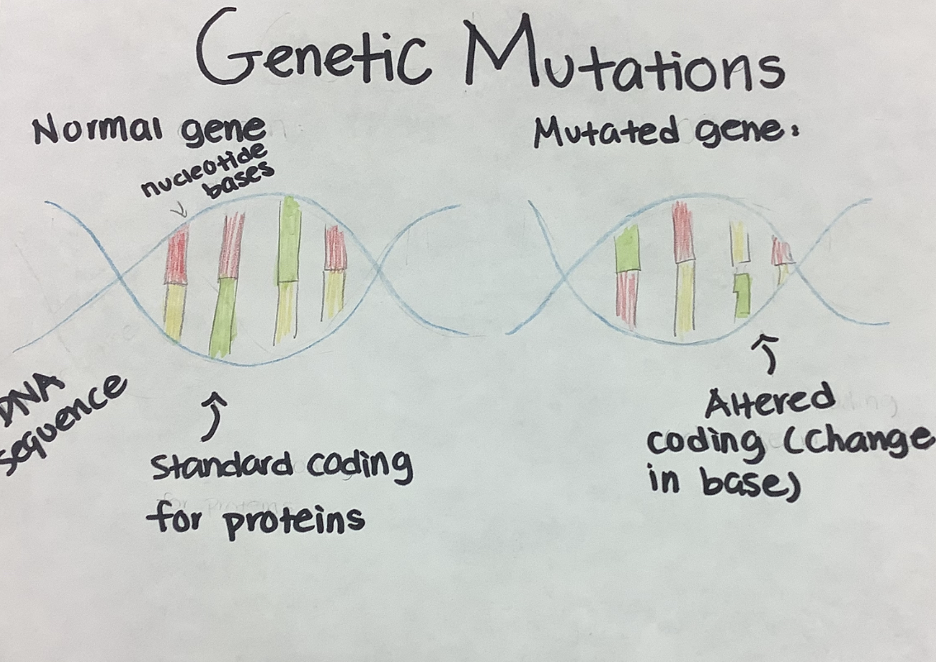
First, to better understand what a genetic mutation is, we have to review the basics. DNA, which is also known as deoxyribonucleic acid, is a molecule which carries out all of our genetic coding and just information in general. DNA is in the shape of this sort of double-helix structure, has a sugar-phosphate backbone, and has four nucleotide bases, also known as the “rungs” of this ladder shape of a structure. These bases include adenine (A) with thymine (T), and cytosine (C) with guanine (G), and, the order of these four bases ultimately determines the genetic information of a being. 

RNA is essentially described as the modified variant of DNA, with many hypothesizing that DNA stemmed from it. Chromosomes are a structure which are compact with strands of DNA, and it is located in the nucleus of a cell. Within the DNA strands, which make up a chromosome, that’s where genes are found.

Now to describe genes, they are a segment of DNA that are described as the building blocks for heredity. They contain the instructions – amino acids – for building proteins, and these proteins help determine our physical traits and other bodily functions. And, this is where genetic mutations come in.

To fully comprehend why a genetic mutation occurs, we must understand what exactly a genetic mutation is. Genetic mutations are changes to your DNA sequence that happen during cell division, and in terms of evolution, it refers to when the genetic sequence has an error when it’s being passed down. According to Ruth Jessen Hickman, a health and medical writer, “Genes contain the information, or ‘code’, needed so your body can make the many proteins it needs to function. A genetic mutation is an alteration in the genetic code found in DNA. A mutation changes the specific instructions of the gene, coded through small components of DNA. Because a genetic mutation changes the genetic coding, the resulting protein might not work the way it was initially supposed to, which can lead to disease.” This demonstrates that a mutation is usually defined as an alteration in genetic coding and can have dire results.

Proteins are typically located outside of the nucleus, where DNA resides. So, in order for the gene’s instructions to reach the proteins, which are located in ribosomes outside of the nucleus, DNA must be transcribed into RNA, since RNA can act as a messenger and bring the instructions outside of the nucleus. In order for the RNA to get to the regions where proteins are produced, DNA must change into a messenger RNA. Now, how it does this is by an enzyme called an RNA polymerase attaching itself to a segment of DNA, also known as a gene. And, each group that helps code for the amino acids which will make up a protein are called codons, and in this process of transcription, the enzyme causes the double helix structure to unwind. After the DNA is unwound, it is split into two halves, and the half that stays the same is called the non-template strand, and the strand that then becomes the RNA strand is the template half. The template half does this by using the existing genetic sequence of that half as a guide to building a complementary one to the original DNA strand. How this relates to mutations is because when a mutation action occurs, this process endures alterations.

Now, like any scientific property, there are different variations, and, for genetic mutations, there are a couple. First of all, point mutations. Point mutations occur when a DNA sequencing has a nucleotide base change because of various factors, and this overall influences the RNA sequence and then the protein coded from it.

Next, frame-shift mutations. These mutations are caused when a base is not changed but instead added, and because RNA reads the coding in codons, also known as groups of three, this changes one of the sequences, and overall alters the protein’s sequence too. Now, in general, frame-shift mutations usually have a larger impact on the protein coding since adding a base can alter around two of the proteins final coding while point mutations only change a base meaning it has less of an impact.

Continuing on, there are also nonsense mutations. Nonsense mutations usually disrupt the normal reading of the genetic code, causing the protein to be prematurely terminated, causing a huge cut off in a protein sequence.

]And finally, missense mutations. Missense mutations occur when a change in a codon leads to a different amino acid being inputted. The protein will then have a different amino acid at the position where the mutation originally occurred. But, if the new amino acid has similar properties to the old one, then there may be a neutral effect on the protein.

Now, there are many reasons for genetic mutations. Some reasons may be because of being exposed to harmful chemicals and radiation, though many identify that many mutations occur because of internal issues within the DNA’s replication processes, and are without too heavy of influence from the outside.

Although I gave you a more in depth explanation of what genetic mutations are, there is still so much to cover. I hope this gave you a better understanding of genetic mutations, and maybe just how a protein is coded in general!

For more information, please go to:

Does it bring harmony or destruction?

By: Maeve Brady

Lying. It is something we all do despite whether you’re aware of it or not. Lying is the substance that is used as a tool in order to avoid getting yourself and/or others in trouble, as well as being used for people’s own personal benefit. For years and years one big question has been asked: Is lying a good thing?

Well, many may consider the adverse effects of lying and disagree. And, besides lying in general, there is also something known as white lying. In our society, people also passionately debate upon whether white lying is ethical or not. Today, I will be giving you both sides of the argument and give you some insight on how it relates to psychology.

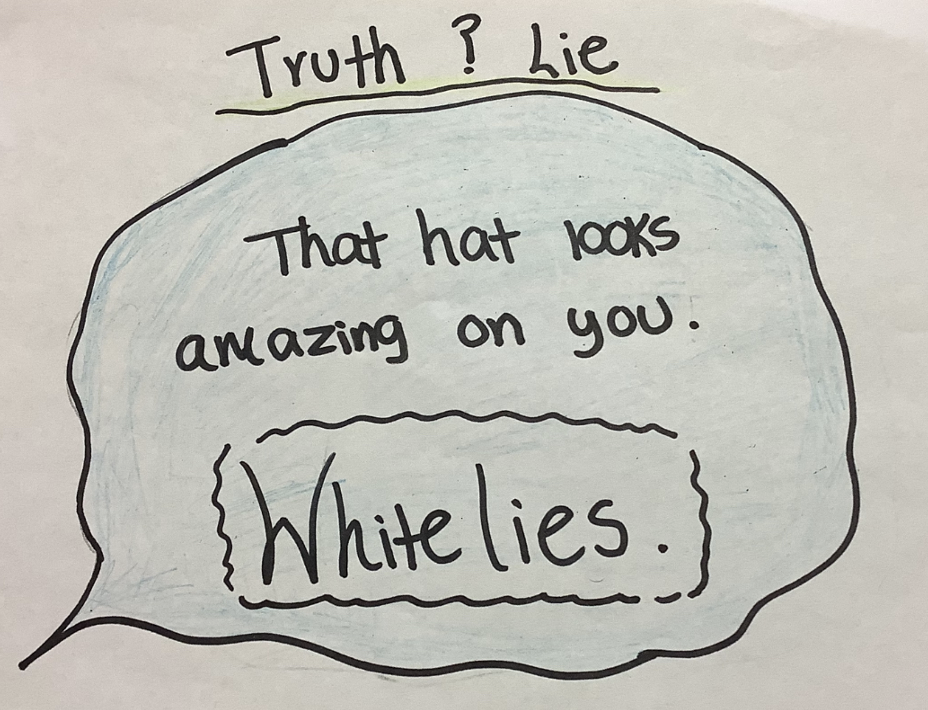
To be more specific, white lies are defined as small and trivial lies which people use in order to avoid hurting someone. For example: Imagine your friend comes up to you and asks you if you like their haircut. Let’s say that you indeed do not like it, yet in order to avoid hurting your friends feelings and make them self conscious about it, you just tell them that you love it, despite thinking otherwise. This demonstrates the act of you white lying in order to protect your friend from receiving any sort of mental hurt. But, many would argue otherwise.

There are many people who believe that a white lie does not “protect” someone from hurt, and in fact, that contradicts itself. Many argue that a white lie causes more harm than good, and instead of shielding someone from the dreadful grasp of truth, it only exposes them to more pain.  And, despite it being in “good nature”, many consider that lying is still lying, and will only generate more distrust and hurt to the person who thought you were being sincere.

As well as this, because white lying is a form of lying, there is a possibility that it could become a bad habit. And, when more serious situations come about, this habit may have dire results. According to an article written by researchers Elena Svetieva and Leanne Ten Brinke, “Each time someone chooses to lie, no matter how small or seemingly inconsequential, a thread unravels. No big reveal that deception has occurred is necessary, no treachery named, no betrayal felt, no punishment to the deceiver doled out – it is the act itself that harms.” This demonstrates that although white lies have the intention of being “harmless”, the action of white lying will only ignite the fire of chaos.

But, on the other hand of the spectrum, there are many people who think otherwise. Like I have mentioned before, white lying has the intention of being “good natured”, and despite the adverse effects of it, many consider that white lying can improve relationships and in some cases, save people’s lives.

While although white lying can create this sense of distrust, it is also a way to maintain a sort of social harmony and always telling the truth can be more hurtful. They say that white lying does have the word “lying” in the term, yet it is far different from that. It has the intention of helping people avoid hurt, not steer them towards it.

In fact, under certain circumstances, white lies are just supposed to just overall bring peace and ease to someone. For example: Imagine your kid has cancer, and they are due to die soon, and they ask you one simple question, “Am I going to heaven?” Whether you believe in it or not, many would white lie and say yes. This overall brings ease to the child rather than telling them that you don’t know and or they are not. This sort of response may only drive them deeper down into the rabbit hole of depression, leaving them fearful for the rest of their days.

Now, to talk about how white lying relates to psychology. First of all, psychologists believe that besides some other factors that cause white lying, white lying may stem from a person’s own self-consciousness. In fact, it is derived from the factor of justifying oneself, also known as “Deceiver’s distrust”. According to the APA Dictionary of Psychology, “Deceiver’s distrust presumably reflects the assumption that interaction partners are similar to oneself; thus, one’s own deceitfulness leads to the inference that the other is, has been, or will be similarly deceitful. By assuming that others are also untruthful, deceivers can feel less guilt about having lied to them.” This demonstrates that someone may tell a white lie because they believe that others may also be telling lies, therefore justifying their actions of being unhonest to someone.

And, like many other crucial cognitive functions, whenever someone white lies, it is said that this may occur in the prefrontal cortex. More specifically, the medial prefrontal cortex (MPFC). According to JuYoung Kim and Hackjin Kim, researchers for the National Library of Medicine, “An increase in selfish motivation for Pareto lies was associated with higher mean-level activity in both ventral and rostral MPFC. The former showed an increased pattern similarity to selfish lies, and the latter showed a decreased pattern similarity to altruistic lies.” This suggests that the MPFC, which is responsible for processing emotions, values of behaviors,  and  lying, may have something to do with white lies of selfish intentions.

Thank you so much for following me along as I explain white lies! I hope you learned valuable information about what are white lies and a further analysis of the debate of whether they are good or not. What do you think, should white lies be allowed?

For more information, please go to:

How ADHD affects girls differently than boys

By: Kate Tabor

Image created with ChatGPT

ADHD affects people of all ages and gender, but how exactly do its effects differ based on gender?

Google defines ADHD as “a neurodevelopmental disorder that affects a person’s ability to pay attention, control impulses, and manage hyperactivity”. A lot of the time, when a person thinks of ADHD, they think of younger boys, so a narrative has been normalized to think of that specific group as people who have ADHD.

Although it may be true that a lot of younger kids, specifically younger boys, have ADHD, this narrative can cause other groups of people to go undiagnosed for longer in their life, and cause them to struggle due to their lack of diagnosis.

This is often because while boys struggle with the more hyperactive side of ADHD, girls often struggle with the more inattentive side of it. However, girls with ADHD can still struggle with the more hyperactive side, while boys can also struggle with the inattentive side.

Because of this difference, girls often go longer in their life without being diagnosed, which can cause them to struggle due to not being able to understand themselves, or get help. The average age of girls diagnosed with ADHD is 23, while for boys it’s 7.

Even though it may not seem like it, being undiagnosed can be extremely difficult for girls with ADHD. Not knowing the root of their behavior can cause a lot of frustration, and lead to mental health issues. Being undiagnosed with ADHD can also create a false narrative around someone. Due to their inattentive nature, people might think they’re just very lazy, and not motivated to do their tasks, which isn’t necessarily true.

Boys may often show more externalized symptoms, such as impulsivity and aggression, while for girls it’s more internalized.This could look like daydreaming, and forgetfulness. Girls with ADHD may also be more likely to have co-occurring conditions, like anxiety or depression (what a great deal, right?).

Getting diagnosed with ADHD can answer so many questions someone might have about themselves, and help them navigate their life in order to be successful. It’s also important for teens who are still growing, and whose brains are still developing. ADHD, like any mental health condition, can manifest differently as we grow up, which can be a struggle if you’re undiagnosed.

This is also a reason it’s so great to have a diagnosis. Without one you might look at yourself and be like why am I all of a sudden like this? I didn’t used to be like this! Once you get diagnosed, you can just be like yeah, this is why I’m like this, and I must just be growing up and changing. Now what’s the first step in making it easier for me?

It’s always good to understand yourself. Even if you’ve never thought about it before, if you feel like you may have any sort of mental health condition, it’s at least worth it to find out, and you’ll thank yourself for it.

You’re still you, and there’s nothing bad about it, your brain just works a bit differently than you originally thought.

For more information:

The excellence of this cognitive phenomenon!

By: Maeve Brady

Cognitive dissonance, the beauty of the mind. It’s something we all undergo even if we are unaware of this factor. Now, you may have heard of this term before, but do you truly know what it is? If you do, then I hope this provides an even more in depth explanation of its properties. If you don’t, then buckle up, because understanding this is essential to understanding the way we humans think.

Cognitive dissonance is a basic principle in psychology, in which it is where you know you are doing something bad, yet you still do it anyway. That’s the simpler way to explain it, but in other words, it is when your thoughts of consistency and conformity don’t align with your seemingly inconsistent actions. For example: You are sneaking out at night, and in order to get to your needed destination, you steal your parents car. Now you may know deep down that it’s wrong, but your actions are contradicting your thoughts. Now, like many of our cognitive abilities and senses, cognitive dissonance is said to occur in the prefrontal cortex which is located in our frontal lobe. But it is said to occur not only in the prefrontal cortex, but also within the insula cortex.

Deep within the lateral sulcus, also described as a deep ridge and or groove that is located along the surface of our brain’s cerebral cortex, you will find the insula cortex which is responsible for the regulating and processing of our emotions. According to an article written by Thea Buckly, about a lecture given by Keise Izuma, at the University of York in England, “‘Additional studies have revealed that cognitive dissonance engages other brain regions, such as the insula and dorsolateral prefrontal cortex (DLPFC). The insula, which processes emotions, often becomes more active when people are upset or angry, and the DLPFC is strongly associated with cognitive control.’” This shows us that the insula, as well as the Dorsolateral prefrontal cortex, may have something to do with the feeling of cognitive dissonance.

Although more research concerning cognitive dissonance is only more recently coming out, the theory was invented a while ago. In 1957, Leon Festinger presented the theory of cognitive dissonance, in which he had claimed that the inconsistencies between cognitions may generate this uncomfortable and motivational feeling within you, also known as cognitive dissonance. This justified the outlandish feeling people got when they knew they were doing something bad, going against their thoughts of structure and doing what’s right.

Cognitive dissonance also plays a big role in the process of justification and over-explanation. The concept of dissonance, which is a clash between disharmonious principles, results in people feeling that they can justify their inconsistent behaviors. Or in other words, when cognitive dissonance creates this feeling of wrongfulness and guilt, people tend to cling on to the action of explaining themselves in order to lessen that uncomfortable feeling and satisfy themselves. When the intensity of the dissonance increases, many people become desperate to reduce it, finding obscure and desperate explanations in order to avoid confronting the uncomfortable truth.

In an experiment done by Leon Festinger and his colleague James M. Carlsmith in 1959, they tested the theory of cognitive dissonance. In this experiment, they lied to people saying the experiment was about the effects of a task on an individual’s perception, meaning how a task can affect the way one views a situation and environment. But in reality, they wanted to test if people would justify lying to another person about a task. He paid volunteers either one or around twenty dollars to lie about a boring task being fun. According to Jerry Suls, a professor at the University of Iowa, “The subjects who were paid $20 should not have experienced dissonance, because they were well-rewarded and had ample justification for lying, whereas those paid $1 had little justification for lying and should have experienced more cognitive dissonance. To reduce the dissonance, they reevaluated the boring task as interesting and enjoyable.” This was the accurate prediction of Leon Festinger which demonstrated human behavior when lying and just in general.

This proves that when people are put into uncomfortable situations and feel cognitive dissonance, they tend to find any sort of reason to justify their actions to relieve the feeling. But, when people have a plausible reason to hide behind their lies, then they may experience less dissonance because they have a “reason” not to. All this proves that people may be willing to justify even the worst of actions if it means keeping themselves and others satisfied.

Cognitive dissonance is a common theme in our society because everyone experiences it in their own life. Sometimes, it can be a spur of the moment thing and we may not even realize we are doing so until later evaluation. When we experience cognitive dissonance, some may have this immediate want to relieve the discomfort they are feeling within. This results in the person finding ways to justify their wrong action.

Thank you so much for following me along as I explained the basics of a major part of psychology, cognitive dissonance. I hope you gained more insight to what cognitive dissonance is and how it is a common theme in our society!

For more information, please visit:

The beauty of covalent bonding!

By: Maeve Brady

Chemistry, and just science in general, correlates with everything in our lives. Now, something that directly relates to the water we drink, the air we breathe, and the DNA we contain is covalent bonds or also known as covalent bonding. Now, after hearing about this, you may be wondering, what exactly is covalent bonding? Well, after the further analysis I will provide in this article, I hope you gain a better understanding about its properties and how it appears in our everyday lives.

A covalent bond is a common occurrence in our lives. In simpler terms, according to the distinguished researchers at the University of Hawai’i at Mānoa, “The puppies represent atoms. The bones represent one of their electrons. Both puppies share both bones” Covalent bonding is a phenomenon where elements may share electrons in order to fill their valence electrons to get a full set. This is unlike ionic bonding, where elements steal electrons instead of sharing electrons. Covalent bonds have the goal of sharing their valence electrons to completion.

For context, in the periodic table, all of the elements have valence electrons who are located in the outermost electron shell of an atom. According to its properties, every element wants to become more stable by gaining a full set of eight valence electrons, this minimizes their energy usage and with this full set, or close to full set, of valence electrons, the element becomes less reactive. In certain circumstances, depending on the group in the periodic table, we may see different results in how reactive they are. You can check what group they are in.

If an element is in group five, then it has five electrons existing in it. And if it is in group sixteen, then it has six electrons, not sixteen.  So, in the case of group eighteen, these elements are known as “noble gases”, and they have a complete set of eight valence electrons, meaning they have a full set and are not reactive; they don’t have a reason to bond with different groups in the periodic table besides themselves.

But there are a couple exceptions to this principle. One example is Helium. Helium is a noble gas with only  two valence electrons instead of eight. This is because helium’s single electron shell is already completely filled. Therefore, it still demonstrates this stable and sparse reactivity.

The aspect of covalent bonding is the formation of a complete set of valence electrons after two elements share the adequate amount of electrons with one another. And with this type of bonding there are subcategories of polar and nonpolar covalent bonding.

An example of polar covalent bonding would be the bonding of two hydrogen atoms and an oxygen molecule, the chemical structure of water. Oxygen has six valence electrons while each hydrogen molecule has one. This means that oxygen is almost stable and only needs two more electrons for full completion. And this is where the word “polar” comes in. “Polar” is essentially this sense of having polarity, and in the context of covalent bonding, it means a non-uniformed and unequal way of bonding. So, in the case of the chemical formation of the water molecule, oxygen and the hydrogen atoms both share their electrons, which gives them both a full set of valence electrons. But because oxygen has a higher electronegativity-oxygen has the tendency to attract electrons towards itself-so it tends to “hog” the valence electrons, hence, creating this negative charge to the originally neutral element. And with this, it creates these positive charges to the two hydrogen atoms.

Now, on the other hand, there is nonpolar bonding. Nonpolar bonding is described as the more uniformed way of bonding and in the context of covalent bonding, it is when two elements equally share valence electrons. Now, in general, you may come across more nonpolar bonds between the same elements, but that is not always the case. In fact, nonpolar bonding can be executed between two different elements as long as they share valence electrons relatively equally. The most prominent example of nonpolar covalent bonding is when two oxygen atoms can each contribute two valence electrons to complete the others’ set.

Now for the big question. How can we find Covalent Bonding in our everyday lives? Well, that is simple to answer. If we truly analyze it, we can tell that covalent bonds are in more than we may have initially thought. For example, one of the most popular examples is the properties H2O. According to the distinguished researchers at the University of Hawai’i at Mānoa, “The unequal sharing of electrons between the atoms and the unsymmetrical shape of the molecule means that a water molecule has two poles-a positive charge on the hydrogen pole (side) and a negative charge on the oxygen pole (side). We say that the water molecule is electrically polar.” This demonstrates that a polar covalent bond is how H20 comes about. And we use water in our everyday lives. It is the basis of everything, and something we rely on so heavily. Besides water, covalent bonds also may be found in our air and more, as mentioned in the first paragraph.

Thank you so much for following me along as I explain the basics on covalent bonding! I hope you now have a better understanding of this process and how it appears in our everyday lives.

The new age of blood shortages

By: Maya Vossen-Nelson

Nearly 6.8 million people donate blood per year in the United States, providing vital resources and support to cancer patients, surgeries, accident and burn victims, and organ transplant patients. In July 2024, the American Red Cross reported a record low in donor participation dropping by 25%. This shortage began during a nationwide heat wave over the summer and donor numbers have not returned to their normal levels since.

Recently, factors such as climate disasters have increased the demand for blood units and the drop in donations are unable to replace the inventory. Blood centers are reporting that limited donor sites, loss of staffing at blood centers, new illness and medication constraints for donation eligibility, along with a decrease in workplace donation events since the rise of remote working have all contributed to lower donor numbers.

Blood shortages are a pressing symptom of the overburdened, under-resourced healthcare system. As of March 4, 2025, of the 53 community blood centers and 90 hospital based blood centers in the United States, 46% have less than a two-day supply of blood.

Amid these unresolved blood shortages, surgeons have turned to blood supply usage efficiency as a method of mitigating the lower supply consequences. Adoption of Patient Blood Management (PBM) policies currently include using preoperative strategies to increase red cell mass, intraoperative cell salvage, and the management of anemia in patients.

To most patients, this medical jargon carries little meaning, overshadowing its influence in medicine. The Association for the Advancement of Blood & Biotherapies (AABB) describes the importance of, and medical situations where, PBM is used: “PBM encompasses all aspects of the transfusion decision-making process, beginning with the initial patient evaluation and continuing through clinical management. These techniques are designed to ensure optimal patient outcomes, while maintaining the blood supply to guarantee that blood components are available for patients when they are needed.”

Preoperative strategies to increase red cell mass include pre-op testing 3 to 4 weeks in advance of the surgery to undergo blood testing and receive proper supplements or medication to resolve anemia.

On average, patients with anemia require an additional liter of blood during surgeries and require longer hospital stays compared to their counterparts. Given that 22.8% of people worldwide are anemic, resolving anemia even temporarily for a surgery would significantly decrease pressure on blood centers.

Intraoperative cell salvage (ICS) is a method used during surgery to collect red blood cells lost during surgery and reintegrating them into the body. Before the blood transfusion, the red cells are processed and repaired. This blood management method requires no additional blood.

These strategies have increased the ability for blood centers to cope with the blood shortages, but the ultimate fix is recruiting more donors. Of the 37% of eligible donors, only 3% choose to donate. Your donation is more important than ever. To schedule a blood donation with the American Red Cross visit: https://www.redcrossblood.org and select from countless donor drives near you.

For more information, please visit:

What is this strange effect?

By: Maeve Brady

Many of us may know about the infamous placebo effect. But have you truly taken the time to analyze it and its components? If you did, do you understand it?  Even after wondering about it for a long time, many still can’t comprehend it. Today, I will be explaining the placebo effect and how it affects our youth in schools and the broad picture of it.

Have you ever heard of a placebo? Well, it’s the reason the placebo effect even exists. A placebo is an inactive treatment, surgery, and more. Also, under certain circumstances, a placebo can also be considered to be an action. A placebo directly correlates to the placebo effect because the placebo effect is the feeling you get after you take the placebo. The placebo effect works by turning on the body’s natural mechanisms that may help us feel better. Our brains make many substances that can lessen pain, anxiety, nausea, and more. This is also known as placebo analgesia.

Like I said, the placebo effect derives from the mind rather than the actual effect the drug has. This can be seen in the fact that you can be aware that you are taking a placebo for the effect to still work. Many believe that you have to be unconscious of the placebo in order for it to work, but in reality, if you have the expectation of the placebo having a positive effect on you, then it may. There is also such a thing as the Nocebo effect; it’s the opposite of the placebo effect where you believe that a placebo has a negative effect on you.

According to Olsen (2021), a Senior Media Relations Officer at Dartmouth, in a recent research conducted by Tor Wager and Diana L. Taylor, who are distinguished professors in Neuroscience, “‘Our findings demonstrate that the participants who showed the most pain reduction with the placebo also showed the largest reductions in brain areas associated with pain construction.’” After further research, according to Olson (2021), “With the large sample, the researchers were able to confidently localize placebo effects to specific zones of the brain, including the thalamus and the basal ganglia.” Scientists believe that because these two areas are involved in the sequence of connecting pain to action, the placebo effect may occur in them and largely impact these regions. Scientists also believe that the prefrontal cortex may have something to do with it.

The placebo effect may affect our youth in many different ways. In recent research conducted by psychologists Ulrich Weger, Ph.D. and Stephen Loughnan, some students were under the impression that the material they studied was enriched and better for the test while some believed that it was worse. According to the two psychologists, “Participant performance was indeed enhanced, compared to a group that did not think the priming process would improve their knowledge.” This demonstrates that the students’ actions could overall affect their academic performance.

The placebo effect is a very complex phenomenon whose properties are still being researched. I hope that from this text you’ve learned a little about the basics and how it affects our youth.

For more information, please visit:

Highland’s 2025 Chinese New Year’s most significant performances

By: Jooney Freddieson and Aalovely Lor

Chinese New Year is one of the most important traditional holidays in Chinese culture.

It is typically between the end of January to mid February and in 2025, Chinese New Year was from January 29th to February 12th.

Every year, Highland Park Senior High School students and teachers celebrate Chinese New Year by performing dances as well as singing and showcasing a play.

( 舞獅 ) Lion’s Dance performed by Julian Falk & Liam Hefferan

The Lion’s Dance is not just a performance but it is a cultural tradition that traces all the way back to ancient China; evolving through each generation.

This dance is significant because when the lunar new year comes around the celebration is intended to ward off evil spirits.

The Lion’s Dance is not only filled with vibrant colors, but it is followed by loud noises, energetic music, and bright lights.

The lion represents a symbol of power, courage, good fortune, and protection in Chinese culture that chases away negative energy or “Nian”.

“Nian” is a mythical monster known to attack villages and leave negative energy in the beginning of the lunar new year, according to Kpbs.org. Which is why the Lion’s Dance is typically known to be performed at the beginning of the Chinese New Year event.

The monster is known to be scared of loud noises, bright lights, and bright colors, which is why the Lion’s Dance is a great tool to chase the monster away.

During the performance the dance was accompanied with loud drums played by two students, symbolizing the terrifying loud noises to scare away “Nian”.

The dancers mimic the lion by swaying, leaping, shaking, often in a playful manner. This adds an element of humor which entertains the audience.

It was cool to see how the music followed the lion’s movement as it got faster and slower.

Our favorite part of the dance was when the lion came close to the audience and interacted with them. The interaction between the lion and the audience created, and added, a more humorous atmosphere.

The Legend Of The White Snake was performed by Highland’s Chinese Immersion 11 class!

Their play gives us insight into the old Chinese folktale about an ancient white snake who transforms into a beautiful woman before quickly falling in love with a young man. 

Despite getting married, he was still unaware of her true form until a monk told him he wasn’t married to a human being; he was married to a snake.

The young man gives his wife wine which transforms her into a big white snake, causing the man to die from shock.

Even though her husband had played that trick on her, she still revived him with her own potion. Once awakened, he realized she was still the person he always loved, someone who’d never do him wrong.

The significance of the Chinese Immersion 11 class reenacting this folktale is that the new year is the year of the snake.

They executed this play perfectly by bringing up beautifully painted sets and a perfect script in between the mix of humor and accuracy.

One highlight from the play was the humorous switch when she turned into the big white snake. The crowd was definitely excited to see the wife go backstage and switch out with the masked snake.

Our favorite part of the play was when the white snake was battling the monk and his two guards for her husband back after he’s been locked up. The music in the background played a comedic role in the fighting; intense but random.

Here is the amazing Chinese Immersion 11 class!