Category Archives: Entertainment

Top 5 upcoming anime you will want to watch in 2024

By: Hyde Moua

There are a lot of new and exciting upcoming anime that are a MUST watch if you already enjoy watching anime, or are just starting to watch anime. These anime are released within the time of January through April 2024. By the time this article is released, there will be a few anime still unreleased. All anime in this article are available to be watched on CrunchyRoll and Netflix.

  1. ‘Solo Leveling’: ‘Solo Leveling’ was a highly anticipated anime which was based on a popular Manwha also named ‘Solo Leveling’. Our protagonist, Sung Jinwoo, is preparing to enter a powerful dungeon with his team despite being nicknamed “The Weakest Hunter of All Mankind”. Being on the verge of death, a mysterious notification appears and Jinwoo accepts. Now granted the ability to level up, he sets out on a journey as he battles against all kinds of opposing men and monsters. For more information, click the link: https://m.imdb.com/title/tt21209876/plotsummary/?ref_=tt_ov_pl
  2. ‘Delicious in Dungeon’: ‘Delicious in Dungeon’ begins with our protagonist Laio, battling a massive crimson dragon with his party. Suddenly, his little sister pushes him out of the way, with Laio dodging the dragon’s mouth but ending up with his sister being eaten. With her last few words as she hangs out the dragon’s mouth, she casts a spell that sends Laio away with the other troops. He makes it his mission to save her before she gets digested due to crimson dragons having slower digestive systems. He makes new friends and adds new people to his party in order to reach his end goal: to save his sister. For more information, click the link: https://m.imdb.com/title/tt21621494/?ref_=nv_sr_srsg_0_tt_8_nm_0_q_delicious
  3. ‘Chained Soldier’: ‘Chained Soldier’ takes place in a world where female super humans dominate. Our main character, Yuuki Wakura, is selected to join a group of monster hunters who will reward him for his servitude. For more information, or if you want to watch this anime, click the link: https://urldefense.com/v3/__https://m.imdb.com/title/tt16156736/__;!!LSatmg!5DaE344SgND6dAWRqonNeEpbHJKT9fpq_JytIJUPvBOCvVkGec5VItJNigZnblxhg8zRqiYXEzdesy-DC4bdD9uu0XU$
  4. ‘A Sign of Affection’: Our main character, Yuki, has always been deaf. She is comfortable communicating using sign language and her phone, but she’s not used to English. She nearly panicked when a tourist from over seas asked for directions, until a stranger steps in and helps. They both feel drawn towards each other and plan a romantic winter date night, although she is afraid if her feelings are real or not and is afraid she might end up getting hurt. For more information, click here: https://kodansha.us/series/a-sign-of-affection/
  5. ‘Whisper Me a Love Song’: Our main character, Himari, is a first year high school student. She awakens feelings that she doesn’t understand after hearing a girl named Yori sing. They become friends and grow a strong and secure relationship, while also growing their feelings for each other. For more information, click here: https://www.penguinrandomhouse.com/series/WML/whisper-me-a-love-song/__;!!LSatmg!6WflV_9Np-7fi7ul7QoUinqIPyJHc-jOxYzK0 RzohIdYzR7bWImG3kIfpfmEQoDUxthVyrZKELsB50Z8Tv2NfR8CE54$

‘Barbie’ movie review

By: Fletcher Pike

*Warning: This review contains small spoilers

‘Barbie’ is a movie directed and co-written by Greta Gerwig that was released in theaters on July 21st, 2023. This film is a visually fantastic creation that captivates the bright pink land of the Barbie franchise. It features actors such as Margot Robbie in the role of the protagonist Barbie, and Ryan Gosling in the role of Ken. This movie also includes popular actors such as Simu Liu, Will Ferrell, and Micheal Cera.

‘Barbie’ tells the story of Barbie living in Barbie Land with a perfect life filled with fun which comes to a stop when she begins to feel powerful emotions that aren’t like her own. She must travel to the real world and discover who her owner is and what is causing her to experience these new emotions.

Accompanied by Ken, Barbie navigates through this new unusual world of humans, and discovers severe differences from Barbie Land. She finds that gender inequality, bullying, and negativity are all common things that she comes across in this new world, and she begins to adapt to these new feelings that she has.

Ken begins to learn about the almost ‘reversed’ gender roles in the real world compared to Barbie Land, and spreads these new ideas back to Barbie Land, causing more chaos. Some themes that are implemented in the movie include feminism, gender equality, and emotional value.

I found this movie to be both comedic yet emotional with stunning and colorful visuals accompanied by a wonderful soundtrack featuring artists like Lizzo, Dua Lipa, and Billie Ellish that embodies the pink, vibrant land of Barbie.

The acting performed by both Margot Robbie and Ryan Gosling was filled with hilarious and fun dialogue that really brought the movie to life. I found myself both amused yet moved by the duality between humor and emotion.

The plot was not what I was entirely expecting. The theme of feeling deep and powerful emotions was not a theme I would’ve associated with Barbie, and yet the movie perfected it wonderfully.

Overall, I had a fantastic time watching this movie and I would definitely watch it again. The combination of great visuals, soundtrack, and acting would have me rate it a 10/10.

‘SIGNALIS’ | A review about love and horror

By Hoaseng Thao

WARNING” This article contains spoilers about the game ‘SIGNALIS’.

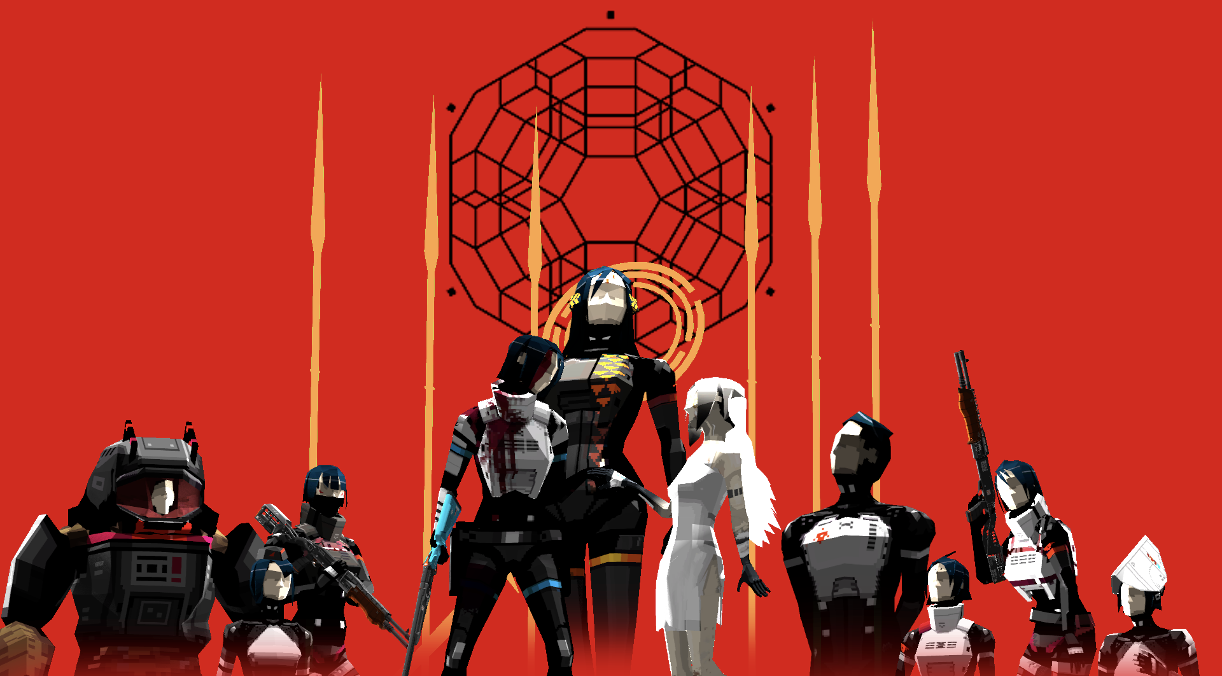
‘SIGNALIS’ is a survival horror game created by Rose Engine Games, being released on October 27th, 2022, and has since then won many awards for its unique story and overall theme of cosmic horror.

Personally, I love this game to death for not only its gameplay and aesthetic but for its story, which sent me down the rabbit hole of cosmic horror and in a deep state of depression from finishing the game’s story over and over again.

PREMISE

Set in a dystopian future where humanity has ventured far into space and into the unknown a Replika or Humanoid Android named Elster, is awakened from cryostasis from having crash landed on a cold planet. She must find a missing crew member in an underground facility being overrun by corrupted Replikas and the memories of a mysterious girl in white.

VISUALS

Do not let the low polygon style dissuade you into thinking that the game is just one of many PS1 style games in recent years that you play once and refund after finishing it. Personally, I believe this low polygon style really portrays the overall feeling of desolation the further you go in the game.

The visuals of the facility intrigues the sci-fi nerd in me, mostly because of the similarities it has with the game ‘Dead Space’ by Motive Studios as well as the movie ‘Alien’ by Ridley Scott. They also intrigue me with how the visuals make the facility a character in the story, with little details such as propaganda posters being laid out around the facility to seeing the aftermaths of bloody battles and last stands.

GAMEPLAY

The gameplay plays just like the classic of the PS1 era, and plays similarly like the early Resident Evil’ games by Capcom, but it adds its own touch to it. Instead of having a complex inventory system, the game forces you to use six inventory slots (you can change this in the settings) which effectively forces the player to decide how you manage your items in your runs.

The shooting in the game feels very smooth, as you have to aim at your target first to get a shot out, and with the brilliant sound designs of each weapon you use, adds to the overall action when playing the game.

Puzzles are found throughout the game and are not that particularly hard to solve, and most of the time in my playthroughs where I had difficulty trying to solve the puzzles, came out of my own faults and not from the game.

The enemies you face in the game are relatively easy to handle once you get a hang of what items you have in your inventory, with guns being used to knock down the enemy while consumable items allow you to heal or take down an enemy without wasting ammo. One key thing to note is that “killing” an enemy won’t stop it from getting back up unless burnt with a flare or flare gun, which forces the player to consider using a flare to insure the enemy is destroyed or to secure chokepoints for backtracking.

Bosses in this game are relatively easy to defeat once you get a hang of each of the bosses movement mechanics, added with that you bring enough ammo to defeat them.

Ammo/items are scattered across the facility, and are very small in number when found, forcing you to have to take in account how many bullets/items you should bring when solving the mysteries of the facility.

STORY

This part of the article will summarize the story of ‘SIGNALIS’ and contains spoilers to the story and ending, skip over this part if you have yet to play ‘SIGNALIS’.

Following a forced wake up sequence, Elster finds herself in the desolate interior of the Penrose spaceship, a spaceship created by the Eusan Nation, and finds a photograph of a white haired female crewmember, sending her onto a journey to find this crewmember. Stepping outside, the Penrose is a total mess as it crash landed on a cold planet before entering a hole that leads into someone’s personal room, and on a table lies the book ‘THE KING IN YELLOW’. After opening the book, Elster receives flashes of memories that are not hers.

Elster then finds herself inside an abandoned facility in which she explores to only find out through one of the survivors, a STAR unit Replika, that the facility has been overrun by corrupted Replika units and the person she’s looking for could be at the bottom of the facility. Elster is also met by an actual human or Gestalt, whose name is Isa, she too is in search of someone, however Elster would venture on alone to find the person she’s looking for.

The more Elster goes down the facility, the more corrupt it becomes as the halls become grittier and messier with each floor she descends revealing the true nature of the facility. The facility the game takes place in is known as S-23 Sierpinski, on the planet Leng, and has been used as a mining facility for the Eusan nation. Through the many readable files scattered across the facility though, it shows that life in the facility was harsh and cruel.

The Eusan Nation was facing a massive shortage of food and materials as it fought a war against the Eusan Empire, leading to many human colonies to starve including S-23 Sierpinski, and it doesn’t help that the Eusan Nation is a repressive totalitarian regime that conducts cruel experiments and punishments on its people.

Following an encounter with a corrupted Mynah Replika, Elster is confronted by a non-corrupted Adler Replika, who warns her that she should’ve never returned before pushing her off an elevator, only to be saved by a mass pile of other Elster units. Elster would continue to scour across the facility, getting flashes of someone else’s memories as she helps Isa along the way (Isa is back).

After a near death experience in the deepest parts of the facility, Elster finally escapes the facility and finally reaches the surface but it is no longer a frozen landscape, but an open red mass that can only resemble that of blood. Confronted by Adler again, he remarked about how his commander, Falke had fallen ill, sending the entire facility into disarray and subtly hinting to a repeated cycle of Elsters journey. Elster crosses the red landscapes, seeing the remains of her previous attempts before reaching the Penrose again, but this time going unconscious as she fails to open the hatch.

Following a forced wake up sequence, Elster finds herself in the interior of the Penrose spaceship again, this time more lively in lighting and color, a clear memory of the past. Onboard the ship is key information as to why Elster is on the ship. She had taken a part on the Penrose program to find a habitable planet for the future of the Eusan Nation, and a part of this program was the missing crew member, Ariane Yeong.

After finishing her chores, she presents herself to Ariane’s quarters where it is revealed that the two are in a romantic relationship established out of isolation and the necessity for human interaction. After this memory sequence, Elster wakes up again, back onto the cold landscape but this time motivated to find Ariane as she reminds her of a promise they both swore to.

Returning back to the Sierpinski, Elster would find herself not on Leng but in a colony on the moon Rotfront. Here, Elster would meet Isa again, but this time Isa apologizes for not finding the person she’s looking for, before eventually becoming corrupted. It is hinted throughout the memory sequences that Isa was looking for her sister, Erika.

Elster would eventually meet the person in charge of Sierpinski, Falke, who remarks to Elster that Ariane will never dance with them again and that both she and Elster are incomplete, before engaging in battle with Elster. As Falke kneels defeated, she would remark to Elster that they are now one.

Elster would return back to the red landscape, this time, a corrupted Adler awaits her and belittles her for continuing the cycle before ultimately meeting his fate after a failed attempt at killing her. Returning back to the Penrose, Elster finally opens the latch and gets back inside, this time revealing what happened on the Penroe’s demise.

The Penrose program was a last ditch effort for the Eusan nation, essentially both Elster and Ariane were doomed to die in space as the Penrose ship began to deteriorate from leaking radiation, which had slowly been poisoning Ariane and had forced her inside a cryo chamber, but before she went into cryo, both she and Elster promised to die side by side so that one would never be alone.

Entering the cryo room, Elster is finally reunited with Ariane, who asks Elster to keep her end of the promise to which Elster hesitates but ultimately concedes to. Placing her hands on the neck of Ariane, Elster would end Ariane’s suffering before eventually succumbing to her wounds.

CONCLUSION

I love this game to death, its story, gameplay, and visuals are by far one of the best I’ve seen so far and is definitely a game everyone must play once in their lifetime. From the horrors that are the corrupted Replikas to the sad but bittersweet story, ‘SIGNALIS’ is a brilliant game that will forever stay in the hearts of many including myself.

You can buy ‘SIGNALIS’ on their official Steam Store Page here: https://www.google.com/url?sa=t&rct=j&q=&esrc=s&source=web&cd=&ved=2ahUKEwinlZ6cgZqEAxWqAHkGHRnYDSUQFnoECCIQAQ&url=https%3A%2F%2Fstore.steampowered.com%2Fapp%2F1262350%2FSIGNALIS%2F&usg=AOvVaw0uwdgI22Owy-MiAc1sbdta&opi=89978449

JOYSTiCK Empirical Ep. 10: ‘Pokémon Scarlet and Violet’ – Magikarpal Tunnel (PART 2)

By: Daniel Kendle

And now, the saga continues…

CHAPTER TWO: I LOVE (HATE) LOOKING AT SAWDUST!

The Nintendo Switch, the console that ‘Pokémon Violet’ exclusively runs on, is turning 7 years old soon, being first released in the US in early March of 2017. So, that means that it’s a pretty dated piece of hardware, relatively. I love the Switch, but I can’t deny that it’s seen a lot, and it might be time for the next console successor from Nintendo soon.

When ‘Violet’ released in November of 2022, it was over 5 years past the Switch’s launch, and we’d obviously seen some very high-end graphics from the platform’s games in prior games, especially open-world ones. The Switch was never the most powerful console; it had the visual fidelity for games rivaling early 2010’s systems. Then again, for a handheld-stationary console hybrid – something not seen very often – it was perfectly fine, in my opinion.

On that note, ‘Pokemon’s’ ranged in terms of their games’ graphics. The pixel-art era is a revered time for the series, featuring some of the best visuals shown on their respective consoles. Then in the 3D era, we’ve had some… mixed results, to say the least. Nothing terrible, but nothing really looking like “the pinnacle” of their visual possibilities. Just kind of generic scenery all-around.

We’ve had a good few other 3D Pokemon games on the Switch who’ve – again – ranged in quality. Some games look really great! Some games look like dog water! It’s all up in the air, frankly. The only other ‘Pokémon’ game I’ve reviewed looks like the latter, and I can safely say that ‘Pokémon Violet’ is definitely in the middle of the scale.

To begin, we’ve had models for the actual creatures themselves remodeled. Now, instead of looking plastic-y and fake. They have bumps and grooves, more natural proportions, and realistic textures. For instance, a Pokémon made out of metal will have a bright sheen to it, reflecting light like an actual shiny iron object. Furry ‘mons now have a faint fur texture to them, instead of solid colors. It’s like the difference between a stock image drawing of a sunflower and an actual sunflower.
This is overall a net-positive, and I haven’t seen many people complaining about this change.

As for the graphical representation of the world, things become murky. Human characters look alright; the artists went in a [slightly] more-realistic direction in designing them. Models look alright, but the animations for them are very stilted, and are very limited in how they move and express themselves. A lot of the time an important character will have 1 or 2 key poses that they’ll strike every now and then and it looks real stinky. Other than that though they’re fine.

Then we come to the actual environments, and they’re… interesting-looking. Like, they’re all-around better than the only other Pokemon game I’ve reviewed, ‘Pokemon Legends: Arceus,’ but comparing the 2 is like comparing a pile of literal garbage and a pile of sawdust. Either way, you’re kind of screwed.

Textures are very muddy and of low quality; any detailed sign lets you count the pixels it’s made up of. THAT’S how bad it is. This also holds true for more natural textures, with grass and leaves being flat, monochrome images spread across a field. Rock faces aren’t as bad, but you notice the fact that they only use one repeating image for the cliffs, as you’ll get the same image in a grid-like pattern and it breaks immersion.

Buildings look fine, but they suffer from an adjacent problem to the pixelated signs, in which being a few meters away from a texture causes it to look blurry and unrendered, but moving closer causes it to become crisper. This is a mild headache and makes certain areas of the region a pain to get through. Also, I don’t know if this’ll sound strange but if you’re out in the wilderness and walking near a hill, the hill will terraform around you (not on purpose, of course) and it’s physical model will warp and bend at the base, making for an odd optical illusion that gives me an ACTUAL headache.

You might be able to tell that I don’t have a lot of energy in this chapter, mainly because, other than the “highlights” above, there’s honestly not a lot to talk about in terms of ‘Violet’s’ visuals, because while some parts of the game look bad, there are other parts that look pretty good, honestly, like the Pokémon models or the User Interfaces (UI). These look good, but the mix of good and bad make this a middling experience to look at. Like, I’ve seen much worse – even from Pokemon – but then again, I’ve seen better. Compared to the franchise’s other 3D outings, ‘Pokemon Scarlet’ and ‘Pokemon Violet’ land around the middle of the pack. They don’t look good, but hey, they don’t look bad! Just sawdust, that’s all.

Gosh, I can’t believe I didn’t hate the graphics of the game as much as I thought I would. Despite what I’ve said so far about the region’s just-okay region design and middling graphics, I’m feeling pretty good about this review so far! What could possibly bring down its score now?

CHAPTER THREE: THE THING THAT BRINGS ITS SCORE DOWN NOW

If you haven’t heard already, there are some notable glitches in this game. If you’ve searched up some of said glitches online you’ll find some interesting results. I can’t show anything because of the wonderful world of the US copyright system, but I assure you that they’re bad. REALLY bad. Say, here’s a [short] list of notable bugs and issues in ‘Violet.’

  • Rendering issues with come textures
  • Shadow problems (shadows of large cliffs or buildings will appear and disappear at will)
  • Sometimes hair on people will flicker and move around weirdly
  • Problems with the aliasing on objects in water, where the object’s borders will appear pixelated and gross
  • Sometimes when riding your bike-dragon (more on this later), if you jump with it into a small-enough gap it’ll become frozen in the air and cause you to be teleported back onto solid ground after 10-or-so seconds
  • Lag spikes
  • The FPS (frames per second) drops to single-digits if you’re in the giant lake area
  • Sometimes when setting up a picnic table, it won’t appear. If you try to do anything that interacts with the table, like making a sandwich, you won’t be able to see it.
  • During one cutscene your character is supposed to be talking to someone else, but instead they’ll awkwardly continue walking in a strange fashion, almost walking off-screen until teleporting back to where they were supposed to originally be, letting the cutscene commence. It’s hard to describe this bug in words but it’s one of the most bizarre bugs here.
  • Pokémon disappearing into walls
  • You’re actually able to escape the first area in the game and bypass the opening tutorial. Simply go to the left corner of the first area and chuck one of your Pokémon at another wild ‘mon from a cliff beyond, and if you’re lucky you’ll be teleported into the battle menu, with your character now in the new area. You can then run away and explore the whole map. I haven’t done this myself, so I don’t know if there are any notable changes before the tutorial is completed.
  • Music not appearing in some instances

And there’s much more, I could go on!

But for the sake of speeding along in this review I’ll cut it here and say this: remember the metaphor in the beginning? Here, these glitches, these obstructing bugs and problems, this is the weasel. This is the snake in the kitchen, the problem that gives these games such a controversial guise.

And honestly, the people who call out these issues are in the right, in my opinion. I think there’s a line between “the developers being rushed for time and not being able to fully-polish their game” and “the developers programming ‘Sandwich Simulator 2042’ instead of making a working product.” Like, I’d rather have a bland-as-sand game that runs relatively-well over a (somewhat) packed title that makes me reminisce about the days when video games looked about the fidelity of a ketchup packet filled with salt.

Why did ‘Pokemon Scarlet and Violet’ come out like this? The most astute and probably-correct answer is time. The ‘Pokémon’ franchise operates with a new generation of games coming out every 3 years. You’ll get a game with a new region and creature designs to kick off the generation, usually a follow-up package the following year being either a second, similar pair of games that act as an “enhanced package, or DLC.

Then next year they’ll have a separated package, either being a remake of a past game or something else entirely.

Then, the generation ends with the next leading game for the NEXT generation.

This means that, for one company, this is a lot of stuff to do, and especially in the 3D era of games has caused the franchise to have a select few half-baked end products from the lack of time. This has caused a lot of people to say that the series should relax and maybe take some time between games, letting developers put more content – and better content, frankly – into future games, as well as higher-quality graphics that don’t make me want to chug quicksand.

This problem comes with that the games essentially “lead” the series forward: with each new generation of games comes a new batch of creature designs and characters, and so forth new trading card lines, plushies, clothing and apparel, movies, the on-going TV show… the Pokemon franchise is so large and has so many facets of entertainment that taking time to iron out and not rush a new game brings a detriment to the rest of the show.

The television series can’t run new seasons in the new region forever, the trading cards can’t print new sets forever, and merch lines won’t last. It’s an ever-repeating cycle of new content becoming old, and eventually being filtered out by the newer, which is then filtered out by the newest, each having a 3-ish few years to shine.

The Pokémon franchise is the kitchen, and these glitches are the irritable animals. However, instead of being inside one’s minute apartment, the kitchen is a part of a network reality cooking show. Just because you’ve got some pests in the kitchen doesn’t mean you can slow down; you’ve got an audience waiting for you, judges to value your dish within an hour’s fray. Just because you’ve got some glitches in the game doesn’t mean you can slow down; you’ve got an audience waiting for you, players waiting to buy your products within 3-years’ time.

And that is the leading issue with ‘Pokemon Scarlet’ and ‘Pokemon Violet,’ as well as the Pokemon franchise as a whole: time is the enemy, and your audience – and surrounding cooks – will not wait for a better dish.

…But YOU can! That’s right kids, this here article’s, again, a 4-parter, due to several factors such as the inevitable heat death of the universe looming closer and also length. We’ll pick up with the gameplay section in this review of a video game in the third part.

‘A Good Girl’s Guide to Murder’: Book review

By: Sophia Elmstrom

‘A Good Girl’s Guide to Murder’ by Holly Jackson is a thrilling and page turning book, perfect for those who love mysteries.

This book includes many relatable and smart characters like the main character Pippa Fitz-Amobi. Pippa is a determined and confidence driven senior in high school who is working on her last project for her senior year of high school. Pippa decides for this project that she will reopen the case of Andie Bell and Sal Singh. In this case it is said that the boyfriend of Andie Bell (Sal) killed her and then killed himself from too much “Guilt”. Pippa knew Sal personally and she doesn’t feel like this is right so she wants to investigate.

Once relenting, Ravi (Sal’s brother) decides to partner with Pippa to solve this crime as he feels the same way as Pippa. This school project turns into a huge burden and weight on Pippa’s shoulders; it distracts her from many things that could be more important. Pippa loses strong relationships with family and friends but for what cost.

Pippa interviews mounds and mounds of people who resent her because it has been years since this murder making it hard to find Pippa’s suspects. Many of the people she tries to interview refuse because they don’t want this murder coming back into their lives. This causes Pippa to slow down the process.

Read this book to find out if Pippa is able to solve this murder and finish her school project.

I really liked this book and couldn’t put it down for days. There were many plot twists that caused this book to be so intriguing and interesting. I liked how fast paced it was and how it wasn’t boring at all. Although it did start out kind of slow and I wish that it started faster so that I would’ve read it quicker at the beginning.

Overall, this is a very well written book with many plot twists that is great for mystery lovers. I think this book is great for anyone of any age to read and enjoy. If you really enjoyed this book it is part of a trilogy with very thoughtful and intriguing plots. I hope you enjoy reading this book as much as I did. 8/10

Rappers Megan Thee Stallion & Nicki Minaj feud, explained

By: Charlie St. Dennis

*Warning: This article contains some references to sexual abuse

In July 2019, rappers Megan Thee Stallion and Nicki Minaj joined each other on an Instagram live stream and exchanged praises for each other after the release of their joint single “Hot Girl Summer”, which had recently entered the top 10 of Billboard’s Hot 100 Singles. Just under 5 years later, the two rappers would be making headlines across the world for their beef. So, how did we get here?

Megan and Nicki have had longstanding drama for the course of a few years, but it hit perhaps its lowest point on January 29th, 2024 upon the release of Megan’s new single, “Hiss.”

Like most songs, the lyrics were quickly broken apart and analyzed by listeners, and one that stood out occurs about one minute into the song, when Megan raps, “These h**s don’t be mad at Megan, these h**s mad at Megan’s Law.” This lyric is in reference to the federal law “Megan’s Law” which mandates law enforcement to make all information about registered sex offenders available to the public, after a young girl named Megan was molested in California.

Listeners believe this lyric was added in reference to Minaj’s husband, Kenneth Petty, who is a registered sex offender from a sex crime he committed in 1995. When asked about it by radio and TV host Wendy Williams in 2019, Minaj said, “I didn’t know that in our society, you have to be plagued by your past. I didn’t know that people can’t turn over a new leaf.”

Considering this is something that Minaj has touched on, much to her dislike, it will not surprise you to hear that once she heard “Hiss”, she had her thoughts. Minaj went on a very agitated rant about Megan on an Instagram Live stream and heavily referenced the rapper’s famous incident with Tory Lanez where she ended up shot in the foot. Lanez was sentenced to 10 years in prison last year after a lengthy trial.

A few Instagram Lives and X posts later, Minaj dropped a lethal diss track, titled “Bigfoot”, in reference to Megan Thee Stallion being shot in the foot. Lyrics in “Bigfoot” targeting Megan include “lyin on your dead momma,” “bad b***h, she like 6 foot, I call her big foot, the b***h fell off, I said get up on your good foot,” along with others. In the last minute of the song, Minaj begins a whispered spoken word where she claims that she is “very serious,” even more will be coming out in “the second installment” and that “we’ll all play the reindeer games,” which I think means if you speak about family and relatives, we all will.

“Hiss” debuted at #1 on the Billboard Hot 100, and is said to be the second single of an upcoming album and Megan will be going on a tour this upcoming summer. “Bigfoot” debuted at #24 and it is unclear if it will appear on an album. Minaj will embark on her “Pink Friday 2: Welcome To Gag City” tour on March 1st, and will visit Target Center on April 27th.

JOYSTiCK Empirical Ep. 10: ‘Pokémon Scarlet and Violet’ – Magikarpal tunnel (PART 1)

By: Daniel Kendle

Let’s start off with a metaphor. Again.

Okay, so you’re at home one day watching TV, and you get the sudden urge to do something productive with your life. So, you naturally head on over to the kitchen to try and create the next great American dish, only to open up the sugar jar and have a rabid weasel pop out. Oh, the horror! It bites you in the upper-most vertebrae (somehow) and runs away.

Being immortal (and the subject of an already-strained metaphor), you magically-shrug off the blistering wound and pop off the lid to the salt shaker and out pops one of those fake rubber snakes magicians use, except replace “fake” with “real” and “rubber” with “blood-driven.” It – again – bites you and also runs off (?).

At this point you’re feeling hopeless, and in one last ditch attempt to eat you open up your patented… bean drawer, and see it: a shining beacon of light, being a glistening can of ‘Jean’s Beans’ is waiting on the shelf. ‘Huzzah!’ You think to yourself, ‘I have found the light at the end of a tunnel of suffering!’

But… Why is your kitchen like this? This new flat you bought has weasels and walking snakes in it, yet also contains some normal stuff too, like beans. Why is that? Why aren’t there either just normal kitchen items instead of animals, or some kind of hydraulic torture device instead of beans? Why are there genuinely good parts of this kitchen, yet also stuff that inflicts great pain onto your physical body? Why is this kitchen so lopsided in terms of quality?

…..

‘Pokémon Scarlet’ and ‘Pokémon Violet’ are the (relatively) most-recent games within the franchise of the same name. Being the first truly “open-world” entries in the 28 year-old series, the games have garnered a very desicive reaction. Selling over 10 million copies in just 3 days, they’ve become one of the fastest selling games in recent memory, but with that success comes the large amount of generally-negative reviews and returns of the product.

But why? Why do these 2 games carry such a degree of inconsistency? We’ve had controversial ‘Pokemon’ games in the past – especially on the Nintendo Switch – but none to this scale. These games are different from past entries in not just their contents, but their reception.

So, to solve this mystery, it’s time we take a deep look into the pair. This is my first open-world game (I’ll explain what that means soon) that I’ve reviewed here, and I want to give it my all. I’d like to go in-depth into every meaningful mechanic and element of these titles that I cared about.

The only part I’m not touching is the story, because I’m not really the kind person to talk on that matter; I don’t focus a lot on a game’s story in my articles because I just don’t care as much about plot in games as I do gameplay, personally. I just don’t think I’m fit to speak on the matter. However, I will be mentioning story beats whenever needed to explain something better.

So, with introductions out of the way, let’s put on our detective caps and sleuth our way into ‘Pokémon Scarlet’ and ‘Pokémon Violet:’ the most middling experiences I’ve had in a while.

CHAPTER ONE: THE PROSPECT OF AN OPEN REGION – ON THE HALF SHELL

I think that we need to start by having a look at past games in the franchise, and how they’ve tackled their regions – the fictional settings where the games take place in. We’ll also briefly glance at the linearity in previous ‘Pokemon’ so we can therefore talk more about ‘Pokemon Scarlet’ and ‘Pokemon Violet’s’ region, and how being open-world implements new changes and impacts the series. I’ve had to rewrite this entrance a few times now, but I think this’ll help paint a good picture of the most subversive part of these games.

Most ‘Pokemon’ games since the very beginning have released 2 versions, which is why I’ve been discussing the newest games as a unit (I personally bought ‘Pokémon Violet,’ however, so I’ll just be talking about that game for the rest of the article). Each game in a pair is structured about the same, with minor differences between each, such as the types of Pokemon that you can find there. Pokemon exclusive to each version of the pair of games are called version exclusives, a whole sort of “is the sky blue” kind of label.

The regions, however, generally stay consistent between the pairs of games. To summarize, a region in these games is basically a fictionalized landmass where the story takes place in, usually being vaguely based off of real-life areas. For instance, the first games in the series, ‘Pokemon Red’ and ‘Pokemon Blue,’ have their regions based off of the Kanto region of Honshu, Japan, the biggest island making up the country (funnily-enough, the region in the games is also called Kanto, the only time in the series where the IRL and fictional locations are under the same name).

Regions before ‘Pokemon Violet’ were made up of 2 main types of locations: routes and towns. Towns are what you think: locations with buildings, roads, the like. Routes were the connecting lines; small or large paths that contain the Pokemon for you to actually catch and train with to use for battle. Combined, they formed a structured path for the player to follow as they went about their journey.

However, different games varied in their linearity. From generations 1-5 of games, routes and towns were usually very complex: structured trails and cities that had lots of depth to them, and routes especially were essentially point A to point B concepts, but had branching cutoffs and split paths. They weren’t maze-like, but instead each route in a game was a deeply-layered and invigorating experience. That’s not even to mention extra unique locations in routes or towns, such as towers or ruins, which often had even more content of their own.

Then, in generations 6-8, it felt like some major shift happened – for the worse. Routes eventually turned into small, short, simple paths that almost-never tried to divert off the main trail. You could even traverse an entire route in a matter of seconds; THAT’S how bad it got. No cool extra locations, barely-to-no unique mechanics… if there’s one thing to take away from the regions of newer games, its that they’ve become far more cramped, dumbed-down experiences.

This goes for towns as well: before they could reach giant sizes, but even smaller settlements were still full of lore and content, stuff to see and do. Now some “towns” were merely 2 houses right next to each other. Both acting as copy-pasted mirrors of one-another. It was miserable.

But with ‘Pokemon Violet,’ we’ve now gotten the exact opposite: a large, sprawling map to traverse in any way we desire. But now that we’ve gotten some history out of the way, how does this new formula impact the region design? How does ‘Pokémon Violet’s’ region stack up against both past and modern region design?

To start, routes aren’t actually a thing anymore! After a few minutes of slow buildup, we’ve now got “areas” instead, which are basically ways to split up the north, south, east and west parts of the map. Each directional province has multiple areas, and each is usually different from one another. For instance, “South Province, Area One” is a humid meadow-y land, with twisting hills and a small marsh. Meanwhile, “South Province, Area Two” is an olive orchard, with aged, beige grass and populations of olive trees.

Then there are areas that aren’t just called “Area #.” For instance, the western Province of the island has multiple Areas, but also a desert called Asado Desert. There’s a lake called Cassaroya Lake. There’s a foggy wood called Tagtree Thicket. I could list more (including one I’ll save for later), but we’ll talk more about the entire region itself for now.

In comparison to past ‘Pokémon’ games, this new region’s a lot more realistic-looking than others. Past games’ regions had mushroom forests, electric caverns and the like, whereas Paldea (apparently the name of the island) is lacking those. We’ve instead got [relatively] average roads, a quarry, some grasslands, a mountain, stuff like that. Nothing out of the ordinary for these games, but it’s missing a lot of the mystical locations of prior titles.

And that segways into a problem I have with Paldea as a region: it’s very bland. Unlike other open-world games which usually have varied landscapes and memorable places, ‘Violet’ instead has mostly biomes, with towns occasionally. In the game, there’s a set of 10 sights that operate similar to our world’s wonders of the world, though when you go to one they’re literally just a big waterfall or some rocks or whatever, it’s boring. The whole world is boring, actually, and that’s one of ‘Pokemon Violet’s’ biggest problems.

In terms of landmarks and locations, you’ve got these watchtowers that give you a nice view of the surrounding area, as well as some assorted items. They also function as waypoints for you to zip to at the press of the button. These are alright; most games with a sizable setting have things like these, and it’s no different here. You’ve also got 4 lighthouses in the 4 corners of the island that function almost-identically.

And really, besides towns and squad bases (something we’ll take a look at in the “gameplay” section of this article) that’s kind of… it? Like, you’ve got some ruins with unique collectibles and ‘mons, ancient stakes to find and pull out of the ground (another prospect for “gameplay”), and… bridges, but overall the world’s pretty empty with its main attraction being its biomes. But other than having different species of Pokemon and maybe some geographical variation, they don’t really do a lot of other stuff. I think having geographical differences of biomes impact gameplay would be super fun, honestly.

For instance, maybe in the mountains you could be stuck in a permanent light snow that causes fog to appear. You could bring a Pokémon that could breathe fire and the fog could dissipate, revealing items you couldn’t find before. Or, maybe the desert could be filled with quicksand, and you could traverse it normally, or breeze across it with a critter that could dig around and surf you across the sand.

The franchise did something like this before with HM’s, moves that you could teach your Pokémon to bypass certain roadblocks preventing you from continuing the game. These were generally annoying nuisances, so we don’t want a repeat of that. They were annoying because you had to replace a move first to teach a creature the HM, so instead of prohibiting the amount of moves you can have, just have a Pokemon meet the standards required (ex. fire-breathing, “diggable”) in front of your team. You could also just ignore the benefits provided and play the game normally.

To end this section, we’ve talked about the emptiness of the region and the missed opportunities with Areas, so let’s talk about cities. In ‘Pokémon Violet,’ there are a good few towns to its name, each pretty different from one another. You’ve got a small olive-farming town, a super-modern city, a multi-leveled waterfall town, one with cool art pieces and natural sights, and so forth. Each town has multiple shared buildings: a place to heal your team of ’mons, a battle court, some shops, and the gym. We’ll look deeper into the latter later.

I’m generally mixed on how I feel about the towns in ‘Violet.’ On one hand, they generally look alright and all feel unique from one another, normally for the better. On the other hand, they’re pretty void of content. One port town has an auction area, which is cool. Another has a game where you roll this giant olive into a goal, and you’ve got some other sparse games to try out in a couple others, but besides those you don’t have much to do in them. They’re pretty, but are mostly just set dressing for the story.

In the end, Paldea is fairly-okay, with some alright sights but very dry amounts of stuff to do. It doesn’t sustain itself enough to provide content after beating the game (or during it, to be frank), and almost-definitely needed some more time in the oven before the game’s release to add more. It’s a good start, but an okay final product.

This may be the end of going over Paldea in general, but stay tuned as PART II will delve into graphics and glitches in the game.

The 2024 Grammys overview

By: Calla Fragassi

Image created with Craiyon,com

The Grammys is an awards show that takes place once a year in the United States. It is hosted by The Recording Academy and recognizes the achievements of artists in the music industry. They are one of the four EGOT awards in the performing arts industry (Emmys, Grammys, Oscars, and Tonys) and were first presented on May 4, 1959. 

There are at least five nominees for each of the awards, and the big four Grammy categories are: Record of the Year (awarded to singer, producer, mixer, recording engineer, etc), Album of the Year (awarded to singer, producer, recording engineer, etc), Song of the Year (awarded to songwriter and singer of the song), and Best New Artist (awarded to a new artist who released music in the last year that established their spot in the music industry).

The Recording Academy also announced three new Grammy categories this year: Best African Music Performance, Best Alternative Jazz Album, and Best Pop Dance Recording. 

The Grammys this year took place Sunday, February 4, 2024 and there were many memorable moments at the show. There were 94 different categories for Grammy Awards, and this is a list of the winners and nominees of each of the 4 main awards:

Record of The Year

Winner: “Flowers – Miley Cyrus

Nominees: “What Was I Made For?” – Billie Eilish

      “On My Mama” – Victoria Monét

      “Vampire” – Olivia Rodrigo

      “Anti-Hero” – Taylor Swift

      “Kill Bill” – SZA

     ” Worship” – Jon Batiste

      “Not Strong Enough” – boygenius

“Flowers” by Miley Cyrus was written as a response to Bruno Mars’ “When I Was Your Man,” and reached 1 billion plays after 112 days of being released.

Personally, I think the song is great and it was fun to compare it to “When I Was Your Man,” but I do think it became very overplayed in a short amount of time. The message behind the song promoted individuality and that you should put yourself first but after a couple of listens, it became very repetitive. I think it deserves the recognition, but not Record of The Year”over a song like “Kill Bill”. 

Album of The Year

Winner: ‘Midnights’ – Taylor Swift

Nominees: ‘World Music Radio’ – Jon Batiste

      ‘Guts’ – Olivia Rodrigo

      ‘The record’ – boygenius

      ‘SOS’ – SZA

      ‘The Age of Pleasure’ – Janella Monáe

      ‘Did you know that there’s a tunnel under Ocean Blvd’ – Lana Del Ray

      ‘Endless Summer Vacation’ – Miley Cyrus

‘Midnights’ is Taylor Swift’s most recent new album, which was released in October of 2022.

I really enjoyed the album, specifically songs like “Lavender Haze”, and “Snow on the Beach”, and even though I preferred SZA’s album ‘SOS’, I definitely think she deserved the spot for Album of The Year because of how big the album was when it first came out, and the anticipation of her new music that came with it. 

Song of The Year

Winner: “What Was I Made For?” – Billie Eilish

Nominees: “Vampire” – Olivia Rodrigo

     “Kill Bill “- SZA

      “Flowers” – Miley Cyrus

      “Dance The Night Away” – Dua Lipa

     ” Butterfly” – Jon Batiste

      “Anti-Hero” – Taylor Swift

      “A&W” – Lana Del Ray

“What Was I Made For?” was first released in the ‘Barbie’ movie that came out this past summer.

The lyrics and meaning behind the song is very heartfelt and I believe it is a song many people can relate to. Out of all of the songs that were nominated for this award, I would say I think it definitely deserves the spot and the title of Song of The Year. It was the one song that stuck with me the most after watching the ‘Barbie’ movie with 45.6 million streams on Spotify. 

Best New Artist

Winner: Victoria Monét

Nominees: Jelly Roll

    The War And Treaty

    Noah Kahan

    Coco Jones

    Ice Spice

    Fred again

    Gracie Abrams

As for the Best New Artist category, I hadn’t heard of Victoria Monét until after the Grammys. This could have happened for multiple reasons, but I have heard and listened to music from every other artist except her.

I personally think Noah Kahan should have won the Best New Artist award. He released multiple different songs that took over social media and the radio like “Stick Season”, “Dial Drunk,” and other songs with features like Post Malone, Mumford and Sons and more. I’m sure Victoria Monét is deserving of the award, but I would have loved to see Noah Kahan win as well. 

The Grammys this year were a hit, and there were many highlights and a big record was set. This year, Taylor Swift became the artist with the most Album of The Year Grammys with previous wins from her albums ‘Fearless’ (2010), ‘1989’ (2016), ‘Folklore’ (2021) and ‘Midnights’ (2024). Miley Cyrus also won her first Grammy this year after being in the music industry since 2006.

The Grammys had multiple different performances by popular artists like Olivia Rodrigo, SZA, Billie Eilish, Dua Lipa, Travis Scott, Tracy Chapman, Luke Combs and more. The Grammys were extremely successful this year, and we can’t wait to see who will win awards next year!

Book review about a boy’s and girl’s worst nightmare called ‘5 to 1’ by Holly Bodger

By: Jefferson Palma

Image created with Craiyon,com

*Warning: Spoilers below

Have you ever heard of a dystopian world where a gender’s role plays an important part to your whole life?

The book called ‘5 to 1’ is an outstanding story that depicts this sort of life but in a poetic way.

It is a book in verse that is quick and captivating to read and uses outstanding ways to visually emphasize words.

‘5 to 1’ refers to the unbalance in both genders. Implying that for every 5 boys there’s only 1 girl. And to make it fair, the boys have to win each trial to ultimately win a girl for a richer and better life.

There are two perspectives in this book that depicts both main characters’ thoughts about the trials and tribulations they endured.

The author has some interesting ways of keeping a secret of Kiran’s plan throughout the story to keep the reader interested.

On page 9 it says, “I’m a puppet strung up in a box hanging over a theater of heads. Of faceless people,” which really shows the interesting idea Bodger wrote to illustrate the main character’s feeling of not being a human and more of being a property.

Although the book was quick and interesting to read, there were some flaws that would be better to change.

Both characters were very likeable, but I found myself not very immersed by the fact that the characters’ only thoughts were that they didn’t like their situation. It felt as if their thoughts were very repetitive and I felt a bit uninterested.

Another flaw I would like to add is that the book was lacking some details for the settings. I didn’t really get the idea of what it’s like in the book because of it.

In other words, there could have been some changes to improve the book more, otherwise I would recommend it to anyone who’s interested of a dystopian future with a bit of romance in the mix.

My final rating is 3 out of 5 stars.

‘Operation Mincemeat’: How the hit West-End musical interrogates our ideas of history

By: Jocelyn Knorr

‘Operation Mincemeat’ is the invention of musical comedy group SpitLip, (comprised of David Cumming, Felix Hagan, Natasha Hodgson, and Zoë Roberts). This bombastic little show has enraptured audiences in London and beyond. But much more lurks beneath the surface of this West End sensation, and it would be a disservice not to bring it to light.

‘Operation Mincemeat’ is nearly inescapable if you’ve ever interacted with the theatre corner of the internet; countless people post photos in front of the yellow-illuminated Fortune Theater, or the yellow curtain dubbed the “spaghetti curtain” by fans.

The soundtrack—blending 1940s instruments with modern, almost Beyoncé-esque pop music—has over 10,000 monthly listeners on Spotify.

And the story’s certainly more than enough to capture the imagination—it’s a true story harkening back to the Second World War about a crack team of intelligence experts and administrators who made a man out of thin air, an identity to legitimize a commandeered corpse left on the shore of Spain, carrying documents implying a future Allied incursion into occupied Europe via Sardinia and Greece. These forged plans made Italy redirect its troops to the areas it thought would be affected, while the Allies were free to march into Sicily. The war movie practically writes itself; and thanks to SpitLip, it has. But, it also contains some clever expectation subversion that you might not find unless you’re looking.

The typical conventions of a movie from the “war story” genre are as follows; our protagonist, an often incredibly self-assured man, gets his mission from an authority figure, assembles a team, and sets out to do what he has to do. Typically, the mission has some kind of crisis in the final hour. ‘Operation Mincemeat’ follows this convention very well—our cocky, self-assured young protagonist (Ewen Montagu) receives a mission from an authority (Colonel Bevan, the man running the War Office. He tasks his agents to come up with a plan that will reroute Axis troops away from Sicily), assembles a team (takes Charles Cholmondeley and Jean Leslie under his wing, a nervous, socially-awkward man from R&D and a young woman desperate to do more for the war than make tea, respectively) endures a third-act crisis (mistakes in the orders regarding the forged paperwork) and achieves his goal in the end.

But there’s alterations to it, especially in the case of our protagonist. Monty starts the play by talking Charles into letting Monty hijack his plans, and turns out to be so self-centered that he’s writing a movie about himself and his involvement in the incredibly top-secret plan. He’s accomplishing this via smuggling eyes-only files out of MI5 headquarters and handing them over to his brother, a suspected Russian spy. By taking the typical flaws of the war story protagonist and exaggerating them, a magnifying glass is held up to the whole genre.

There’s also the fact that it takes place within the War Office. The characters are safe behind their desks; they are in the privileged position of experiencing the glory of being part of the war without actually having to risk their lives. This is reflected upon by Colonel Bevan, who speaks almost with guilt about the fact that they are the ones making the strategic decisions, but the young men of England are the ones who will suffer the consequences. This is unusual for the war story genre that ‘Operation Mincemeat’ parodies and operates within, but the musical shows incredible sympathy towards the civilians and regular soldiers who are put in harm’s way.

Another aspect in which ‘Operation Mincemeat’ shows this sympathy is regarding the corpse that’s key to the plot. Monty brags about how easy it was to get and how the fact that the man it used to be was “just some tramp,” means less paperwork—but rather than impressed, the team is horrified, both at the idea of using someone’s dead body without permission and the callous attitude he seems to have about it. It would be easy to crack another war joke here, to satirize the British military or the common view of military men, but they don’t. Every step of the way, they choose to remind us that he used to be a man, and the unauthorized use of his corpse is a violation.

This culminates in the final lines of the musical, where they tell us the man’s real name and what his story was; Glyndwr Michael, a young man from Wales who came to London when he fell on hard times. By exhibiting this sympathy and extending  a hero’s remembrance to everyone, the whole musical drives home the fact that everyone has value, everyone deserves to be honored as contributors to history—even those who served without knowing it.