
By: Maya Song
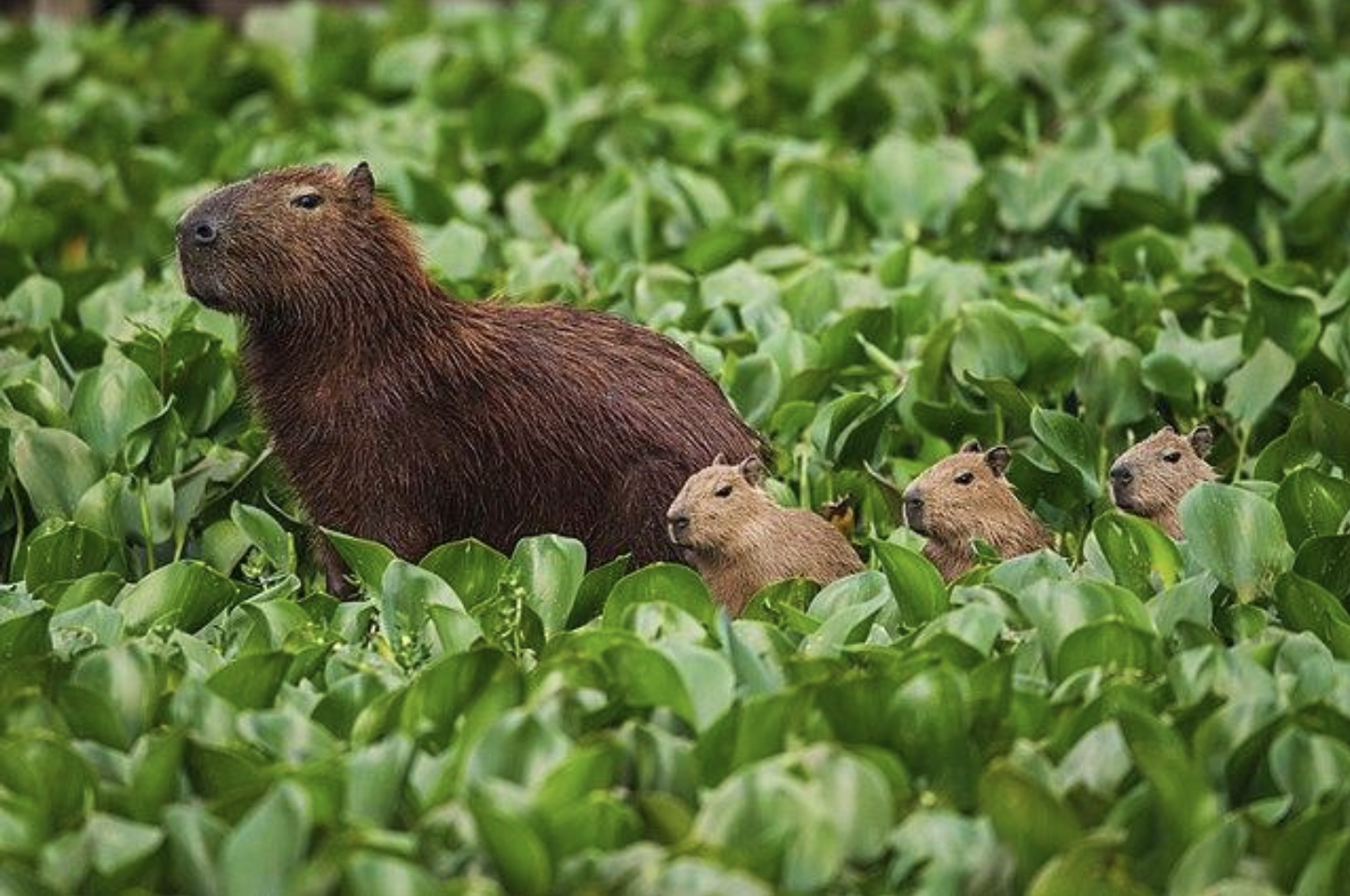
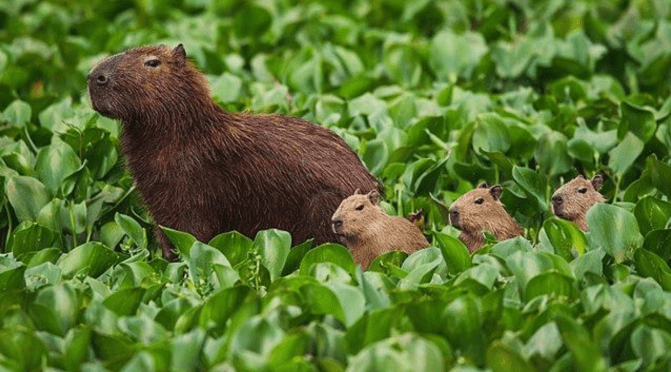
Capybaras are in the rodent family, some cousins of the capybara would be guinea pigs, and rock cavies. The capybara is the largest living rodent with a height of about 2 feet and a length that ranges from 3 to 4 feet. They can weigh between 60 and 174 pounds with most of the weight being fat.
The capybara is native to South America; their habitat is in areas with dense vegetation and plenty of water bodies. They also are semi-aquatic and enjoy spending their time in water.
Capybaras are also mammals and are pregnant for about 130 to 150 days. Which means they are pregnant for about 4 ½ to 5 months. The capybaras litter usually consists of four to five pups but there can be up to eight. After a week of being born the pups can start to eat grass but continue to drink milk. The pups stay with their mothers for 16 weeks while still drinking from the females in the group.
The capybaras diet mainly consists of vegetation as they are herbivores. 80% of the capybara’s diet is different types of grasses; they also eat water plants such as reeds, water hyacinths, and water lilies. The adult capybara could eat 6 to 8 pounds per day. While the capybara’s main diet is grasses and water plants the capybara also eats fruits and grains like melons, bananas, squashes, rice, and corn.
Capybaras tend to travel in groups as they are very social animals. These groups of Capybaras are referred to as bands or herds. These bands will usually range from having 10 to 20 individuals. The bands have one dominant male Capybara, several females, and their babies. During the dry season the bands tend to get much larger as the capybaras gather around water sources such as rivers, ponds, lakes, etc.
For more information, please visit:
 Plaid Line + PRIZM + Scottie News