
By: Chloe Rocha

The phrase “It’s because of your phone” is something that is commonly heard amongst adolescents. In some cases, that phrase can apply, but in others it is not necessarily accurate.
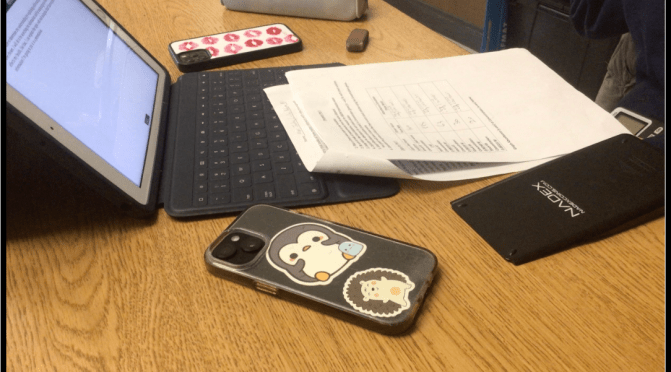
This phrase however, can apply to the education of kids during school. Cell phones have been something that is used in our day to day lives because they provide convenience and also connectivity. But at the same time they can also be proven to be a distraction while in the classroom.
There have been proven to be many negative effects of cell phone use while in the classroom, and according to an article by ‘Why Edify’, these are the top 10 reasons:
- Distraction
- Cyberbullying
- Academic dishonesty
- Social isolation
- Physical health issues
- Sleep disruption
- Privacy concerns
- Inequality
- Reduced physical activity
- Addiction
Distraction:
Decreased focus and attention in the classroom can occur because students become distracted by their phones, whether it be social media, or playing video games. These platforms are made by design to hook the user and keep them entertained. This can also be known as “doom scrolling” in some situations.
Cyberbullying:
In some cases students use their cell phone to send hurtful messages. Many adults don’t know how big of an impact cyberbullying can be and how frequently it is seen in classrooms. Nearly 42% of kids have been bullied online, according to an article by Annapolis, MD. When these children experience cyberbullying by their own classmates, it can cause them to be fearful or anxious about going to class and in the long run can have harmful effects on their education.
Academic dishonesty:
It is a very well known fact that AI has been evolving and also becoming more frequently used during people’s day to day life. Specifically in class, students have become more reliant on using AI to guide them in their class work. A global survey, that was conducted by Statista, showed that 86% of students used AI in the year of 2024. Students may also cheat during exams or assignments, simply because they have access to the answers or the information on their phones.
Social isolation:
When students use their phones excessively, it can cause them to spend less time interacting face-to-face with their own peers. Face-to-face interactions are crucial during a child’s adolescence because it allows them to develop many crucial social skills. Some of these skills include empathy, effective communication, the understanding of nonverbal cues, peer dynamics, and forming a strong sense of identity.
Physical health issues:
When cell phones are used excessively, they can begin to cause physical health problems, such as poor posture, eye strain and many other health issues.
Sleep disruption:
Cell phone use before going to bed can cause disruptions to people’s sleep patterns. When sleep patterns are disrupted, it can lead to fatigue and also a decrease in their academic performance. Sleep is important because it improves your brain performance, your mood, and also your health.
Privacy concerns:
Students may share their personal information or photographs and this can raise concerns about their privacy.
Inequality:
In many classes, a digital divide can be formed among students because not everyone may have access to a cell phone. This can cause students to feel left out from their peers.
Reduced physical activity:
This issue applies to both in school and out. During school, cell phones can discourage students from engaging in physical activity during recess or during their breaks. Outside of school, when a child has access to a cell phone, they often don’t release their energy in a physical way, like going outside, instead they go on their phones while in the house.
Addiction:
As mentioned before, many apps on your phone are by design very addictive. Mobile apps can stimulate the release of dopamine and this leads to the formation of habits. Some very popular apps that you may use that are also addictive are Facebook, Instagram, Snapchat, Youtube, and TikTok.
For more information, please visit:
 Plaid Line + PRIZM + Scottie News