
By: Munira Ahmadad

*Warning: This book contains graphic descriptions of violence, includes depictions of sexual assault, and contains characters that may be considered to represent anti-semitic stereotypes.
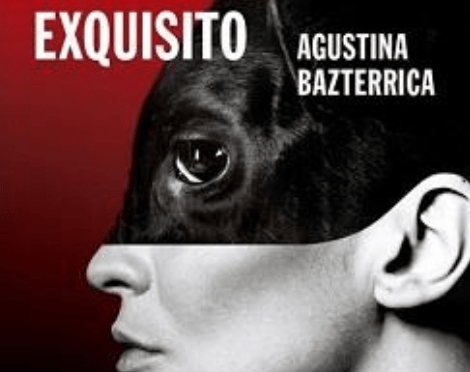
‘Tender is the Flesh’ is a horror novel by Agustina Bazterrica. The story takes place in a dystopian society where a disease causes humans to be unable to consume animal products or flesh anymore. Not that long after the event, the human population turned to cannibalism for an industrialized replacement of animal meat. This is referred to as “the Transition”.
Humans are bred for consumption identical to how animals were and are referred to as “heads”. The majority of the human product in first world countries is advertised as “special meat”, and the Transition is easier on those who have the privilege to not have to think about where and how they got their meat.
The protagonist is a man named Marcos who works directly in the industry who struggles with his relationship with his wife after the death of their baby. At his job, Marcos was given a first generation pure female head as a gift.
The novel aims to comment on the bleakness of real life society with how the Transition impacted marginalized groups first and the hardest. The message wasn’t that eating meat is bad, but it prompts the readers to consider their own internal ethical conflict and how we oftentimes think around discomforting knowledge and try to disregard it.
The story parallels the real life horrendous aspects in the meat processing industry. Not only do slaughterhouse workers operate in physically dangerous environments, the mental toll of having to constantly disconnect with what they are doing leads to emotional dissonance, and the abusive workplace causes slaughterhouse workers to often turn to maladaptive coping mechanisms according to the National Library of Medicine. The majority of slaughterhouse workers are people of color both in the book and in real life. Slaughterhouse employees are mostly migrants in real life, making up 70% of the workforce in the UK.
I recommend Bazterrica’s novel to anyone who enjoys splatterpunk horror in particular, but I would say that it’s relatively grotesque with its descriptions, and some readers might find it excessive enough for the book to be put down.
 Plaid Line + PRIZM + Scottie News