

By: Trump Vang
Pollination is the process by which animals can transfer pollen from a male flower to a female flower. It produces most of the natural things that we eat today; everything from fruit to vegetables are all produced by this process, and it’s integral to our food resources today. Even some non-edible applications, such as seeds, are important for reproduction and the spread of species. Nonetheless, pollination is an important part of nature, though some may wonder what happens behind the title and definition of pollination. What is the Science of Pollination?
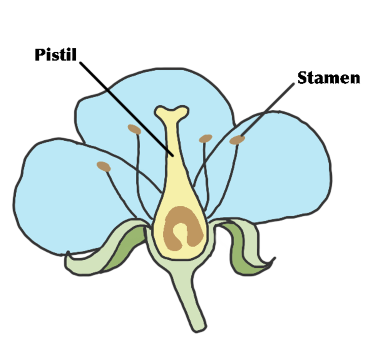
All pollination happens due to flowers. Their ability to produce pollen to spread to one another, allows for this process to happen as well as all of its side effects. What is in a flower though? Well there are two main structures within the flower. They’re specifically known as the stamen and the pistil. While the stamen produces the important pollen, the pistil contains genetic information in its ovaries. When pollen comes in contact with the pistil, the process of fertilization starts, and the plant starts to produce seeds for reproduction.
Now, how does the pollen come in contact with the pistil? Well there are a few different ways that this can occur: wind can disperse pollen and birds, plus insects, can spread them from flowers. Wind is unpredictable, so plants are forced to adapt to the style of animals. Most plants will provide animals the benefit of nectar, a sweet substance, in exchange for having them spread their pollen.
All flowers have different structures, though the pollination happens in the same way. Usually, the animal comes in contact with the flower and attempts to get some of the nectar at the back of the flower. Through this process, pollen is able to get stuck on the animal and stays there until they pass it onto a pistil; this happens in the same process in which they attempt to get nectar from the flower. These processes allow for plants to get pollinated and spread their species.
While providing food (nectar) is the most common way for the process of pollination, there are other ways that plants have adapted to get pollinated. Some plants use visual cues, scents, mimicry and entrapment to get animals to pollinate their flowers. One example of these methods are found in the set of plants known as the Orchid. Often these plants will use scents to lure in their pollinators, just to trap them within their intricate designs. As the organism attempts to escape, it can run into the pollen that the flower’s produce, allowing for population to occur. After a while, the Orchid opens, and the bug is freed from its confines. There are reasons for why these plants differ in their requirements, but for the Orchids it comes in saving their energy in having to make nectar, and ensuring that their pollen is spread properly.
The first ever pollinators most likely passed pollen from one plant to another by accident. Ever since then, both parties in pollination have developed to coexist with one another and thrive together. From bugs like beetles to animals such as bats, they all are effective pollinators, and allow for plants to properly reproduce. The most popular pollinator is the common honeybee which pollinates around 80% of all flowering plants.
With global warming on the rise, pollination is becoming harder and harder. With the warming climates, plants are blooming earlier, which inhibits animal’s time to pollinate them. This change in time throws off all pollinators, leaving us with decreased pollination and starvation. Alongside this, regular pollutants are hurting plants and their pollinators, affecting their reproduction and pollination ability. Taking steps against pollution and global warming is integral to the safety of pollination. Pollination is an important part of our world and the science behind it allows for the world to grow and develop in its own way.
To learn more about pollination, please visit:
 Plaid Line + PRIZM + Scottie News