
By: Jocelyn Knorr
Yom HaShoah is a Jewish religious and secular holiday honoring over six million Jewish people killed in the Holocaust and the Jewish ghetto uprisings in Poland. Created in the 1950s by the Knesset, it falls on the 27th day of Nisan in the Hebrew calendar—in 2024, that was May 6th. Holocaust Remembrance Day in Europe is celebrated on January 27th, the anniversary of the Auschwitz liberation by Soviet troops, but this was thought to be too focused on the accomplishments of other people; the Knesset chose to solemnize a date belonging solely to the Jewish people.
In North America, it is celebrated in several ways; many synagogues run public educational programs and hold talks by survivors, and the Mourner’s Kaddish is always recited, occasionally in addition to other prayers. Typically, the lights are dimmed and each member of the congregation lights a candle ceremonially. The names of the six million victims are sometimes read aloud, emphasizing the scale of the slaughter. The poetry of Holocaust survivors Primo Levi and Paul Celan are read on occasion.
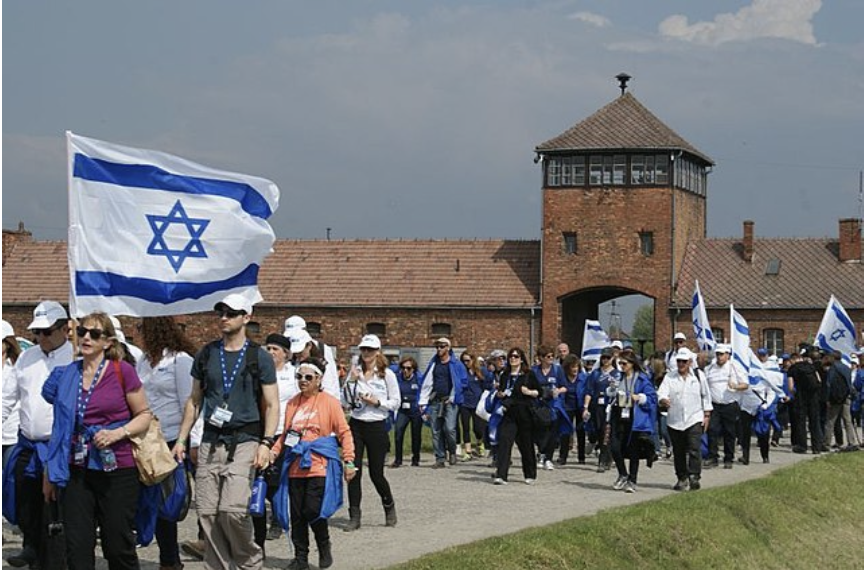
Outside of North America, a march is held yearly at Auschwitz-Birkenau, the largest of the death camps—called the March of the Living, it is testament to the fact that we are still here. In my opinion, this belies a core part of Yom HaShoah that many non-Jewish people may miss when looking in from the outside. Yom HaShoah is celebrated today to force us to recall a tragedy that otherwise may be lost to history. This is history, yes, but it had a massive impact on our world today—in 1933, an estimated 9.5 million Jewish people lived in Europe. Nearly two-thirds of a population was wiped from the face of the earth, two-thirds of a community is missing today. Jewish culture is all about survival in the face of resistance; everyone from the Roman Empire to Nazi Germany has tried to eliminate us, but we have survived. We honor those lost, and turn our faces towards the future; ready to weather whatever comes next.
 Plaid Line + PRIZM + Scottie News