
By: Hoaseng Thao
NOTE: This Article covers a war between fictional nations
BACKGROUND
Following the end of the First Continentals War in 1950, the Kirston Empire, located in the Eusonan continent, was facing an economic crisis that stemmed from its debts for its participation in the war. Their solution to this debt was to sell off parts of their territory for cash, resulting in the 1957 Treaty of Saant, which formed The United Republic of Litho and the Federal Republic of Envoa.


In 1967, the Kirston Empire elected a new Viceroy to the nation, Elena Oplau, the Fair Maiden of Saint Mons. Oplau, born in the city of Saint Mons, was a staunch supporter of regaining the territories of Envoa and Litho, which to her and her supporters, was seen as an illegal treaty that went against the vision of the Eternal Virgin Empress, Lyria Tran. On May 24th, 1970, Oplau, with the support of the grand congress, invaded Litho to regain its lost territories.

LITHOAN FRONT
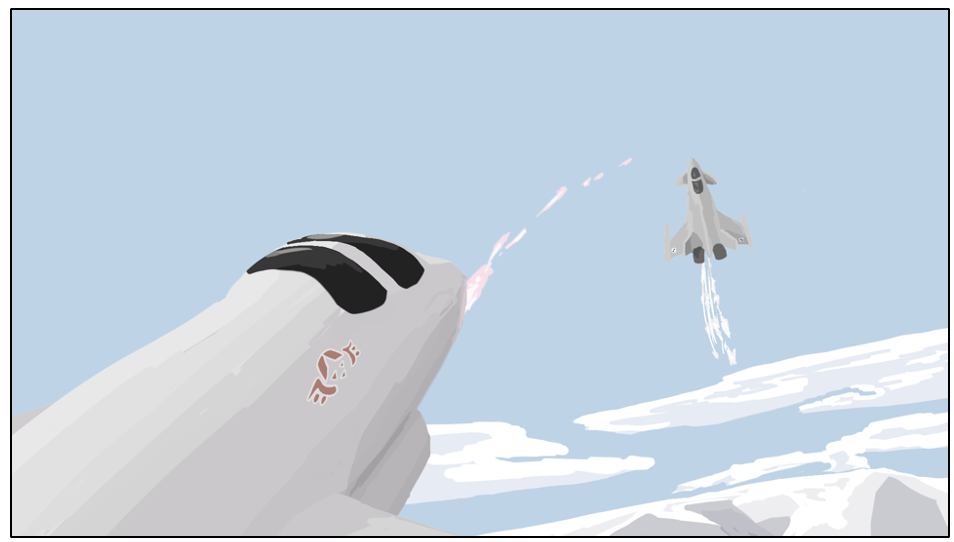
On the 1st of May, 1970, Kirston forces invaded the United Republic of Litho through the Rikin plains, flowing through the Lithoan countryside with over a hundred thousand troops over the border through a massive armored offensive. The Lithoan armed forces were forced to fall back to the Grai Mountain Range, where they would put up an intense guerrilla war against the Kirston Imperial Forces.
By 1971, Kirston forces would deplete nearly half of its invasion forces, fearing of losing the sufficient manpower, the Kirston government began a massive recruitment campaign granting those who volunteer a large amount of government grants. This act of handing out grants would be used to coin the war as “The Grants War”.
Despite the large influx of volunteering troops, the Kirston forces were unable to move past the Grai Mountain Range, and as the winter of 1971 began, the Lithoan armed forces began their counter offensive. The Lithoan forces recaptured the country’s capital, Juno, on December 10th, however this was one of out of a few successful counter offensive campaigns, as the harsh winter conditions led to the fall of the northern region. The harsh winter would result in a complete halt of any major offensive by any side until the winter passed by. Oplau and her supporters needed a victory, but it couldn’t be won during the Lithoan winter.
ENVOAN FRONT
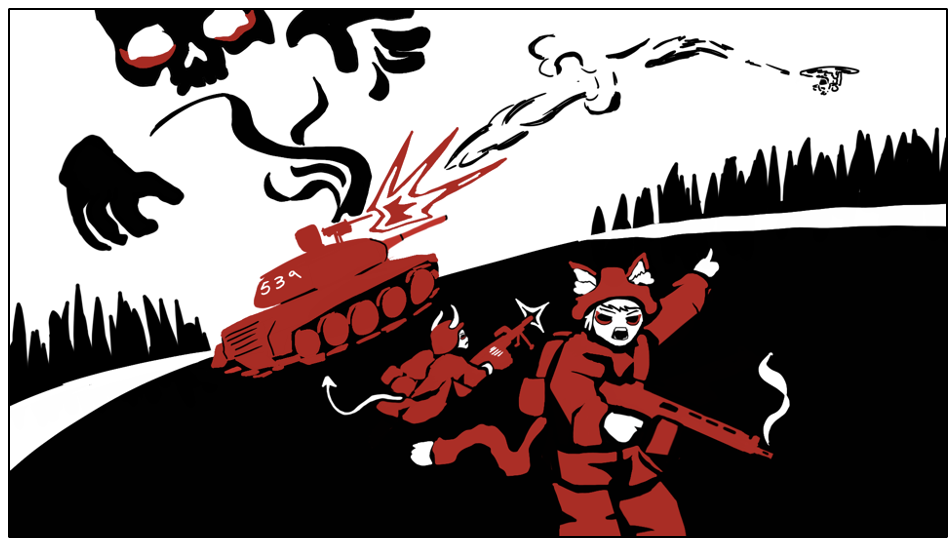
On January 2nd, 1972, another front was started, this time on the border with Envoa. Caught off guard by the invading Kirstons, nearly half of the country had fallen to the hands of the Kirston Imperial Forces within three days, with its capital of Ioniv falling in a matter of a few hours. By March 10th, mainland Envoa had fallen to Kirston forces, but the Envoan navy continued the fight, even scoring a kill on the pride of the Kirston Imperial Navy, the KIN Opposer in the second battle for Nolan Island.
By the first of March of 1973, a large mob of Envoan partisans successfully took over the city of Tuve, resulting in the large uprisings across the country and the successful return of the Envoan forces on the mainland in the battle of Crownady. The war was turning against the Kirston armed forces with the return of the Envoan armed forces, and as the war turned against the Kirstons, there was only one way the war could end.
THE GRANTED OFFENSIVE

As the snow melted, the reunited Envoan army and a hardened Lithoan military, forced the Kirston military to retreat back to its former borders. As the two armies marched into Kirston soil, they began to loot and spread fire to the Kirston countryside in a scorched earth tactic to demoralize the Kirston population, however this would only embolden those to defend what remained pure.
By April 10th, nearly 20% of the Kirston’s forests were burned as a result of the scorched earth tactic, but nonetheless the Kirston military still fought on despite the odds. As the Envoan and Lithoan armies crept towards the capital of Kirsto, pressure was forced onto the Viceroy, Elena Oplau, to decide the fate of the empire.
SIGNING OF SUKUYO

With the war nearing its third anniversary and the increasing pressure against the Kirston officials to resolve the conflict, it was time for the war to end. Oplau, unwilling to call an end to hostilities, insisted they wanted a conditional surrender but due to the harsh reputation of the empire in the war, neither side wanted to openly agree for a ceasefire unless an intermediary assisted in its conclusion. Upon hearing the news of a potential end to the conflict, the King of the Vaserian Federation, Crizk Flaw, hastily answered the call for the conclusion of the war.

King Flaw, was ironically, a flawed king. He spent the first 4 years of his 10 year administrative term trying to force congress to increase the powers of the monarchy, with Flaw often being warned by congress of being impeached, which was a warning supported by nearly every Vaserian. When the call for an intermediary to conclude the war in Kirsto was announced, Flaw readily accepted it to save his reputation.
On May 22nd, 1973, the officials of the three warring nations met in the Vaserian capital city of Sukuyo to conclude the conflict, and by May 24th, the conflict would end with Kirsto ceding parts of its territory to Envoa, and a controversial 10 mile wide settlement exclusion zone along the Lithoan border, ensuring that a build up at the Lithoan border would never happen again. In return for these concessions, the three nations agreed to work together in rebuilding each nation’s infrastructure; however, only Kirsto and Envoa would fulfill this deal.

By the end of the war, over 80,000 people were killed in the war, with at least a million being forced to flee or endure the conflict. Nearly 40% of the forests of Kirsto were burned due to the scorched earth tactics, but as of 2049, the country has reclaimed nearly 30% of the burned land.
 Plaid Line + PRIZM + Scottie News