
By: Julia Yang
There are loads and loads of games that have an increasing amount of popularity, resulting in wide ranges of community. Many of these games’ attention is extremely well-deserved, but some I feel like deserve more; these games have had many popular streamers and YouTubers play them but for some reason have yet to gain a large following like others. These games are usually known by most, and talked about by none.
I’m just here to raise the awareness of said games.
This article is basically suggesting games and reviewing them, so be aware of spoilers.
(These games are not ranked in any specific order)
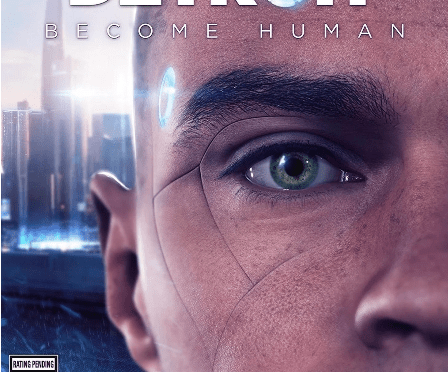
Number 1, ‘Detroit: Become Human’ (DBH)

‘Detroit: Become Human’ is just such a fantastic game considering all of its attributes like visuals, plot line, and overall gameplay. Not only is it a stunningly beautiful and realistic game, you truly connect with the characters as DBH is a decision based game that has 82 endings.
In DBH, you play as 3 androids in the year 2038; Connor, Marcus, and Kara. Each android has their own stories and conflicts, all of which you decide how they deal with them.
All androids have a possibility of becoming “deviant”. An android becoming deviant basically means that the android has broken out of their original code and has a consciousness of their own.
Connor is a detective android. Your job as Connor is to capture all deviants and track down the reasoning behind all of the rapidly increasing deviant cases. Connor is a conflicting character to play and empathize with as you’re supposed to do your job to capture all of the surrounding deviants, but as you continue the story, Connor may begin to feel emotions for others; something completely forbidden of him to do.
Marcus is a caretaking android. His job was to take care of his owner and friend, Carl. An incident between Carl and his son results in Marcus being thrown into an android dump yard, where Marcus goes deviant and his story begins.
Marcus believes that all androids should have rights, that they should be treated the same as humans. You follow Marcus in his story as you make choices between life and death to save his declining kind.
Kara is also a caretaking android. Kara is in an abusive setting as her owner threatens to hurt his daughter— Alice— and herself as a result of his unfortunate past. Kara goes deviant to escape with Alice where they begin their relationship as a family. Kara’s goal is to escape the country where it’s safer for androids, thus, safer for her new found family. You make decisions to sacrifice or not, to tell the truth or lie, to do anything to leave the country or think about the lives of others.
I have not played this game myself, but I’ve watched multiple gameplays. Every single one of them is unique in their own way as they each make their own decisions that end up in different scenarios. I love watching them make choices based on their own experiences and quick reactions.
Before you think of watching/playing this game, be warned; this game touches upon death, suicide, violence, abuse, and oppression.
I’d rate this game a shining 10/10, I really believe that nothing about this game can be rated lower. You can play DBH on the PS4 and PC.
Number 2, ‘Stray’

I’ve not known many people who know ‘Stray’, but trust me when I say it is a masterpiece. It’s such a unique story that speaks upon what may happen if humanoid robots outlived mankind, I’ve yet to see anyone make a story even remotely close to the one told in ‘Stray’.
In ‘Stray’, you play as an orange cat without a known name. The cat travels through the underground filled with a robot ran civilization where they’re blocked off from the outside world. Your job as the cat is to help the robots reach the outside as this’ll benefit you and the future as you are from the outside.
You’ll discover that the world you’re exploring needs more aid and has more depth than you first believed, eventually forming a large understanding of the game and the world it built up.
I wish I could think of more to write about, but this game is so complex that I don’t even know what to say. What I can say is that this game definitely needs a larger audience.
As someone who played this game, I rate ‘Stray’ a 9/10. Everything about it is wonderful, but I will say, a few minor things are hard to comprehend— also because the ending made me sad. You can play ‘Stray’ on multiple platforms, just not Nintendo’s Switch.
Number 3, All ‘Little Nightmares’ games
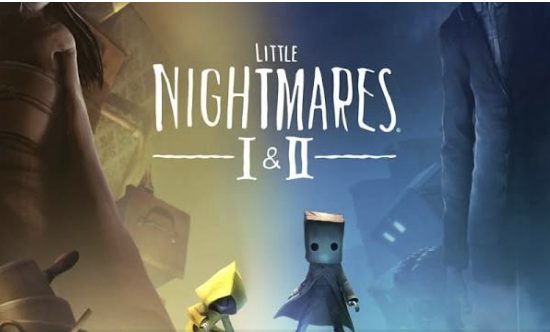
I’ve talked about ‘Little Nightmares’ in a past article since they’re coming out with a third game, but I’m here to bring up the existing two since nobody else seems to wanna do it.
The ‘Little Nightmares’ series only has open endings for interpretation and theories. There’s no dialogue, or known personality for characters. It’s a game of mystery, skill, and strategy. When you play these games, you better have the patience and reaction of a mouse, because things happen fast. You solve puzzles whilst also being chased by unbelievably creepy humanoid things 10x your size.
In ‘Little Nightmares I’, you play as Six. Six wears a yellow raincoat and carries around a lighter to see in the dark. As Six, you encounter a variety of monsters to escape the place she’s put into called ‘The Maw’. When you’re Six, you have to jump, climb, swing, and harm. Nothing can get in the way of your escape plan.
In ‘Little Nightmares DLC: Secrets of the Maw’, you play as a boy simply named The Runaway Kid. He wears a blue shirt, dirtied up pants, and a chain around his ankle. The Runaway Kid also seeks to escape the Maw, but uses the help of interesting little creatures named the Nomes to aid him in his puzzles. The Runaway Kid seems to get a lot more help in his journey than Six does.
In ‘Little Nightmares II’, you play as Mono. Mono wears a brown paper bag over his head, a brown trench coat, and brown pants. Mono encounters more complex and new characters than the past ‘Little Nightmares’ games. These characters seem to have special abilities, unlike the majority of previous monsters. ‘Little Nightmares II’ is a prequel to ‘Little Nightmares I’, meaning that the events in this game had taken place already by the time ‘Little Nightmares I’ had happened. Mono saves and travels with Six to survive in this world.
‘Little Nightmares III’ is yet to come, but deserves all of the hype it can get since the past games were so iconic. The people I’m surrounded by don’t know about ‘Little Nightmares’, but can recognize it. People online on the other hand, know all about it. I always wonder why it doesn’t get talked about.
I played these games with my siblings (they’re all single player, we just switched off the controller), and the gameplay was extremely fun. We love this franchise so much.
I rate all games a 10/10. ‘Little Nightmares’ can be found on all platforms.
Number 4, ‘A Way Out’

‘A Way Out’ is a really rare game for someone to know about. It stars two inmates working together to escape prison and get revenge on someone named Harvey.
This game requires two players, it cannot be played otherwise.
One person will play as Leo Caruso. Leo is sarcastic, brash, overly confident, comedic, loud, and hardheaded, always resorting to violence before anything else. He escapes to see his family and seek revenge on Harvey, a past companion who betrayed him. He belongs to a family of 3; his wife Linda, his son Alex, and himself. Leo makes crass decisions and enjoys the thrill of fighting, which makes him a super funny character to play as.
One person will play as Vincent Moretti. Vince is reserved, respectful, calm, rational, controlled, cool, and a pacifist. Unlike Leo, Vince thinks about the consequences of his actions— you can say he’s the brains of the two. Vince belonged to a family of two before his wife Carol gave birth to their newborn daughter while he was on the run. Vince doesn’t like to fight, he likes to talk his way out of situations if possible. Vince is the more, I guess, realistic option of the two characters.
In the end, it takes a turn for the worse and it doesn’t matter what character you choose as in the last chapter you both end up in the same situation no matter what decisions were made in the past. You end up in the same situation at the end, but the ending is still the player’s choice. There are two possible endings in total, and they make it worse for both Leo and Vince. Let’s just say; there is no good ending.
I played this game with my little sister, and it’s just outstanding. The end was totally unexpected, which ended up with both me and her absolutely hating one of the main two. I played as Vince and she played as Leo, it was so fun.
Before you think of watching/playing this game, be warned; this game touches upon death, (gun) violence, vulgar language, and partial nudity. (Rated M+)
I rate this game a 10/10, this game is super enjoyable for both players. You can play ‘A way out’ on multiple platforms, but not Nintendo’s Switch.
Number 5, ‘It Takes Two’
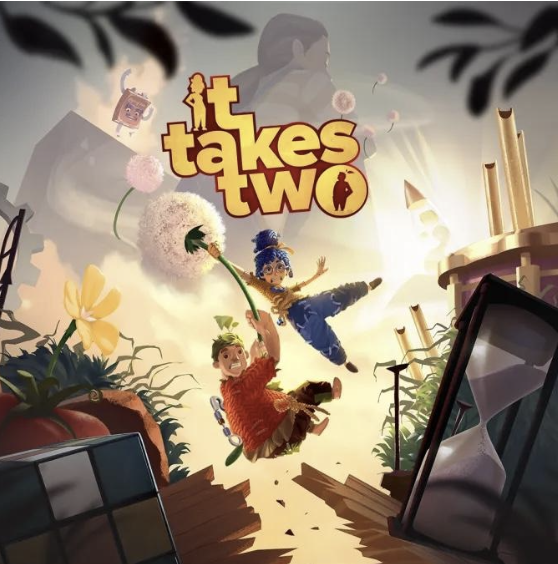
‘It Takes Two’ was made after ‘A Way Out’ and they even added a little Easter egg as a salute to the game.
In this game, the two main characters get turned into toys, created by their daughter Rose, by a sentient book named the Book of Love due to their doomed relationship with each other. As the two characters, you and a friend will help them repair their family by traveling through different experiences with one another resulting in them falling in love all over again.
This game also requires two players, it cannot be played otherwise.
One person will play as May. May is cocky, intelligent, loving, and rational. May is quick to think about responses and plans in difficult situations, which often gets disrupted by her husband or the Book of Love. She finds she has no time to herself and whatever Cody does somehow messes her day up. When May encounters something, she can’t help but think aloud. She’s smart and is excellent at negotiating with the enemy.
One person will play as Cody. Cody is loud, comedic, sarcastic, and understanding. He enjoys making jokes and lightening the mood, even though sometimes it’s better to just not speak at all. Some of his past choices come up in this game frequently since Cody often does things without thinking or he didn’t do something correctly and it comes back to bite him.
Even so, they’re both married and need to figure things out. That’s where you and a friend come in, or possibly you and your significant other. Even though I’m not with anyone, I think this game would be an excellent game to play with your significant other since it touches upon usual issues and fights that may appear in your own relationship and how to repair anything possibly broken.
I played this game with, again, my younger sister. We had a really fun time playing since the characters are super entertaining and the gameplay was interesting.
I rate this game a 10/10. ‘It Takes Two’ can be found on all platforms.
Number 6, ‘INSIDE’

‘INSIDE’ is another no-dialogue-mysterious-game like the ‘Little Nightmares’ games. The art style is really unique— and even though I’ve played it multiple times, I still don’t know what this game is about.
‘INSIDE’ is a game that I know people don’t know because absolutely no one brings it up anywhere. There’s not even that many YouTubers/streamers that played this game. I only know one.
In ‘INSIDE’ you play as a boy with a red shirt and black pants. He seems to be running away from the police/any authoritative figure, for what I know, an unknown reason. I’m actually not too sure if it was the police either. The kid just seems to be wanted by everyone.
The kid travels through the disturbing world, encountering pigs, brain dead humans, water creatures, deadly dogs, and complicated puzzles. When I say complicated, I mean it. There were several puzzles I had to look up because I was so lost.
Again, I wish I could say more, but I really don’t know what’s going on in this game. I don’t know the story, the characters, or the world. All I know is that it was a really good game.
Before you think of watching/playing this game, be warned; this game may make some uncomfortable as it shows rag doll-like humans, dead pigs, clumps of sentient meat including human meat, and just overall large amounts of floppy physics. I know that physics like that in games can make people nauseous or unsettled.
I rate it a solid 8/10 even though I’m lost. I think the reason I want more people to talk about this game is because I want to know what was going on and I can’t find any answers or common knowledge if no one talks about it. You can play ‘INSIDE’ on most platforms.
Number 8, ‘Twelve Minutes’
‘Twelve Minutes’ is definitely an…interesting game. In ‘Twelve Minutes’, you get stuck in a time loop and you have to figure out how to break out of it in twelve minutes (shocker).
You almost immediately start off by your apartment being broken into by a police officer accusing your wife of murdering her father and looking for a pocket watch. When your wife denies being a murderer, the police officer murders you as a threat to her life, thus; your loop begins. It’s your job as her husband to get rid of the cop and stop him from harming you or her in the name of getting out of this loop.
With every loop, you learn something new. With every loop you go deeper and deeper into the real situation, the real story behind the murder and the pocket watch.
This game is phenomenal. I’ve watched and played this game, and the twists and turns are always so jaw dropping. I’ve never played a game like ‘Twelve Minutes’ before, and it was an incredible experience.
I rate this game a 10/10. ‘Twelve Minutes’ can be found on all platforms.
I hope by writing this article more people will watch/play these games which will result in more people talking about them. I hope these games spread around the world like rapid fire one day.


 Plaid Line + PRIZM + Scottie News