
By: Isabelle Baidoo

Axolotls have been on earth for roughly the last 10,000 years, inhabiting central Mexico. Much of their suitable habitat has been drained or dried up, so there are only two spring-fed lakes left that they can inhabit wildly. Axolotls breed very easily in captivity and quickly develop new colors and sizes.
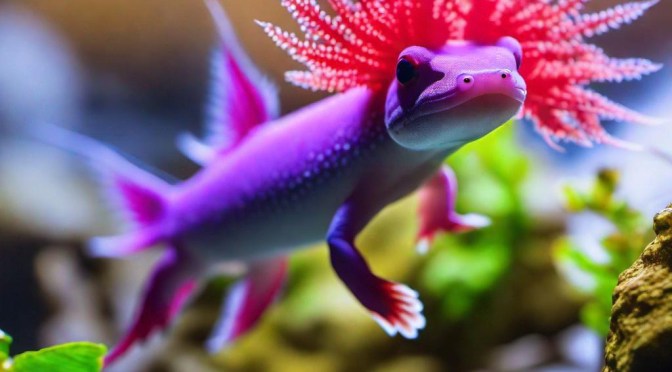
They have feathery gills spouting from either side of their heads, webbed feet, a dorsal fin that runs down their body, and a tail. Although axolotls have gills, adult axolotls have functional lungs and can breathe through their skin. Axolotls are unique compared to other salamanders because they reach adulthood without going through metamorphosis. Instead of going to land once they’re fully developed, they remain aquatic and keep their gills.
These creatures have the ability to completely regenerate their limbs. Regeneration is initiated by injuries or wounds, but not all injuries result in limb regeneration. Small cuts, scrapes, or bruises wouldn’t result in complete regeneration but their healing time is much faster than humans.
Axolotls suck in their prey through their small smiling mouths, they eat crustaceans, mollusks, insect eggs, and small fish.
The pet trade of axolotls started from Paris, France in 1864 when Mexican traders brought axolotls to Europe, Europeans across the continent were intrigued by the exotic creatures. This led to the excessive breeding of axolotls in captivity.
The pink axolotls you commonly see as pets have been bred to be those colors; wild axolotls are mostly gray, brown, or black. Pink axolotls are extremely rare in the wild since they can’t camouflage well.
When keeping an Axolotl as a pet you must take into consideration that they prefer cool water. Their water temperature should be less than 70 degrees F. When feeding your pet, experts recommend you attempt to replicate its natural diet as closely as possible. You can do this by feeding them a combination of earthworms, brine shrimp, and daphnia. Daphnias are a small aquatic crustacean.







 Plaid Line + PRIZM + Scottie News